Introduction
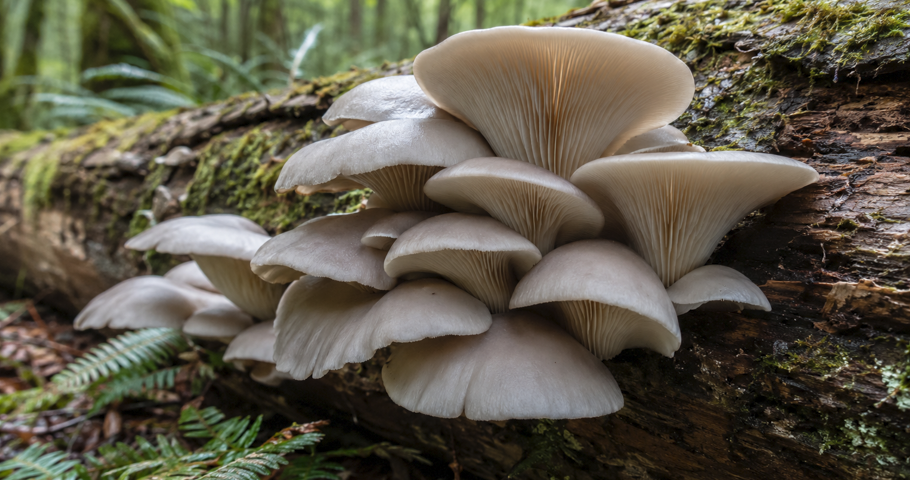
Oyster mushrooms are some of the most useful wild edible mushrooms to learn because they are common, flavorful, and easier to recognize than many gilled mushrooms once you understand the full identification pattern. They grow from wood, often in overlapping shelf-like clusters, with pale gills that run down a short side stem or attach near the base of the cap.
This oyster mushroom identification guide covers how to identify oyster mushrooms, where they grow, when to look for them, how to separate them from important lookalikes, and how to harvest and cook them safely.
Oyster mushrooms usually refer to mushrooms in the genus Pleurotus. The classic oyster mushroom is Pleurotus ostreatus, but several related oyster species occur across North America. For beginner foragers, the safest approach is to learn the full oyster mushroom group pattern rather than relying on color alone.
If you are building your mushroom skills one species at a time, this guide fits well with our full Wild Mushroom Identification Guides library and our Chanterelle Mushroom Identification Guide.
Quick Answers About Oyster Mushrooms
How do you identify oyster mushrooms?
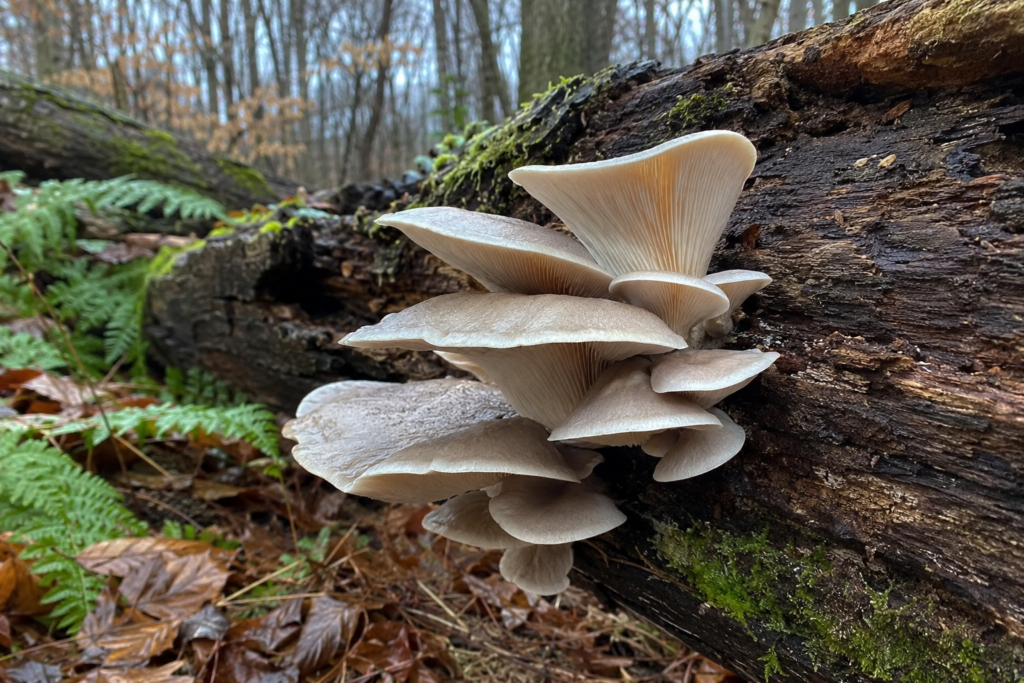
Oyster mushrooms usually grow in shelf-like clusters on dead or dying wood. Look for fan-shaped caps, pale gills that run down the stem, a short side stem or nearly absent stem, soft white flesh, and a white to pale lilac spore print.
Are oyster mushrooms edible?
Yes, true oyster mushrooms in the genus Pleurotus are edible when correctly identified and cooked. Never eat a wild mushroom unless you have confirmed every key trait and ruled out lookalikes.
Where do oyster mushrooms grow?
Oyster mushrooms grow from wood, especially dead or dying hardwood trees, fallen logs, stumps, and large branches. They should not be growing directly from clean soil, although they may appear ground-level if buried wood is present.
What do oyster mushroom gills look like?
Oyster mushroom gills are pale white to cream or grayish-white and run down the stem or attachment point. This is called decurrent gill attachment and is one of the most important identification traits.
What mushrooms look like oyster mushrooms?
Important oyster mushroom lookalikes include angel wings, Crepidotus species, mock oysters, elm oysters, and some tough shelf-like gilled mushrooms. Angel wings are especially important to know because they are thin, white, oyster-like mushrooms often associated with conifer wood.
Do oyster mushrooms have poisonous lookalikes?
Yes. Oyster mushrooms have lookalikes, and some can be dangerous or cause illness. Beginners should be especially cautious with thin white oyster-like mushrooms growing on conifers, mushrooms with brown spore prints, orange gilled mushrooms, or any specimen that does not match the full oyster mushroom pattern.
Basic Oyster Mushroom Identification
Common name: Oyster mushroom
Scientific group: Pleurotus species
Classic species: Pleurotus ostreatus
Edibility: Edible when correctly identified and cooked
Spore print: White to pale cream, sometimes faintly lilac
Habitat: Dead or dying wood, especially hardwoods
Growth pattern: Shelf-like clusters or overlapping fans
Season: Varies by species and region; often fall through spring for P. ostreatus, with some related species appearing in warmer months
MushroomExpert describes Pleurotus ostreatus as a wood-growing mushroom with shelf-like clusters, whitish gills that run down a short or nearly absent stem, and a whitish to lilac spore print.
Key Identification Traits
Cap
Oyster mushroom caps are usually fan-shaped, shelf-like, kidney-shaped, or oyster-shell-shaped. They may be smooth, slightly moist when fresh, and often grow in overlapping layers.
Color can vary quite a bit. Depending on the species and conditions, oyster mushrooms may be white, pale gray, bluish-gray, tan, brown, or cream. Older specimens often fade, dry out, curl, or yellow around the edges.
Good oyster mushroom caps should feel fleshy and pliable, not brittle, leathery, slimy, or paper-thin.
Gills
The gills are one of the most important features. Oyster mushroom gills are usually pale white to cream or grayish-white and run down the stem. This is called decurrent gill attachment.
The gills may be close together and sometimes fork or connect slightly near the stem. If the underside has pores instead of gills, it is not a true oyster mushroom.
Stem
Oyster mushrooms usually have a short side stem, an off-center stem, or almost no visible stem at all. When they grow from the side of a log or standing tree, the stem may look like a small thickened base where the cap attaches to the wood.
A long central stem should make you slow down and recheck the identification. Some oyster mushrooms can grow with a more central stem when fruiting from the top of a log, but that is not the most typical form.
Flesh
The flesh should be white, soft, and somewhat thick compared with many thin shelf-like lookalikes. Fresh oyster mushrooms are flexible and meaty. They should not be tough like leather, deeply discolored, waterlogged, or falling apart.
Avoid old specimens that smell unpleasant, feel mushy, have heavy insect damage, or show dark, rotten patches.
Smell
Many oyster mushrooms have a pleasant, mild, slightly sweet, earthy, or faintly anise-like smell. Smell alone is never enough for identification, but a strong foul odor is a good reason to leave a mushroom behind.
Spore Print
A spore print is useful when confirming oyster mushrooms. Most oyster mushrooms produce a white to pale cream spore print, sometimes with a faint lilac tint.
To take a spore print, remove the cap and place it gill-side down on dark paper, foil, or a half-dark and half-light surface. Cover it with a bowl and wait 12 to 24 hours. A brown spore print points away from true oyster mushrooms and may indicate a lookalike such as Crepidotus.
Where Oyster Mushrooms Grow
Oyster mushrooms grow from wood. They may appear on dead logs, standing dead trees, fallen branches, stumps, or sometimes living trees with damaged or dying wood.
They do not grow directly from clean soil. However, they can appear to come from the ground if they are fruiting from buried wood or roots. If an oyster-like mushroom seems to be growing from soil, gently check for buried wood before trusting the identification.
Oyster mushrooms are most often associated with hardwoods such as beech, maple, cottonwood, alder, aspen, oak, willow, and other broadleaf trees. Some oyster-like species may occur on conifers, but beginners should be especially cautious with white oyster-like mushrooms growing from conifer wood because of the angel wing lookalike.
When to Find Oyster Mushrooms
The season depends on the species, region, and weather.
Classic Pleurotus ostreatus often fruits in cool weather, especially fall through early spring in many parts of North America. Other oyster species, such as summer oysters, may appear in warmer months.
In the Pacific Northwest and other mild, wet regions, oysters can show up during cool, damp periods when the forest has enough moisture. After rain, check dead hardwood logs, old stumps, shaded stream corridors, and downed trees along trails.
Oyster Mushroom Lookalikes
Oyster mushrooms are beginner-friendly compared with many gilled mushrooms, but they are not risk-free. Several shelf-like mushrooms grow on wood and can confuse new foragers.
| Lookalike | Key Difference | Safety Note |
|---|---|---|
| Angel wings (Pleurocybella porrigens) | Usually thinner, whiter, more delicate, and often found on conifer wood | Associated with serious poisonings; avoid white oyster-like mushrooms on conifers unless confirmed by an expert |
| Crepidotus species | Often smaller with brown spore prints | Brown spores separate them from true oysters |
| Mock oyster (Phyllotopsis nidulans) | Orange to yellow-orange, often with an unpleasant odor | Not a true oyster mushroom |
| Lentinus species | Tougher flesh, sometimes scaly caps or shaggy stems | Usually much more leathery than oysters |
| Elm oyster (Hypsizygus ulmarius) | Often grows higher on living hardwoods, usually with a more central stem | Edible by many accounts, but not a true Pleurotus oyster |
| Jack-o-lantern mushrooms (Omphalotus species) | Bright orange clustered mushrooms with orange gills | Poisonous and can cause severe gastrointestinal illness |
Angel wings deserve special attention. The University of Florida IFAS Extension notes that Pleurocybella porrigens shares several oyster-like traits, including shelf-like growth, pale flesh, white spores, and decurrent gills, but it has been associated with deadly poisonings in Japan. Because of that, beginner foragers should be very cautious with thin, white, delicate oyster-like mushrooms, especially on conifer wood.
Safe Identification Checklist
Before harvesting oyster mushrooms for food, confirm every point:
The mushroom is growing from wood or woody debris.
The caps are fan-shaped, shelf-like, or oyster-shell-shaped.
The gills are pale and run down the stem or attachment point.
The stem is short, off-center, side-attached, or nearly absent.
The flesh is soft, white, and fleshy rather than tough or paper-thin.
The spore print is white, cream, or faintly lilac.
The mushroom is not growing from conifer wood unless confirmed by an experienced identifier.
The mushroom is fresh, firm, and free from rot.
If any of these traits do not match, leave it behind.
Are Oyster Mushrooms Edible?
Yes, true oyster mushrooms are edible when correctly identified and cooked. They are also widely cultivated and sold in grocery stores.
Wild oyster mushrooms should always be cooked before eating. As with any wild mushroom, try a small amount the first time, even when the identification is correct. Some people are sensitive to mushrooms that others eat without issue.
Do not eat old, slimy, moldy, or bug-filled specimens. Wild mushrooms can spoil quickly, especially during warm or wet weather.
Poison Control warns that wild mushroom lookalikes can fool people and that cooking does not make a poisonous mushroom safe. If there is any doubt, do not eat it.
How to Harvest Oyster Mushrooms
Harvest only fresh clusters that are firm, clean, and bug-free enough to use. Younger caps are usually better than older, wide, curled, or yellowing caps.
Use a knife to cut the cluster near the base, or gently twist it free if it releases cleanly. Trim away tough stem bases, damaged edges, and dirty portions in the field so your basket stays cleaner.
Avoid harvesting from:
Roadside trees exposed to heavy traffic runoff
Treated lumber or old construction wood
Industrial areas
Contaminated urban sites
Logs sprayed with herbicides or chemicals
Oyster mushrooms decompose wood, and wood can hold contaminants. Clean habitat matters.
How to Clean Oyster Mushrooms
Brush away dirt, bark, insects, and debris. If needed, wipe them with a damp cloth or rinse quickly and dry well before cooking.
Because oyster mushrooms grow in layered clusters, check between the caps and along the gills. Small beetles and larvae often hide inside older mushrooms. That is normal in the woods, but it is also why fresh, young clusters are worth waiting for.
How to Cook Oyster Mushrooms
Oyster mushrooms are excellent sautéed, fried, roasted, grilled, or added to soups, eggs, rice, pasta, tacos, and wild food dishes.
For the best flavor, cook them until their moisture releases and evaporates, then let the edges brown. A simple pan with butter or oil, salt, black pepper, garlic, and a little thyme is often enough.
Good cooking ideas include:
Sautéed oyster mushrooms with garlic and butter
Oyster mushroom tacos with onions and wild greens
Creamy oyster mushroom soup
Oyster mushrooms with eggs and potatoes
Crispy pan-fried oyster mushroom strips
Wild mushroom gravy
Oyster mushrooms pair well with field garlic, dandelion greens, plantain leaves when young and tender, nettles, ramps where legal to harvest, and many garden vegetables.
Beginner Foraging Tips
Start by studying oyster mushrooms in the field without eating them. Take photos of the top, underside, stem attachment, full cluster, wood type, and surrounding habitat. If you are unsure, post the full photo set to a trusted mushroom identification group or consult a local mycological society.
Do not rely on one photo, one app, or one trait. Mushroom identification works best when you build the full picture: growth pattern, substrate, gills, stem, flesh, spore print, season, smell, and location.
When you finally do harvest oysters, cook a small amount thoroughly and wait to see how your body handles them before eating a large meal.
Final Thoughts
Oyster mushrooms are one of the best wild edible mushrooms to learn after you understand basic mushroom safety. They are common, delicious, and recognizable by their full pattern: wood-growing clusters, fan-shaped caps, pale decurrent gills, short side stems, soft white flesh, and pale spore prints.
Still, oyster mushrooms are not a shortcut mushroom. Take your time, confirm every trait, learn the lookalikes, and skip anything that does not fit. That patience is what turns a lucky find into a real field skill.
Get outside. Do something wild.


