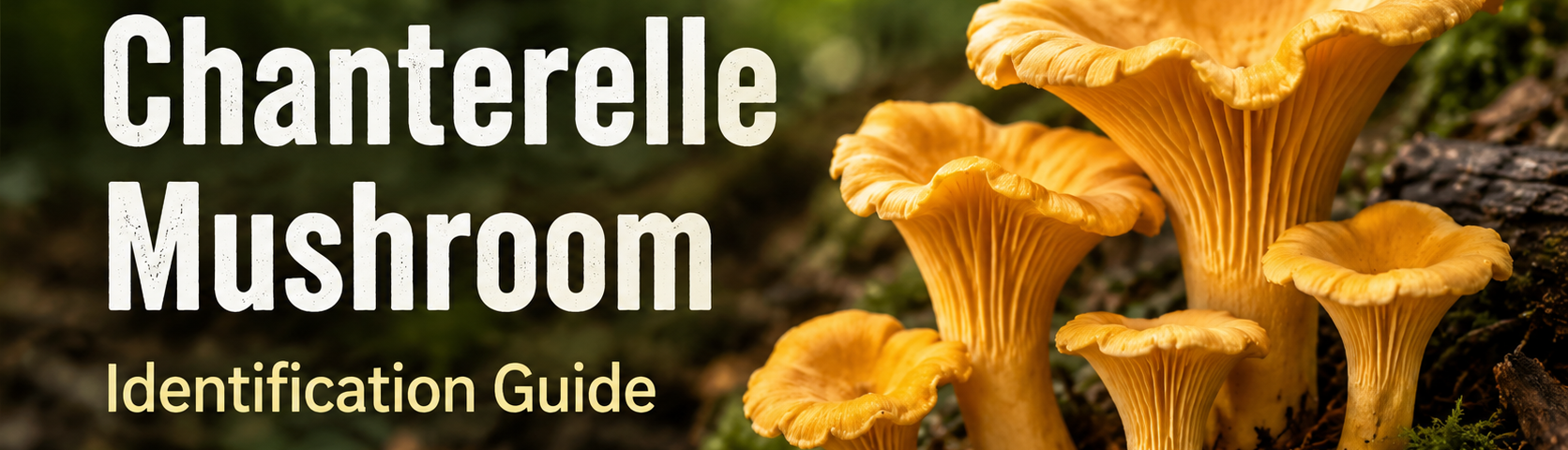
Chanterelle mushrooms are some of the most loved wild edible mushrooms in the world.
They are beautiful, fragrant, flavorful, and exciting to find. Their colors can range from golden yellow and orange to white, red, pink, gray, brown, or even black, depending on the species. Some look like classic golden chanterelles, while others appear as white chanterelles, cinnabar chanterelles, smooth chanterelles, yellowfoot chanterelles, or black trumpets.
That variety is part of what makes chanterelles fascinating.
It is also why beginners need to slow down.
The word “chanterelle” does not refer to one single mushroom. It is a common name used for several edible mushrooms in the genera Cantharellus and Craterellus. These mushrooms grow from soil near trees because they form mycorrhizal relationships with living host plants. They are not wood-decay mushrooms, and true chanterelles do not grow directly from logs, stumps, or tree trunks.
This chanterelle mushroom identification guide covers how to identify chanterelles, understand their major species variations, avoid dangerous lookalikes, harvest responsibly, and cook them safely.
For more beginner-friendly mushroom guides, visit our Wild Edible Mushrooms Foraging Guides.
What Are Chanterelle Mushrooms?
Chanterelles are wild edible mushrooms known for their firm texture, fruity aroma, and ridged undersides. Many species have a vase, funnel, or trumpet-like shape, while others start rounded and become wavy, lobed, or depressed in the center as they mature.
Unlike many familiar mushrooms, chanterelles do not have true blade-like gills. Most have blunt ridges, folds, wrinkles, or vein-like structures on the underside of the cap. These are often called false gills.
That difference matters.
True gills are thin, blade-like, and often look like separate pages under the cap. Chanterelle false gills are more like wrinkles or ridges in the mushroom’s flesh. They usually run down the stem and do not detach cleanly without tearing the mushroom.
This feature is one of the most important differences between true chanterelles and lookalikes such as jack-o’-lantern mushrooms or false chanterelles.
Quick Field Summary
Common name: Chanterelle mushrooms
Main genera: Cantharellus and Craterellus
Mushroom type: Mycorrhizal wild mushrooms
Gills: No true blade-like gills
Underside: False gills, ridges, wrinkles, veins, or sometimes a nearly smooth surface
Growth habit: Growing from soil near trees, not directly from wood
Common colors: Yellow, orange, white, red, pink, gray, brown, or black depending on species
Texture: Usually firm, dense, and not flimsy
Aroma: Often fruity or apricot-like, though not every species has a strong smell
Best season: Usually summer through fall, depending on species, rainfall, and climate
Edibility: True chanterelle species are generally considered edible when correctly identified
Critical safety rule: Avoid orange mushrooms with true gills, fused clusters, or growth from wood
How to Identify Chanterelle Mushrooms
Chanterelles have a pattern. Do not rely on one trait by itself.
A careful forager looks at the underside, growth habit, texture, shape, smell, and overall structure before calling a mushroom a chanterelle.
Look for False Gills, Ridges, or Wrinkles
The underside is the first place to look.
Chanterelles usually have blunt ridges, folds, or wrinkles that run down the stem. These false gills may fork, branch, cross-connect, or look melted into the underside of the cap. They are not thin, papery blades.
If the underside has true blade-like gills, slow down. You may be looking at a false chanterelle, jack-o’-lantern, Gymnopilus species, or another gilled mushroom.
Some chanterelles, especially smooth chanterelles, may have an underside that is nearly smooth or only shallowly wrinkled. Because of that, the absence of true gills is often more important than the presence of dramatic ridges.
Confirm That It Is Growing From Soil
True chanterelles grow from soil, usually near trees. They are mycorrhizal, which means they form partnerships with living plants and trees.
They do not grow directly from wood.
This is a major difference between chanterelles and jack-o’-lantern mushrooms. Jack-o’-lanterns often grow in clusters near stumps, at the base of trees, or from buried wood. They may appear to come from the ground, but the actual food source is decaying wood or buried roots.
If the mushroom is growing from a log, stump, tree trunk, or tight fused cluster at the base of wood, do not call it a chanterelle.
Check the Texture
Chanterelles are usually firm and dense. Many foragers compare the way they pull apart to string cheese. They are not thin, fragile, or flimsy like many gilled mushrooms.
False chanterelles are typically softer and more flexible than true chanterelles. That does not mean texture alone is enough for identification, but it can support the rest of the pattern.
Notice the Shape
Many chanterelles become vase-shaped, funnel-shaped, or trumpet-like as they mature. Golden chanterelles may begin rounded or convex, then develop wavy margins and a shallow central depression.
Black trumpets and some Craterellus species are more deeply trumpet-shaped. Yellowfoot chanterelles are often smaller, thinner, and more delicate than golden chanterelles.
Shape helps, but it should never replace the underside check.
Smell for a Fruity Aroma
Many chanterelles have a fruity smell often compared to apricots. This scent is especially noticeable when several fresh chanterelles are collected together in a basket.
However, smell can vary by species, age, weather, and individual nose. Use aroma as supporting evidence, not the deciding factor.
Cut or Pull One Apart
A chanterelle is usually pale, whitish, cream, or lighter inside than outside. The flesh should be firm and solid, not hollow unless you are working with a hollow-stemmed species such as yellowfoot chanterelle.
This simple habit helps you learn texture, flesh color, density, and structure. It also helps separate true chanterelles from orange lookalikes that may be orange through the flesh.
Chanterelle Species and Variations
This guide is species-focused rather than region-focused. Not every chanterelle species grows everywhere, but the major types below are important foragers should recognize by name, structure, and identification pattern.
Golden Chanterelles
Golden chanterelles are the classic chanterelles most beginners imagine first. They are usually yellow, golden yellow, yellow-orange, or orange-yellow, with firm flesh and false gills that run down the stem.
Older field guides often used the European name Cantharellus cibarius for many golden chanterelles in North America. Modern mycology has shown that North America has multiple cibarius-like chanterelle species, so it is better to think of golden chanterelles as a group unless you are working through a technical key.
For beginner foragers, the practical lesson is simple: do not force every golden chanterelle into one old Latin name. Instead, learn the reliable field pattern of soil growth, false gills, firm flesh, no true gills, and no growth directly from wood.
White Chanterelle
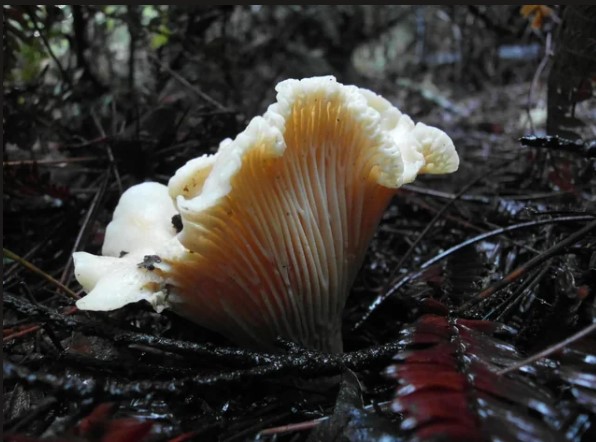
White chanterelle, Cantharellus subalbidus, is a pale white to cream-colored chanterelle with a firm body, false gills, and a fragrant or sweet smell. It is one of the best-known pale chanterelles.
Important traits include:
- White to cream overall color
- False gills running down the stem
- Firm, dense flesh
- Sweet or fragrant smell
- Yellowish or orangish bruising with age or handling
- Growth from soil, not wood
White chanterelles are a great reminder that chanterelles do not have to be golden. Color helps, but the underside, growth habit, and structure matter more.
Cinnabar Chanterelle
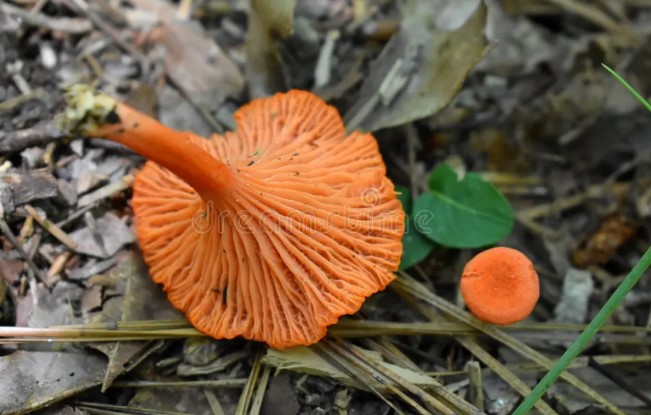
Cinnabar chanterelle, Cantharellus cinnabarinus, is a small, colorful chanterelle known for its pinkish-red, reddish-orange, or flamingo-pink color.
It is usually smaller and more delicate than many golden chanterelles, but it still has the chanterelle pattern of false gills beneath the cap.
Important traits include:
- Small size
- Pink, red, reddish-orange, or cinnabar color
- False gills that run down the stem
- Often graceful and delicate compared with golden chanterelles
- Firm but thinner flesh
- Growth from soil near trees
Cinnabar chanterelles are beautiful mushrooms, but color should not make the decision for you. Always check for false gills and confirm that the mushroom is not growing directly from wood.
Smooth Chanterelle
Smooth chanterelle, often represented by Cantharellus lateritius, looks like a chanterelle but may have a nearly smooth underside instead of obvious false gills.
This can confuse beginners who were taught that every chanterelle must have strong ridges.
Important traits include:
- Yellow to orange chanterelle-like body
- Smooth or shallowly wrinkled underside
- Single well-defined stem
- Firm flesh
- Growth from soil near trees
- No true blade-like gills
The key point is simple: smooth chanterelles may lack dramatic false gills, but they should still lack true gills.
Yellowfoot or Winter Chanterelles
Yellowfoot chanterelles are usually placed in Craterellus, not Cantharellus, but they belong in the broader chanterelle group. One commonly discussed species is Craterellus tubaeformis, often called yellowfoot or winter chanterelle.
These mushrooms are usually smaller, thinner, and more trumpet-shaped than classic golden chanterelles. Many have a brownish to yellow-brown cap, a yellowish to orange-yellow stem, and a wrinkled or veined underside that can develop more defined false gills with age.
Important traits include:
- Smaller, thinner body than golden chanterelles
- Brownish or yellow-brown cap
- Yellow to orange-yellow stem
- Hollowing or hollow stem in mature specimens
- Wrinkled, veined, or shallow-ridged underside
- Growth from soil, often in mossy forest habitat
Because yellowfoot chanterelles are more delicate and visually different from golden chanterelles, beginners should treat them as a separate learning target rather than assuming every small yellow-stemmed mushroom is edible.
Black Trumpets
Black trumpets are also placed in Craterellus, and they are closely related to chanterelles. They look very different from golden chanterelles but belong in the broader chanterelle conversation.
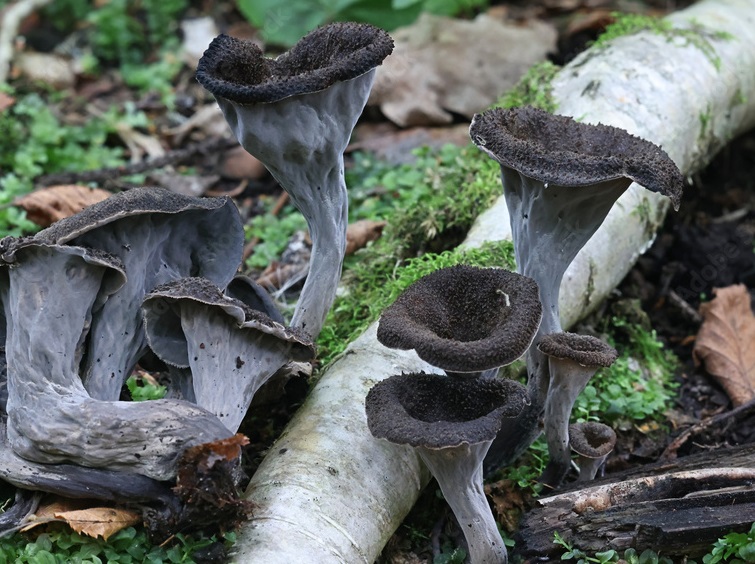
Black trumpet species, such as Craterellus fallax and related species, are thin, dark, trumpet-shaped mushrooms with a hollow center. Their color can range from gray-black to brown-black. The outer surface is usually smooth or only lightly wrinkled, not covered with true gills.
Important traits include:
- Dark gray, brown, or black color
- Trumpet or funnel shape
- Hollow center
- Thin, fragile flesh
- Smooth to shallowly wrinkled outer surface
- No true gills
- Growth from soil near trees
Black trumpets can be hard to spot because they blend into leaf litter. Once your eyes adjust, one patch may reveal many more.
Where to Find Chanterelles
Chanterelles grow from soil near trees because they are mycorrhizal. You are looking for forest floor mushrooms, not mushrooms growing directly from logs or stumps.
Good habitat clues include mature woods, mixed forests, conifer forests, hardwood forests, mossy ground, leaf litter, trail edges, moist slopes, and places where chanterelles have fruited in past seasons.
Avoid harvesting from roadsides, sprayed parks, polluted urban strips, industrial edges, or any place where soil contamination is likely.
Because chanterelles depend on living tree relationships, they are not commercially cultivated in the same way button mushrooms or oyster mushrooms are. That forest relationship is part of what makes finding them so rewarding.
When Are Chanterelles in Season?
Chanterelles usually appear during warm, wet parts of the year, often from summer into fall. Exact timing depends on species, rainfall, temperature, elevation, and habitat.
Some species fruit heavily after summer rains, while others show up later in fall or winter in mild climates. Since this is a species-specific guide rather than a regional calendar, the best practical rule is to learn the season of the species you are targeting and watch after soaking rains.
Productive chanterelle areas may fruit again in future seasons. Mark the location, tree types, weather pattern, date, and mushroom condition in your foraging journal.
Are Chanterelle Mushrooms Edible?
Yes, true chanterelle species are generally considered edible when correctly identified.
However, safe edibility depends on careful identification. The dangerous part is not the chanterelle itself. The dangerous part is mistaking a lookalike for a chanterelle.
For beginners, the safe rule is this: only eat chanterelles that show the full identification pattern. Look for false gills or wrinkles, firm flesh, soil growth near trees, no true gills, no direct growth from wood, and no fused orange clusters.
For more species-specific mushroom examples, compare this guide with our Chicken of the Woods Identification Guide and Puffball Mushroom Identification Guide.
Beginner Safety Rules
Do Not Rely on Color Alone
Not every yellow or orange mushroom is a chanterelle. Some chanterelles are not yellow at all, and some dangerous or unpleasant mushrooms can be bright orange.
Color is only one clue.
Avoid True Gills
If the underside has thin, blade-like true gills, do not call it a chanterelle.
This is one of the most important differences between chanterelles and several common lookalikes.
Avoid Mushrooms Growing Directly From Wood
True chanterelles grow from soil. Jack-o’-lanterns, Gymnopilus species, and false chanterelles may grow on wood or near buried wood.
Because buried wood can make a mushroom look like it is coming from the ground, check carefully around the base.
Watch for Fused Orange Clusters
Jack-o’-lantern mushrooms often grow in large clusters with stems attached or very close together. Chanterelles may grow scattered in the same area, but they are usually separate mushrooms or loose groups rather than dense fused clumps.
If you find a big orange cluster at the base of a tree or stump, do not treat it as a chanterelle.
Cook Chanterelles Before Eating
Chanterelles are normally cooked before eating. Cooking improves flavor, texture, and digestibility.
Try a small amount the first time you eat any wild mushroom, even if it is a well-known edible.
Skip Old, Slimy, Bug-Riddled, or Decaying Mushrooms
A correctly identified edible mushroom can still be a poor food choice when it is old or breaking down. Skip chanterelles that are waterlogged, moldy, rotten, slimy, full of insects, or falling apart.
Fresh mushrooms are better food and safer practice.
Chanterelle Lookalikes
Jack-o’-Lantern Mushrooms
Jack-o’-lantern mushrooms are the most important toxic lookalikes to learn.
These orange mushrooms belong to the genus Omphalotus. They can resemble chanterelles to beginners, but they have true gills, often grow in clusters, and grow from wood, buried wood, stumps, roots, or tree bases.
Key differences:
- Chanterelles have false gills; jack-o’-lanterns have true gills.
- Chanterelles grow from soil; jack-o’-lanterns grow from wood or buried wood.
- Chanterelles are usually separate or loosely grouped; jack-o’-lanterns often form large fused clusters.
- Chanterelles are often lighter inside; jack-o’-lanterns are usually more orange throughout.
If you are not completely sure, do not eat it.
False Chanterelle
False chanterelle, Hygrophoropsis aurantiaca, is another common lookalike. It is usually orange to brownish-orange, often with a darker center and crowded, forked true gills.
Key differences:
- Chanterelles have blunt ridges; false chanterelles have true gills.
- Chanterelles are firm; false chanterelles are softer and flimsier.
- Chanterelles often smell fruity; false chanterelles usually do not.
- False chanterelles often have a darker orange center.
False chanterelles are not a beginner harvest target. If the underside looks like thin gills instead of blunt ridges, leave it behind.
Gymnopilus Species
Some orange or rusty mushrooms in Gymnopilus can confuse beginners. These are wood-decay mushrooms with true gills and rusty-brown spores.
Avoid orange mushrooms with true gills, rusty coloration, and growth from wood. That pattern does not match a true chanterelle.
Woolly Chanterelle and Scaly Vase Mushrooms
Some mushrooms have been called “woolly chanterelles,” but they are not true chanterelles in the same sense as Cantharellus and Craterellus species. Scaly vase-like mushrooms can have ridges and a funnel shape, yet differ in cap surface, texture, structure, and edibility reputation.
For beginner purposes, do not treat every vase-shaped orange mushroom as a chanterelle. Learn golden chanterelles, white chanterelles, cinnabar chanterelles, and smooth chanterelles first.
How to Harvest Chanterelles
Harvest chanterelles when they are fresh, firm, and clean enough to use.
Choose mushrooms that are firm, fresh-smelling, not slimy, not waterlogged, not moldy, not heavily bug-damaged, and clearly identifiable.
Use a small knife to cut the mushroom near the base, or gently pinch and twist if the soil is loose. Try not to tear up the surrounding forest floor more than necessary.
Carry chanterelles in a basket or breathable bag. Avoid sealing them in plastic while hiking because they can sweat and break down quickly.
Cleaning Chanterelles
Chanterelles can hold dirt in their ridges and wrinkles, so clean them carefully.
Brush away soil, leaf bits, and needles in the field when possible. At home, trim dirty stem bases and inspect the ridges for grit or insects.
A soft brush, damp cloth, or quick rinse can help, but avoid soaking chanterelles for long periods. They already contain moisture, and extra water can make them harder to brown in the pan.
How to Cook Chanterelles
Chanterelles are best cooked simply, especially the first time.
Good cooking methods include sautéing in butter or oil, dry sautéing first to release moisture, adding them to eggs, cooking with garlic and herbs, folding them into pasta, simmering them into cream sauce, using them in risotto, adding them to soups, or serving them with fish, poultry, or wild game.
For a simple first meal, slice or tear fresh chanterelles into pieces. Cook them in a dry pan for a few minutes to release moisture, then add butter or oil once the liquid evaporates. Finish with salt, pepper, garlic, and a small amount of fresh herbs.
Keep the first meal simple so you can taste the mushroom and see how your body responds.
For more ways to use wild foods in the kitchen, explore our Wild Food Recipes with Foraged Ingredients.
What Do Chanterelles Taste Like?
Chanterelles are usually mild, earthy, fruity, and slightly peppery. Many have an apricot-like aroma, especially when fresh. Their texture is firm and satisfying rather than soft or slippery.
Golden chanterelles tend to be classic and fruity. White chanterelles are often dense and rich. Cinnabar chanterelles are smaller and more delicate. Black trumpets are deeper, darker, and more aromatic.
The exact flavor depends on species, freshness, habitat, and cooking method.
How to Store Chanterelles
Fresh chanterelles are best used soon after harvest.
For short-term storage, place them in a paper bag or breathable container in the refrigerator. Cook them within a few days if possible.
For longer storage, chanterelles can be sautéed and frozen. They can also be dehydrated, although texture and aroma vary by species. Some foragers pickle chanterelles using tested mushroom-pickling methods.
Do not store old, wet, slimy, or questionable mushrooms.
Ethical Harvesting Tips
Chanterelles are part of a living forest relationship. They are not just food.
Harvest responsibly by taking only what you will use, leaving old or damaged mushrooms behind, avoiding raking or tearing up the forest floor, and respecting productive patches.
Follow public land rules, get permission on private land, and photograph uncertain finds instead of eating them. Small young mushrooms can also be left to mature when they are too tiny to use.
Because chanterelles may return to the same areas year after year, mark good habitat in your foraging journal. Note tree types, weather, date, elevation, and mushroom condition.
Field Checklist: Chanterelle Mushrooms
Before eating a chanterelle, confirm every point:
- It is growing from soil, not directly from wood.
- It is near trees or forest habitat.
- It has blunt false gills, folds, wrinkles, veins, or a smooth underside.
- It does not have thin, blade-like true gills.
- The ridges or wrinkles run down the stem when present.
- The mushroom feels firm, not flimsy.
- It is not growing in a large fused orange cluster.
- It is not orange all the way through like a jack-o’-lantern.
- It is fresh, not rotten, slimy, or waterlogged.
- It matches a known chanterelle species or species group.
- You plan to cook it before eating.
- You will try a small amount the first time.
If any point fails, do not eat it.
Common Beginner Questions
Are Chanterelle Mushrooms Edible?
Yes, true chanterelle species are generally considered edible when correctly identified. The main risk is confusing them with lookalikes such as jack-o’-lanterns or false chanterelles.
How Do You Identify Chanterelles?
Look for mushrooms growing from soil near trees, with firm flesh and blunt false gills, ridges, wrinkles, or veins running down the stem. Avoid mushrooms with true blade-like gills or growth directly from wood.
Do Chanterelles Have Gills?
Chanterelles do not have true blade-like gills. Most have false gills, which are blunt ridges, folds, or wrinkles. Some species have a nearly smooth or shallowly wrinkled underside.
What Is the Difference Between Chanterelles and Jack-o’-Lanterns?
Chanterelles have false gills and grow from soil near trees. Jack-o’-lanterns have true gills, often grow in clusters, and grow from wood, buried wood, roots, stumps, or tree bases.
Are White Chanterelles Edible?
White chanterelles, such as Cantharellus subalbidus, are considered edible when correctly identified. They are pale white to cream, have false gills, firm flesh, and often bruise yellowish to orangish.
Are Cinnabar Chanterelles Real Chanterelles?
Yes. Cinnabar chanterelles, including Cantharellus cinnabarinus, are true chanterelles. They are usually smaller and pinkish-red, reddish-orange, or flamingo-pink, with false gills beneath the cap.
Are Yellowfoot Chanterelles the Same as Golden Chanterelles?
No. Yellowfoot chanterelles are chanterelle relatives in Craterellus, while golden chanterelles are usually placed in Cantharellus. Yellowfoot species are often smaller, thinner, more trumpet-shaped, and may have a hollow yellowish stem.
Are Black Trumpets Chanterelles?
Black trumpets are not golden chanterelles, but they are close relatives in the broader chanterelle group. They belong to Craterellus and have a dark trumpet shape, hollow center, and no true gills.
Can You Eat Chanterelles Raw?
Chanterelles are normally cooked. Cooking improves flavor, texture, and digestibility. As with all wild mushrooms, try a small cooked portion the first time.
Final Thoughts
Chanterelles are one of the great wild mushroom rewards.
They are beautiful, flavorful, and deeply satisfying to find. Golden chanterelles, white chanterelles, cinnabar chanterelles, smooth chanterelles, yellowfoot chanterelles, and black trumpets all show how diverse this group can be.
Still, the basics do not change.
Look for soil growth near trees. Learn false gills. Avoid true gills. Stay away from orange mushrooms growing from wood. Watch for fused clusters. Cook your harvest well, and try a small amount the first time.
The more you learn chanterelles as a group, the more confident you become with each species variation.
Use this chanterelle mushroom identification guide as a starting point, then keep learning one species at a time.
Learn slowly. Harvest carefully. Respect the forest.
Get outside. Do something wild.
References and Further Reading
- University of Florida IFAS: The Common Chanterelles of Florida
- MushroomExpert: Chanterelles and Trumpets
- MushroomExpert: Cantharellus “cibarius”
- MushroomExpert: Cantharellus subalbidus
- MushroomExpert: Cantharellus cinnabarinus
- MushroomExpert: Cantharellus lateritius
- MushroomExpert: Craterellus tubaeformis
- MushroomExpert: Craterellus fallax
- MushroomExpert: Hygrophoropsis aurantiaca
- Ohio State University Extension: Jack-o’-Lantern Mushrooms
- North Carolina Extension Gardener Plant Toolbox: Omphalotus illudens


