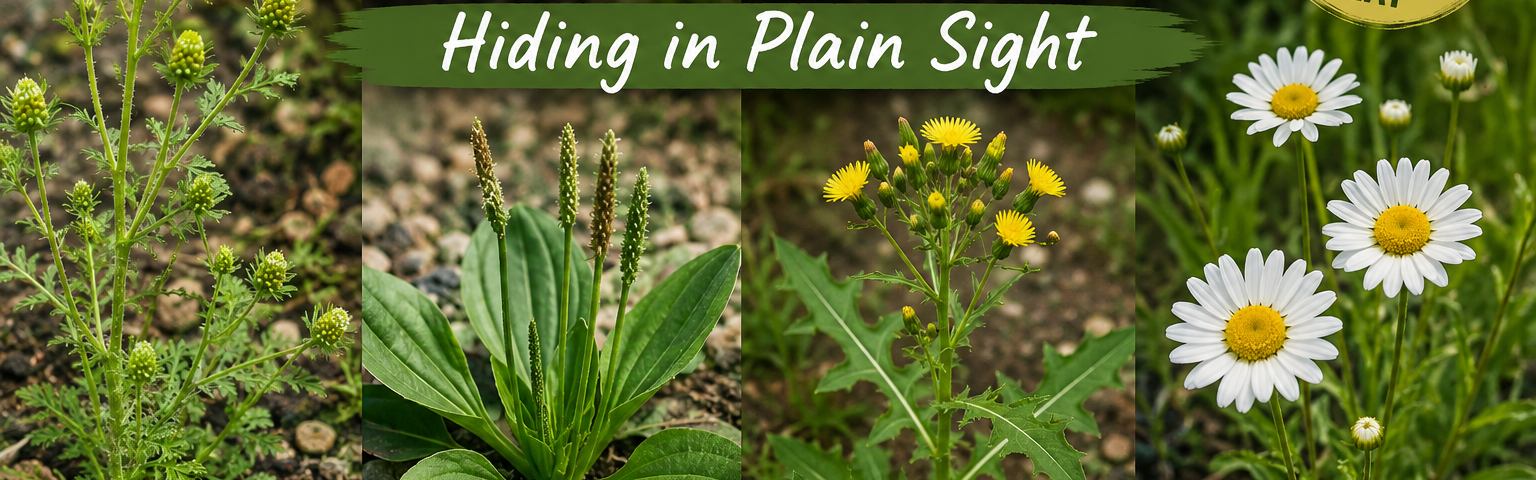
Some of the best beginner foraging lessons happen when you stop walking.
That was the whole idea behind the “four edible plants in four feet” video. In one tiny patch of ground, there were four useful wild plants growing close together. Most people would have stepped right over them.
However, once you know what to look for, the ground starts to change.
A patch of weeds becomes a wild tea plant. A lawn plant becomes a useful green. A familiar flower becomes a reminder to slow down and look closer.
That is why learning a few easy edible wild plants is one of the best ways to start foraging. You do not need a secret location. You do not need deep wilderness. In many cases, you just need clean ground, careful identification, and a little curiosity.
In this guide, we will look at four common wild plants from the video:
- Pineapple weed
- Plantain
- Sow thistle
- Oxeye daisy
We will cover how to identify them, which parts are edible, how people use them today, and what traditional uses are associated with them. Then, at the end, you will find two simple recipes that use these plants in realistic ways.
A Quick Safety Note Before You Start
Never eat a wild plant unless you are completely sure of the identification.
Use more than one field mark. Compare several trusted sources. Also, avoid harvesting from roadsides, sprayed lawns, industrial areas, pet areas, polluted soil, or any place that may have been treated with herbicides.
If you are trying a plant for the first time, start small. Some people are sensitive to plants in the daisy family, including pineapple weed, sow thistle, and oxeye daisy. Because of that, use extra caution if you react to ragweed, chamomile, daisies, or related plants.
This guide is for education. It is not medical advice.
Why These Easy Edible Wild Plants Matter
Beginner foragers often imagine wild food as something hidden deep in the forest.
Sometimes it is.
However, many useful wild plants grow in ordinary places. You may find them near trails, lawns, gardens, campgrounds, gravel roads, field edges, and disturbed soil.
That makes these plants great teachers.
They are common, useful, and they are often easy to revisit. Most importantly, they help you build confidence.
Instead of trying to learn everything at once, start with a few plants that have clear identification traits. Then, watch them through the season. Notice where they grow, when they flower, and how the young leaves change as they mature.
That is how foraging starts to make sense.
1. Pineapple Weed
Pineapple weed is one of the friendliest beginner plants because it gives you a strong clue when you crush it.
It smells sweet, fruity, and a little like pineapple.
At first glance, pineapple weed may not look like much. It is a small, low-growing plant with tiny yellow-green flower heads and finely divided leaves. However, once you smell it, you usually remember it.
For a deeper guide, read: Pineapple Weed: Identification, Edibility, Uses, Harvesting, and Complete Field Guide.
Where Pineapple Weed Grows
Pineapple weed often grows in sunny, compacted, disturbed soil.
Look for it in places like:
- Gravel driveways
- Trail edges
- Parking lot margins
- Campsites
- Lawns
- Dirt paths
- Logging roads
- Bare or compacted ground
It handles foot traffic and poor soil well. Because of that, it often appears in places where more delicate plants struggle.
Key ID Traits for Pineapple Weed
Look for this combination of traits:
- Small yellow-green cone-shaped flower heads
- No white petals
- Finely divided, fern-like leaves
- Low, branching growth
- Strong pineapple or chamomile-like scent when crushed
- Sunny, compacted, disturbed habitat
The lack of white petals is important. Pineapple weed is related to chamomile, but it does not have the classic white daisy-like petals around the flower head.
Edible Parts of Pineapple Weed
The flower heads are the best part.
You can use them fresh or dried. They make a mild, fruity tea and can also be used in simple syrups, infused honey, desserts, and camp drinks.
The leaves are edible too, especially when young. However, they can become bitter as the plant matures. Because of that, most foragers focus on the flower heads first.
Modern Uses for Pineapple Weed
Today, pineapple weed is often used as a wild tea plant.
You can use it for:
- Hot tea
- Iced tea
- Infused honey
- Simple syrup
- Fruit salad
- Camp drinks
- Light dessert flavoring
The flavor is delicate, so do not boil it hard for a long time. Instead, steep it gently.
Traditional Uses for Pineapple Weed
Pineapple weed has a long history as an aromatic tea plant. It has also been used in traditional herbal preparations, often in ways similar to chamomile.
Still, this article focuses on food and identification. Traditional use does not replace modern medical care.
2. Plantain
Plantain is one of the most useful easy edible wild plants a beginner can learn.
This is not the banana-like tropical fruit. This is the common Plantago plant found in lawns, trails, fields, and compacted soil.
Broadleaf plantain and narrowleaf plantain are both familiar to many foragers. They look different at first, but they share important traits.
For a complete guide, read: Plantain Plantago: Identification, Edibility, Uses, Harvesting, and Complete Field Guide.
Where Plantain Grows
Plantain often grows close to people.
You may find it in:
- Lawns
- Parks
- Trails
- Garden edges
- Sidewalk cracks
- Campgrounds
- Field paths
- Compacted soil
It tolerates mowing and foot traffic well. As a result, it often shows up in places you already walk.
Key ID Traits for Plantain
Look for these traits:
- Leaves growing in a low basal rosette
- Strong veins running from the base toward the tip
- Leafless flower or seed stalks rising from the center
- Tough, flexible leaves
- Small, plain flowers along the stalk
- Fibrous strings when older leaves are pulled apart
The veins are one of the best clues. In plantain, the veins start near the base and run toward the tip. When you tear a leaf, those veins may pull into stringy fibers.
Edible Parts of Plantain
Young leaves are the best edible part.
They can be:
- Eaten raw when small and tender
- Chopped into salads
- Added to soups
- Cooked like greens
- Stir-fried
- Added to eggs, rice, potatoes, or pasta
Older leaves can be tough. However, you can still use them if you chop them fine or cook them well.
The seeds of some Plantago species are also used, but beginner foragers usually focus on the leaves first.
Modern Uses for Plantain
Plantain is a dependable wild green.
It is mild, useful, and easy to mix into everyday meals. It will not usually be the star of the dish. However, it adds green flavor, texture, and nutrition.
Try plantain in:
- Egg scrambles
- Potato skillets
- Trail soups
- Rice bowls
- Stir-fries
- Green sauces
- Mixed wild green sautés
Many people also know plantain as a traditional field poultice plant for minor skin irritation, bites, or scrapes. That use is common in folk herbal traditions, but it should not be treated as medical advice.
Traditional Uses for Plantain
Plantain has a long history as both a food plant and a traditional remedy.
Historically, people used the leaves for minor wounds, bites, stings, sore feet, and skin irritation. It was valued partly because it was so common.
That is an important lesson. Useful plants do not have to be rare. Sometimes, the most helpful plants are the ones growing right beside the trail.
3. Sow Thistle
Sow thistle is easy to overlook.
It has yellow flowers, soft green leaves, and a weedy look. Many people confuse it with dandelion or simply walk past it.
However, once you learn the leaf shape, milky sap, and branching flower stems, sow thistle becomes much easier to recognize.
Where Sow Thistle Grows
Sow thistle often grows in rich, disturbed soil.
Look for it in:
- Gardens
- Lawns
- Farm edges
- Compost-rich soil
- Vacant lots
- Trail edges
- Field margins
- Disturbed open ground
Several Sonchus species are called sow thistle. Common sow thistle and prickly sow thistle are two well-known examples.
Key ID Traits for Sow Thistle
Look for this combination:
- Upright growth
- Soft, lobed leaves
- Leaves that clasp the stem
- Milky white sap when broken
- Yellow dandelion-like flower heads
- Multiple flowers on branching stems
- Hollow or soft stems
One helpful difference from dandelion is the flower stalk. Dandelions usually send up one flower per hollow stalk. Sow thistle commonly branches and produces several yellow flower heads.
Sow Thistle Lookalike Note
Do not confuse sow thistle with other yellow-flowered plants in the daisy family.
Prickly lettuce is one common lookalike. It often has a noticeable row of prickles along the underside of the leaf midrib. Sow thistle does not have that same strong row of midrib prickles.
As always, use several ID traits before harvesting.
Edible Parts of Sow Thistle
Young sow thistle leaves are edible and often surprisingly good.
You can use them:
- Raw when young and mild
- Cooked like spinach
- Sautéed with butter or oil
- Added to soups
- Mixed into eggs
- Tossed into rice, noodles, or potatoes
- Blended with other wild greens
Older leaves can become bitter. Cooking helps mellow that flavor.
Tender young stems may also be peeled and cooked. Still, most beginner foragers should start with the young leaves.
Modern Uses for Sow Thistle
Sow thistle works well as a practical wild green.
Use it in the same way you might use young dandelion greens, bitter greens, or mild chicory-type greens.
It pairs well with:
- Eggs
- Potatoes
- Rice
- Lentils
- Beans
- Pasta
- Garlic
- Bacon
- Olive oil
- Lemon
- Vinegar
The slight bitterness can be a good thing. Balance it with fat, salt, acid, and starch.
Traditional Uses for Sow Thistle
Sow thistle and related edible greens have been used as food in different parts of the world.
In New Zealand, edible greens known as pūhā or rauriki, including smooth and prickly-leaved forms, are traditional Māori foods and are still eaten today. This does not mean every sow thistle patch is exactly the same plant or should be used without careful ID. However, it does show that these greens have a real food history.
Sow thistle has also been used as animal forage, which helps explain the common name.
For more detail on key traits, lookalikes, harvesting, and cooking, read our full sow thistle identification guide.
4. Oxeye Daisy
Oxeye daisy is the familiar white daisy with a yellow center.
Many people recognize the flower but never think of it as a wild edible plant. However, it does have some edible uses when harvested carefully and used in small amounts.
It also needs an important warning.
Oxeye daisy is considered invasive or noxious in many areas, including Washington, where it is listed as a Class C noxious weed. Do not plant it, spread it, sell it, transport seed heads, or encourage it to move into new areas.
If you harvest it where legal and appropriate, think of it as “use what you remove, but do not spread it.”
Where Oxeye Daisy Grows
Oxeye daisy often grows in sunny, open places.
Look for it in:
- Meadows
- Pastures
- Road edges
- Field margins
- Old lawns
- Trail edges
- Disturbed sunny soil
It can spread by seed and rhizomes. In some places, it forms dense patches and pushes into pasture or native plant communities.
Key ID Traits for Oxeye Daisy
Look for:
- White daisy-like flowers
- Yellow centers
- Single flower heads at the ends of stems
- Upright stems
- Basal leaves near the ground
- Toothed or lobed leaves
- Leaves that get smaller higher on the stem
- A somewhat unpleasant smell when crushed
Do not assume every white daisy is oxeye daisy. Many plants are casually called daisies, and several ornamentals can look similar.
Edible Parts of Oxeye Daisy
Oxeye daisy should be used in small amounts.
The young leaves can be eaten raw or cooked, although they may taste strong. Petals can be used as a garnish. Unopened buds are sometimes pickled like capers.
Avoid eating the yellow centers in quantity, because some sources note that they may cause digestive upset. Also, people sensitive to daisy-family plants should use caution.
Modern Uses for Oxeye Daisy
Use oxeye daisy more like an herb than a main vegetable.
Try small amounts in:
- Salads
- Egg dishes
- Potato dishes
- Herb sauces
- Wild green sautés
- Garnishes
- Pickled bud recipes
The unopened buds are especially interesting. When pickled, they can work like a wild caper substitute.
Traditional Uses for Oxeye Daisy
Oxeye daisy has a history of folk use in herbal traditions. Older sources sometimes mention it in poultices and other preparations.
However, this article is focused on safe identification and small culinary uses. It is not a recommendation to use oxeye daisy as medicine.
For more detail on ID traits, edible parts, invasive plant concerns, and responsible harvesting, read our full oxeye daisy identification guide.
What These Four Plants Teach Us
The real lesson is not just that these four plants are edible.
The bigger lesson is that useful plants are often hiding in plain sight.
In one small area, you may find:
- A fragrant wild tea plant
- A dependable edible green
- A tender cooked vegetable
- A daisy-family plant with edible leaves, petals, and pickled buds
That is why foraging starts with observation.
Instead of asking, “What can I harvest today?” try asking better questions.
What is growing here? Is the soil compacted? Is the area sunny? Has this place been sprayed? Are these same plants growing nearby? Do I know enough traits to identify them with confidence?
Those questions slow you down. They also make you a better forager.
How to Harvest a Small Mixed Patch
When several edible wild plants grow close together, harvest lightly.
A good beginner approach is simple:
- Take only what you can positively identify.
- Harvest from clean areas only.
- Avoid roadsides and sprayed lawns.
- Keep each plant separate until you are confident.
- Use scissors or pinch carefully.
- Leave plenty behind.
- Wash everything well.
- Do not spread invasive plants.
- Try new wild foods in small amounts.
For a “four in four feet” patch, you may only need a small handful total. That is enough for a trail meal, tea, garnish, or a small wild green addition to dinner.
Easy Ways to Use These Wild Plants
You do not need complicated recipes to enjoy easy edible wild plants.
Start simple.
Use pineapple weed flower heads for tea. Add young plantain leaves to soup or eggs. Sauté young sow thistle with garlic and oil. Sprinkle a few oxeye daisy petals over a finished dish. Pickle unopened oxeye daisy buds if you have enough from a place where harvesting is appropriate.
Small uses are often the best uses.
They let you learn the flavor without depending on wild plants for the whole meal.
Recipe 1: Four-in-Four Trail Couscous Bowl
This is a simple trail meal that uses all four plants in a realistic way. The wild greens add flavor and freshness, while the couscous and protein provide the calories.
Ingredients
- 1 packet plain couscous
- 1 tablespoon olive oil
- 1 tuna, salmon, chicken, or chickpea packet
- 1 small handful young plantain leaves, chopped fine
- 1 small handful young sow thistle leaves, chopped
- A few young oxeye daisy leaves, minced
- A few oxeye daisy petals or unopened buds, if available
- 1 tablespoon pineapple weed flower heads
- Salt and pepper
- Lemon packet, vinegar packet, or a small squeeze of fresh lemon
- Optional: garlic powder, chili flakes, parmesan packet, or dried mushrooms
How to Make It
- Bring water to a boil.
- Add the pineapple weed flower heads to the hot water.
- Let them steep for 3 to 5 minutes.
- Use that pineapple weed tea to hydrate the couscous.
- Cover the couscous and let it soften.
- Stir in olive oil, protein, plantain, sow thistle, and minced oxeye daisy leaves.
- Add salt, pepper, and lemon or vinegar.
- Finish with oxeye daisy petals or finely chopped buds.
Trail Notes
The pineapple weed adds a light fruity flavor. The plantain gives mild green body. The sow thistle adds a pleasant bitter-green note. The oxeye daisy works best as a small herbal accent.
This is a good meal for a day hike, fishing stop, e-bike ride, or quick overnight camp.
Recipe 2: Wild Green Potato and Egg Skillet
This at-home meal blends wild greens with both starch and protein. It is a great way to use a small harvest without needing a large amount of wild food.
Ingredients
- 2 medium potatoes, diced
- 3 to 4 eggs
- 1 tablespoon butter or olive oil
- 1 small onion or shallot, diced
- 1 garlic clove, minced
- 1 handful young sow thistle leaves, chopped
- 1 handful young plantain leaves, chopped fine
- 1 to 2 tablespoons young oxeye daisy leaves, minced
- A few oxeye daisy petals or pickled buds for garnish
- 1 tablespoon pineapple weed flower heads
- Salt and pepper
- Optional: bacon, sausage, smoked salmon, mushrooms, beans, or cheese
How to Make It
- Boil or pan-fry the diced potatoes until tender.
- Heat butter or olive oil in a skillet.
- Add onion and cook until soft.
- Add garlic and cook briefly.
- Stir in the potatoes.
- Add plantain and sow thistle.
- Cook until the greens wilt and soften.
- Add the minced oxeye daisy leaves near the end.
- Beat the eggs and pour them into the skillet.
- Cook gently until the eggs are set.
- Sprinkle pineapple weed flowers over the top just before serving.
- Garnish with oxeye daisy petals or pickled buds.
Serving Ideas
This works as breakfast, lunch, or a simple dinner.
For more protein, add bacon, sausage, smoked fish, leftover chicken, beans, or cheese. For more starch, serve it with toast, rice, or roasted potatoes.
Final Thoughts
Easy edible wild plants are often closer than we think.
Pineapple weed, plantain, sow thistle, and oxeye daisy are not rare treasures hidden deep in the wilderness. They are common plants that teach us how to pay attention.
That is the heart of beginner foraging.
Slow down. Look closer. Learn one plant at a time. Then, keep watching as the season changes.
The more you notice, the more the outdoors opens up.
You may not need to walk miles to find your first wild food lesson. You may be standing right on top of it.
Get Outside. Do Something Wild.
Additional Resources
- UC IPM: Pineapple Weed Identification
- Cornell Weed Science: Plantains
- Go Botany: Common Sow-thistle
- Washington State Noxious Weed Control Board: Oxeye Daisy
Foraging Disclaimer
This article is for educational purposes only. Always identify wild plants with certainty before eating them. Use multiple trusted sources, regional field guides, and expert guidance when needed. Avoid contaminated areas, obey local laws, harvest responsibly, and try new wild foods in small amounts. Use extra caution if you have allergies, medical conditions, are pregnant, or take medications.


