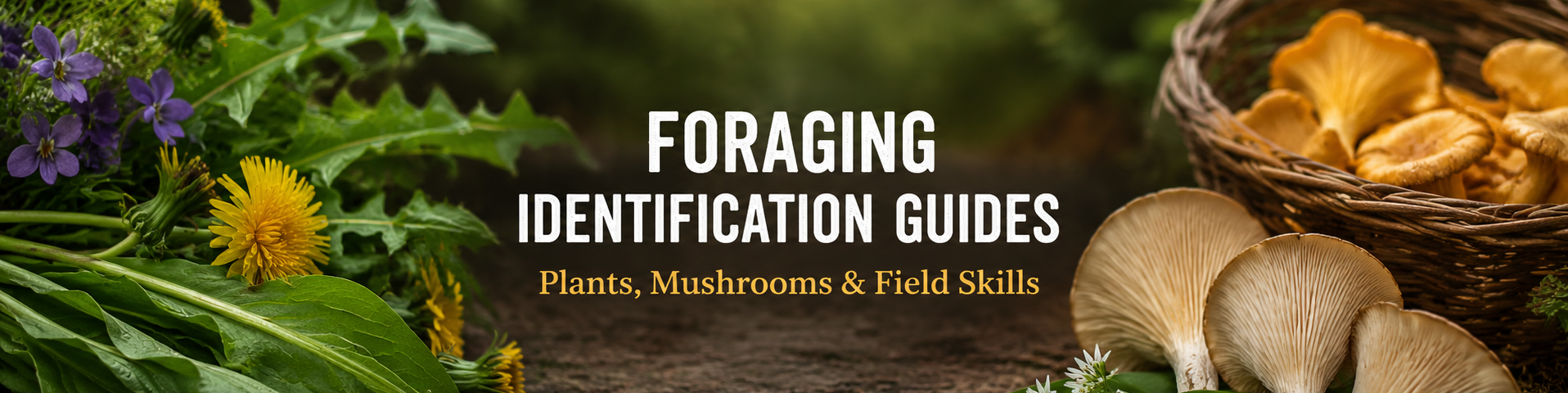
Wild edible plant guides, mushroom identification, harvesting tips, edibility notes, uses, lookalikes, and field skills for beginner foragers.
Foraging starts with learning to slow down, look closer, and identify one thing well before moving on to the next. The Hunter Gatherer Society Foraging Identification Guides are built to help beginner and everyday foragers recognize wild edible plants, understand mushroom safety, harvest with care, and build confidence outdoors one guide at a time.
This page is the main field guide library for our wild food identification content. From common edible plants hiding in plain sight to beginner-friendly mushroom safety lessons, each guide is designed to help you learn practical identification traits, edible uses, harvest timing, lookalikes, preparation ideas, and important safety considerations before you gather anything for the table.
Use this page as your starting point, then choose the guide path that matches what you want to learn next.
Browse Wild Edible Plant Identification Guides
Wild edible plants are often the best place for new foragers to begin. Many useful plants grow in yards, trails, campgrounds, fields, forest edges, gravel paths, and other familiar places. Learning common plants first helps you build observation skills before moving into more difficult wild foods.
Our wild edible plant guides focus on practical field identification, edible parts, harvesting tips, common uses, preparation ideas, and beginner safety notes. These guides are written for real outdoor conditions, not just textbook examples, so you can learn what each plant looks like where people actually find it.
Start here if you want to learn about dandelion, plantain, pineapple weed, wood sorrel, sow thistle, oxeye daisy, and other common wild edible plants.
Browse Wild Mushroom Identification Guides
Wild mushrooms require more caution than most beginner plant guides, but they can be one of the most rewarding parts of foraging when approached carefully. Mushroom identification should always be slow, structured, and safety-first.
Our mushroom guides focus on visible identification traits, habitat, season, lookalikes, beginner mistakes, harvesting notes, cooking considerations, and toxic mushroom awareness. Some guides cover edible mushrooms, while others focus on dangerous species beginners need to recognize before collecting wild fungi.
Start here if you want to learn about oyster mushrooms, chanterelles, lobster mushrooms, morels, puffballs, Amanita safety, toxic lookalikes, and beginner mushroom foraging skills.
What Each Foraging Guide Covers
Each identification guide is built to answer the questions beginner foragers usually ask in the field:
- What is this plant or mushroom?
- Where does it grow?
- When is it in season?
- What are the key identification traits?
- Is it edible?
- What parts are used?
- How should it be harvested?
- Are there dangerous lookalikes?
- How can it be prepared or used?
- What safety notes should beginners know?
The goal is not to rush you into harvesting everything you see. The goal is to help you build a repeatable field process so you can identify wild foods more carefully, make better decisions, and enjoy the outdoors with more confidence.
Start With Easy Wild Foods First
The best beginner foraging path is simple: learn a few common species very well. Instead of trying to memorize hundreds of plants and mushrooms, focus on easy-to-find wild foods with clear identification traits and practical uses.
Good beginner wild edible plants may include dandelion, plantain, pineapple weed, wood sorrel, and other common species found in everyday places. Beginner mushroom learning should start with safety, structure, and awareness before harvesting. For mushrooms, knowing what not to eat is just as important as knowing what is edible.
If you are new to foraging, start with plants first, study mushroom safety separately, and never eat anything unless you are completely confident in the identification.
Foraging Safety Comes First
Foraging is rewarding, but it requires responsibility. Always confirm identification with more than one reliable source, learn local rules before harvesting, avoid polluted areas, and never collect from places treated with herbicides, pesticides, road runoff, or other contaminants.
Eat new wild foods in small amounts the first time, even when they are generally considered edible. Individual reactions, allergies, preparation methods, and plant maturity can all matter. With mushrooms, extra caution is essential because some toxic species can cause serious illness or death.
The Hunter Gatherer Society encourages careful learning, ethical harvesting, and respect for the land. Take only what you need, leave plenty behind, and remember that wild food is part of a larger living system.
Build Your Field Skills
Good foraging is not just about naming plants and mushrooms. It is about noticing patterns. Pay attention to habitat, season, soil, moisture, sunlight, elevation, nearby trees, and how a species changes through the year.
Bring a notebook, take clear photos, document where and when you find things, and revisit the same places through different seasons. Over time, this turns random outdoor walks into a personal field education.
Foraging is a skill built through repetition. Learn one species, return to it often, and let each guide help you build the next layer of confidence.
Continue Learning With The Hunter Gatherer Society
The Hunter Gatherer Society is about reconnecting with nature through real outdoor experience. Whether you are identifying a common edible weed in your yard, studying mushrooms on a forest trail, cooking with wild ingredients, or planning your next seasonal foraging walk, these guides are here to help you slow down, look closer, and build a more grounded relationship with the natural world.
Start with one guide. Learn one species well. Then get outside and do something wild.
New foraging guides are added regularly. Check back often, or follow The Hunter Gatherer Society on Facebook for new plant, mushroom, and field skill guide announcements.
Get outside and do something wild!