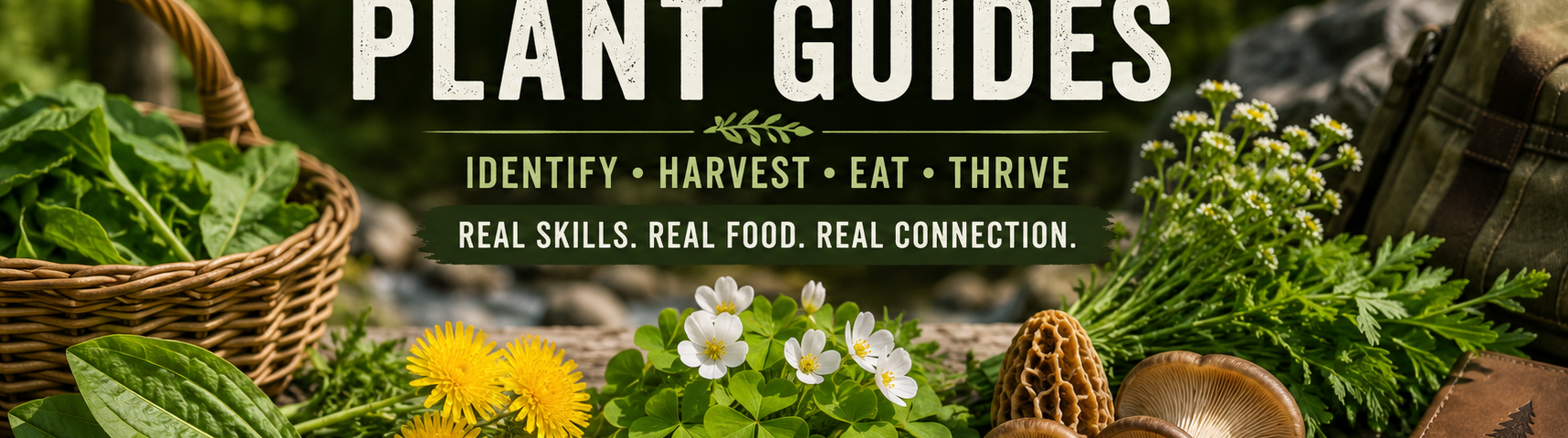
Learn how to identify common wild edible plants, understand their edible uses, harvest responsibly, and build safer field skills one plant at a time.
Wild edible plants are one of the best places to begin foraging. Many useful species grow in yards, trails, fields, forest edges, gravel paths, and other everyday places, which makes them easier to revisit, compare, and study through the seasons.
The Hunter Gatherer Society Wild Edible Plant Identification Guides are built for beginner and everyday foragers who want clear, practical field information. Each guide focuses on real-world identification traits, edible parts, harvesting tips, common uses, lookalikes, safety notes, and seasonal field observations.
This page is your plant guide library. Browse the guides below, choose one plant to learn well, then return to it often until the identification feels natural.
Start With Common Wild Edible Plants
The safest way to build foraging confidence is to start with common plants that have clear identification traits. Instead of trying to learn every edible plant at once, focus on a small group of familiar species and study how they change through the year.
Good beginner plants often include dandelion, plantain, pineapple weed, wood sorrel, sow thistle, oxeye daisy, and other widespread species. These plants are useful because they are common, approachable, and often easy to observe in multiple stages of growth.
Learning common wild edible plants first helps you build the field habits that matter most: slowing down, checking details, comparing lookalikes, understanding habitat, and confirming identification before harvesting.
What Each Plant Guide Covers
Each wild edible plant guide is designed to answer the questions foragers usually ask in the field:
What does this plant look like?
Where does it grow?
When is it in season?
Which parts are edible?
How is it harvested?
What are the common uses?
Are there lookalikes?
What safety notes should beginners know?
How can this plant be prepared or preserved?
The goal is not to rush into eating every plant you find. The goal is to help you build a repeatable identification process so each harvest is more informed, careful, and connected to the place where the plant grows.
Plant Safety and Responsible Harvesting
Wild edible plants should always be identified with care. Never eat a plant unless you are confident in the identification, and always compare more than one trait before harvesting. Leaf shape, flower color, stem structure, growth pattern, habitat, scent, and season can all matter.
Avoid harvesting from busy roadsides, sprayed lawns, industrial areas, contaminated water, pet waste areas, or places treated with herbicides or pesticides. Even a correctly identified edible plant can be unsafe if it grows in a polluted location.
When trying a new wild food, start with a small amount. Some edible plants can still cause individual reactions, especially when eaten raw, eaten in large quantities, or harvested at the wrong stage.
Harvest with respect by taking only what you need, leaving plenty behind, and learning local rules before gathering on public or private land.
Browse the Wild Edible Plant Guides
Plantain (Plantago): Identification, Edibility, Uses, Harvesting, and Complete Field Guide
Plantain is a common yard, trail, and disturbed-ground plant that many people walk over without noticing. This guide explains how to identify Plantago leaves, veins, flower stalks, seeds, edible uses, harvesting methods, and common beginner mistakes.
Dandelion Identification Guide: Edibility, Uses, Harvesting, and Complete Field Guide
Dandelion is one of the most recognizable wild edible plants, but there is still a lot to learn beyond the yellow flower. This guide covers leaf shape, flower stems, roots, sap, edible parts, harvesting tips, bitterness, preparation ideas, and beginner safety notes.
Wood Sorrel Identification Guide: Edibility, Uses, Harvesting, and Complete Field Guide
Wood sorrel is a small wild edible known for its bright lemon-lime flavor and heart-shaped leaflets. This guide explains how to recognize Oxalis, where it grows, how to use it responsibly, what to know about oxalic acid, and how to enjoy it as a trail snack or flavor accent.
Lamb’s Quarters Identification Guide: Edibility, Uses, Harvesting, and Complete Field Guide
Lamb’s quarters is a common wild edible known for its tender leaves, mild spinach-like flavor, and distinctive powdery coating. This guide explains how to recognize Chenopodium album, where it grows, how to harvest it responsibly, what lookalikes to avoid, and how to prepare it safely in the kitchen.
Pineapple Weed: Identification, Edibility, Uses, Harvesting, and Complete Field Guide
Pineapple weed is a small aromatic wild edible often found in gravel, compacted soil, campsites, and footpaths. This guide covers its pineapple-like scent, cone-shaped flower heads, lack of petals, edible uses, harvesting tips, and safety considerations.
Purslane Identification Guide: Edibility, Uses, Harvesting, and Complete Field Guide
Purslane is a common wild edible known for its fleshy leaves, reddish stems, and pleasantly tart flavor. This guide explains how to identify common purslane, distinguish it from spurge and other lookalikes, where and when to harvest it safely, and how to enjoy the edible leaves and tender stems raw or cooked.
Wild Onion Identification Guide: Edibility, Uses, Harvesting, and Complete Field Guide
Wild onions are flavorful wild edibles that can be easy to overlook among grasses and other narrow-leaved plants. This guide explains how to identify wild Allium species, recognize the telltale onion or garlic scent, distinguish them from dangerous lookalikes such as death camas, harvest them responsibly, and use the edible leaves, flowers, and bulbs in the kitchen.
New Wild Edible Plant Guides Added Regularly
This wild edible plant guide library continues to grow with new identification guides, harvesting notes, safety tips, and field observations.
Check back often for new plant guides, or follow The Hunter Gatherer Society on Facebook for new guide announcements, seasonal foraging updates, and fresh outdoor content.
Ready to keep building your foraging skills? Visit our main Foraging Identification Guides page to explore plant guides, mushroom safety, harvesting basics, and field skills from The Hunter Gatherer Society.
Get outside. Do something wild.