The Hunter Gatherer Society
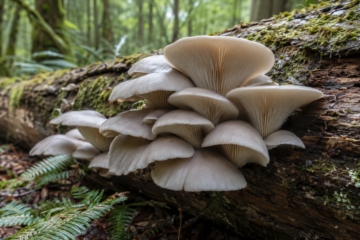
Oyster mushrooms growing in overlapping clusters on a mossy fallen log in a Pacific Northwest forest

Oyster Mushroom Identification Guide: Edibility, Lookalikes, Harvesting, and Complete Field Guide

Introduction Oyster mushrooms are some of the most useful wild edible mushrooms to learn because they are common, flavorful, and easier to recognize than many gilled mushrooms once you understand the full identification pattern. They grow from wood, often in overlapping shelf-like clusters, with pale gills that run down a short side stem or attach near the base of the cap. This oyster mushroom identification guide covers how to identify oyster mushrooms, where they grow, when to look for them, how to separate them from important lookalikes, and how to harvest and cook them safely. Oyster mushrooms usually refer to mushrooms in the genus Pleurotus. The classic oyster mushroom is Pleurotus ostreatus, but several related oyster species occur across North[…]

Read more
Lobster mushrooms partially buried in forest duff with bright orange tops showing

Lobster Mushroom Identification Guide: How to Identify, Harvest, and Cook Lobster Mushrooms

Lobster mushrooms are one of the easiest wild edible mushrooms to recognize once you know what you are looking at. Their bright orange-red color, firm white interior, and strange twisted shape make them stand out on the forest floor. They are also one of the more unusual wild edibles because the “lobster mushroom” is not a normal mushroom species by itself. It is a parasitic fungus, Hypomyces lactifluorum, growing over and transforming another mushroom, usually a Russula or Lactarius species. When fresh, lobster mushrooms are dense, meaty, and mildly seafood-like. They are excellent in soups, chowders, sautés, pasta, tacos, and anywhere you want a firm mushroom that holds its shape. Quick Answer: Are Lobster Mushrooms Edible? Yes. Lobster mushrooms are[…]

Read more
Beginner mushroom forager identifying dangerous Amanita mushroom warning signs in an oak forest

California Mushroom Poisonings: Beginner Safety Guide to Dangerous Amanita Mushrooms

Recent California mushroom poisonings linked to deadly Amanita mushrooms have renewed conversations about mushroom foraging safety across the West Coast. For beginner foragers, these incidents are not a reason to fear wild mushrooms. They are a reminder that safe mushroom identification starts with learning a few important warning signs first. Fortunately, beginner mushroom safety does not require memorizing hundreds of species. Learning how to recognize dangerous mushrooms like death caps and destroying angels can dramatically reduce risk while building long-term foraging confidence. Mushroom foraging can still be one of the most rewarding ways to connect with nature. The key is learning carefully, slowing down, and building knowledge one species at a time. What Happened in the Recent California Mushroom Poisonings?[…]

Read more
Person calmly harvesting wild greens with small basket showing ethical foraging

How to Become a Confident, Ethical, and Structured Forager

Bringing the Entire System Together Over the past several weeks, you have done more than gather information. You have built a framework. At the beginning, safety anchored everything. Then identification skills strengthened your confidence. As the weeks progressed, seasonal awareness added timing. Mapping introduced strategy. Finally, preparation gave you direction. If you need to revisit the seasonal planning structure, review Week 11 here:How to Prepare for a Full Foraging Season With a Simple Action Planhttps://thehgsociety.com/prepare-for-foraging-season Now it is time to step back and look at what you have actually created. Because becoming a confident forager is not about memorizing more species. Instead, it is about integrating safety, ethics, observation, documentation, and restraint into one repeatable personal system. Confidence develops from[…]

Read more
Organized foraging gear and notebook outdoors preparing for full foraging season

How to Prepare for a Full Foraging Season With a Simple Action Plan

Why Preparation Determines Your Success You now understand how to track productive locations and build a personal foraging map. If you missed last week’s article, review it here:How to Create a Personal Foraging Map and Track Productive Locationshttps://thehgsociety.com/personal-foraging-map Mapping strengthens strategy. However, strategy becomes powerful only when paired with preparation. A successful foraging season rarely happens by accident. Instead, it develops from clear intention, steady focus, and simple structure. Today, you will learn how to prepare for a full foraging season without overwhelm. The Beginner Forager Framework New articles every Thursday at 6:00 PM This article continues our 12-week progression. Each week has added another layer of confidence and clarity. Now we bring those layers together into a seasonal plan.[…]

Read more
Social Share Buttons and Icons powered by Ultimatelysocial