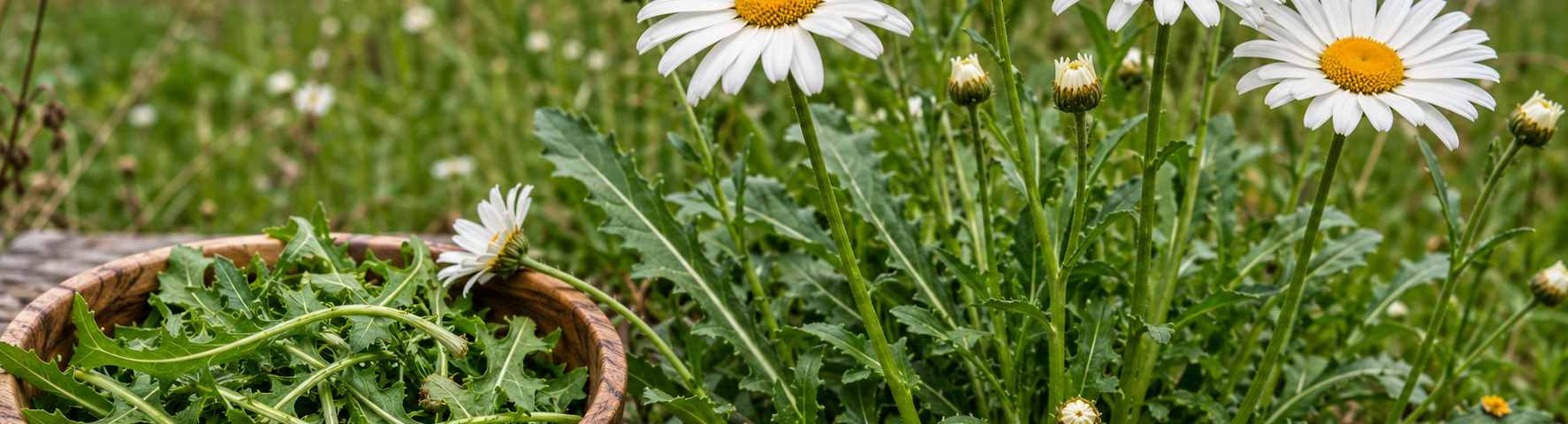
Oxeye daisy is one of the most recognizable wildflowers in fields, meadows, roadsides, and open sunny places.
Most people know the look right away. A bright yellow center. White petals. A simple daisy shape that feels familiar from childhood.
However, oxeye daisy is more than just a pretty flower. It is also a useful plant for beginner foragers to understand because it is common, easy to notice, and sometimes used in small culinary ways.
It also comes with an important warning.
Oxeye daisy is considered invasive or noxious in many areas, including Washington State. Because of that, this is not a plant to spread, plant, scatter, move around, or encourage. If you harvest it where it is legal and appropriate, think of it as a “use what you remove” plant.
This oxeye daisy identification guide covers the important details: key ID traits, edible parts, harvesting tips, lookalikes, safety notes, modern uses, traditional uses, and simple recipe ideas.
It also completes our “four edible plants in four feet” beginner foraging set. If you are building your wild edible plant knowledge one guide at a time, you may also enjoy our guides to pineapple weed identification, plantain identification and edibility, dandelion identification and uses, and sow thistle identification.
Quick Oxeye Daisy Identification
Oxeye daisy, Leucanthemum vulgare, is a perennial plant in the aster family.
Look for this combination of traits:
- White daisy-like flowers with yellow centers
- One flower head at the end of each stem
- Brown-edged green bracts beneath the flower head
- Basal leaves near the ground
- Alternate leaves along the stem
- Lower leaves that are larger and stalked
- Upper leaves that are smaller, toothed, and often clasp the stem
- Upright stems, usually 1 to 3 feet tall
- A somewhat unpleasant odor when crushed
- Growth in fields, meadows, pastures, roadsides, and disturbed sunny areas
Do not identify oxeye daisy by the flower alone. Many plants are casually called daisies, and several white daisy-like flowers can look similar from a distance.
What Is Oxeye Daisy?
Oxeye daisy is a perennial herbaceous plant. That means it lives for more than one growing season and returns from its root system.
Its scientific name is Leucanthemum vulgare. Older references may list it under Chrysanthemum leucanthemum, so you may see both names in older books or plant databases.
Common names include:
- Oxeye daisy
- Ox-eye daisy
- Dog daisy
- Field daisy
- Marguerite
- Moon daisy
- White daisy
Although it is attractive, oxeye daisy can spread aggressively. It reproduces by seed and by shallow rhizomes, which are underground stems that help the plant form clumps and expand into nearby areas.
That spreading habit is one reason land managers are concerned about it.
Is Oxeye Daisy Native?
Oxeye daisy is native to parts of Europe and temperate Asia. In North America, it is introduced.
In many regions, it has escaped cultivation, wildflower seed mixes, roadsides, pastures, and disturbed ground. Once established, it can form dense patches that reduce plant diversity and compete with forage plants in pasture settings.
That does not mean every single patch needs the same response. Local rules vary, and some areas treat it more aggressively than others. However, the safest foraging mindset is simple: do not plant it, do not spread it, and do not move seed heads or plant material to new places.
Why Oxeye Daisy Matters to Beginner Foragers
Oxeye daisy is useful to learn for several reasons.
First, it is common and easy to notice when blooming. That makes it a good plant for practicing field observation.
Second, it teaches an important lesson about wild edibles: edible does not always mean harmless, unlimited, or ecologically neutral.
Some wild plants are edible but invasive. Others are edible only in small amounts. Some are useful as garnishes or flavor accents rather than main vegetables. Oxeye daisy fits that category well.
It can be part of a beginner foraging lesson, but it should be approached with restraint and care.
Where Oxeye Daisy Grows
Oxeye daisy prefers sunny, open places.
You may find it in:
- Meadows
- Pastures
- Field edges
- Road edges
- Railroad rights-of-way
- Waste areas
- Old lawns
- Trail margins
- Disturbed sunny ground
- Overgrazed or open grassy areas
It often grows in clumps. When conditions are right, those clumps can expand and create patches with many flowering stems.
Because it often grows along roadsides and disturbed areas, harvest location matters. Avoid plants from roadsides, sprayed fields, pet areas, industrial sites, drainage ditches, and any place that may be contaminated.
When to Find Oxeye Daisy
Oxeye daisy is easiest to identify when it flowers.
In many areas, it blooms from late spring into summer. Depending on climate and mowing, some plants may flower longer or produce later blooms.
However, the best edible parts are not always the fully open flowers.
Young leaves are usually best before the plant flowers. Unopened buds are harvested before they expand. Petals, if used, should come from clean, fresh-looking flowers that are not wilted, browned, or insect-damaged.
Oxeye Daisy Identification by Growth Stage
Learning oxeye daisy by stage is helpful because the plant looks different before and after flowering.
Basal Leaf Stage
Before flowering, oxeye daisy forms leaves near the ground.
Look for basal leaves that are:
- Green
- Spoon-shaped to lance-shaped
- Toothed or lobed
- Larger than the upper stem leaves
- Attached by a leaf stalk, also called a petiole
This is often the stage when young leaves are most useful in the kitchen. It is also the stage when identification can be more challenging, so do not harvest young leaves unless you are completely confident.
Upright Stem Stage
As the plant grows taller, it sends up upright stems.
At this stage, look for:
- Alternate leaves along the stem
- Smaller upper leaves
- Coarse teeth or lobes on the leaves
- Upper leaves that may clasp the stem
- Unbranched stems or stems that branch near the top
- Developing flower buds
The leaf pattern is important. Lower leaves and upper leaves do not look exactly the same.
Flowering Stage
The flowering stage is when most people notice oxeye daisy.
Look for:
- A white daisy-like flower head
- A bright yellow center
- One flower head at the end of a stem
- Green bracts with brownish edges under the flower
- Upright stems, often in clumps
- A somewhat unpleasant smell when crushed
The “flower” is actually a composite flower head. The white petal-like parts are ray flowers, while the yellow center is made up of small disk flowers.
Seed Stage
After flowering, oxeye daisy produces seeds.
If you are removing it from an area, avoid shaking mature seed heads. Also, do not toss seed-bearing plants into places where they may spread.
For home control, check your local noxious weed or extension office for disposal guidance.
Key Oxeye Daisy ID Traits
Here are the most important traits to use together.
White Ray Flowers and Yellow Disk Flowers
Oxeye daisy has the classic white-and-yellow daisy look.
However, remember that this trait alone is not enough. Several plants have similar flower heads.
One Flower Head Per Stem
Oxeye daisy usually has one large flower head at the end of each flowering stem.
This can help separate it from some lookalikes that produce smaller, more numerous flowers.
Brown-Edged Bracts
Under the flower head, look for green bracts with brownish edges.
This is a useful close-up detail, especially when comparing oxeye daisy with other white daisy-like plants.
Toothed or Lobed Leaves
Oxeye daisy leaves are not smooth ovals.
The lower leaves are generally larger and may look spoon-shaped or lance-shaped with toothed or lobed edges. Higher on the stem, the leaves become smaller, narrower, and more directly attached.
Alternate Stem Leaves
The stem leaves are alternate, which means they do not grow in opposite pairs directly across from one another.
Clumping Growth
Oxeye daisy often grows in clumps because it can spread by rhizomes. It can also spread by seed.
Unpleasant Odor When Crushed
The plant may have a disagreeable odor when crushed or cut.
This is not the first trait most people use, but it can support the identification when combined with the rest of the plant’s features.
Oxeye Daisy Lookalikes
Oxeye daisy has several lookalikes. Some are edible, some are ornamentals, and some simply have different safety profiles.
Because of that, do not eat a white daisy-like plant unless you are sure of the identification.
Shasta Daisy
Shasta daisy is a common garden ornamental and can look very similar.
It often has larger flower heads and a more cultivated appearance. Since garden plants may be treated with chemicals, never assume an ornamental daisy is safe to eat.
Also, do not use garden-center daisies, roadside plantings, or treated landscape plants for food.
Daisy Fleabane
Daisy fleabane can have white or pale ray flowers and yellow centers. However, the flowers are usually smaller and more numerous, with many thin, narrow rays.
Oxeye daisy generally has larger, more classic daisy-like flower heads.
Scentless Mayweed and Chamomile Relatives
Some mayweed and chamomile relatives have white ray flowers and yellow centers. Their leaves are often much more finely divided, feathery, or thread-like compared with oxeye daisy.
This is where leaf shape becomes extremely important.
If the leaves are finely cut and fern-like, do not assume you have oxeye daisy.
Common Daisy
Common daisy, Bellis perennis, is much smaller and often grows in lawns.
The flower shape may feel similar, but the plant size, growth habit, and leaves are different.
Feverfew
Feverfew has small daisy-like flowers and strongly aromatic, lobed leaves.
It has different traditional uses and different safety concerns, so it should not be confused with oxeye daisy for food use.
Is Oxeye Daisy Edible?
Oxeye daisy has edible uses, but it should be used carefully and in small amounts.
The most commonly used parts are:
- Young leaves
- Young spring shoots
- White petals
- Unopened flower buds
Young leaves may be eaten raw or cooked, although they have a strong flavor and are best used sparingly. Petals can be used as a garnish. Unopened flower buds are sometimes pickled and used like small wild capers.
Avoid eating the yellow centers in quantity because some sources note that they may cause digestive upset. Also, leaves and flowers may cause contact dermatitis in sensitive people.
For most foragers, oxeye daisy is better as a garnish, bitter green, or flavor accent than as a main vegetable.
What Does Oxeye Daisy Taste Like?
Oxeye daisy has a stronger flavor than many people expect.
The young leaves can taste green, pungent, aromatic, and slightly bitter. Some people enjoy the flavor, while others find it too strong raw.
The petals are milder and work better as a garnish. The unopened buds can become tangy and savory when pickled.
Because the flavor is assertive, use oxeye daisy the way you might use a strong herb or bitter green.
Good pairings include:
- Potatoes
- Eggs
- Rice
- Fish
- Chicken
- Beans
- Lemon
- Vinegar
- Olive oil
- Butter
- Garlic
- Mild salad greens
Small amounts usually work best.
How to Reduce Bitterness
Oxeye daisy leaves can become stronger and more bitter as they mature.
To keep the flavor pleasant:
- Harvest young leaves before flowering.
- Use small amounts mixed with milder greens.
- Chop leaves finely.
- Cook older leaves instead of eating them raw.
- Blanch briefly before sautéing.
- Add lemon juice or vinegar.
- Pair with fat, salt, and starch.
- Avoid old, tough, or damaged leaves.
Do not force yourself to like a plant just because it is edible. If the flavor is too strong, use less or skip it.
How to Harvest Oxeye Daisy
Harvest oxeye daisy carefully, especially because it can be invasive.
Harvest From Clean Areas Only
Avoid plants growing near:
- Roadsides
- Parking lots
- Sprayed lawns
- Pet areas
- Industrial areas
- Drainage ditches
- Railroad edges
- Agricultural fields with unknown chemical use
- Polluted urban soil
Oxeye daisy often grows in places where contamination is possible, so clean location is essential.
Best Parts to Harvest
For food use, focus on:
- Young leaves before flowering
- Fresh white petals from clean flowers
- Tight unopened buds
- Young shoots in spring
Avoid old, tough, wilted, browned, insect-heavy, or seed-bearing material.
Harvesting Method
Use scissors or a clean knife.
For leaves, snip only what you need, buds, harvest tight unopened buds before they expand into flowers. The petals, you select fresh flowers and remove only the white ray flowers if you want a mild garnish.
If you are removing oxeye daisy from a property, bag seed heads carefully and follow local disposal guidance. Do not shake mature seeds or carry seed-bearing plants to new areas.
Legal and Ecological Considerations
This part matters.
Oxeye daisy is listed as a noxious weed in several places, and rules vary by location. In Washington, it is a Class C noxious weed and is also on the state quarantine list, which means it should not be bought, sold, offered for sale, or intentionally distributed.
For foragers, the practical rule is simple:
Avoid spreading it.
Do not plant oxeye daisy, add it to wildflower mixes, scatter seed heads, or move live plants to new places. If you harvest it, use it responsibly and keep control in mind.
This is a plant where foraging can align with removal, but only if you handle it carefully.
How to Clean Oxeye Daisy
Wash oxeye daisy well before eating.
For leaves:
- Sort out damaged or old leaves.
- Rinse in a bowl of cool water.
- Lift the leaves out so grit stays behind.
- Repeat if needed.
- Pat dry or spin dry.
- Chop before using.
Flowers or petals:
- Inspect closely for insects.
- Shake gently.
- Rinse lightly if needed.
- Pat dry.
- Use fresh.
For unopened buds:
- Choose tight, clean buds.
- Remove stems.
- Rinse well.
- Pat dry before pickling.
How to Use Oxeye Daisy in the Kitchen
Oxeye daisy is not a bulk vegetable. It works best as a small accent.
Simple Kitchen Uses
Try it in:
- Mixed green salads
- Potato salads
- Egg dishes
- Wild green sautés
- Herb sauces
- Rice bowls
- Fish dishes
- Pickled bud recipes
- Garnishes
- Spring vegetable plates
Use young leaves sparingly, petals lightly, and pickled buds as a tangy accent.
Raw Uses
Young leaves can be chopped finely and mixed with milder greens. Petals can be sprinkled over salads or finished dishes.
Raw oxeye daisy is strong, so start with a small amount.
Cooked Uses
Cooking softens the leaves and mellows the flavor.
Add chopped young leaves to:
- Scrambled eggs
- Omelets
- Potato hash
- Soups
- Rice
- Pasta
- Sautéed greens
For older leaves, blanching before cooking can improve the flavor.
Modern Uses for Oxeye Daisy
Modern foragers usually use oxeye daisy in small culinary ways.
The most practical uses are:
- Young leaves as a bitter green
- Petals as a garnish
- Buds pickled like capers
- Leaves cooked into eggs or potatoes
- Small amounts in wild salads
- A teaching plant for beginner identification
It also has value as a reminder that not every wild edible should be encouraged. Sometimes the best use of a plant is careful removal, small-scale kitchen use, and responsible disposal.
Traditional and Historic Uses
Oxeye daisy has a history of traditional herbal use.
Older sources and folk traditions mention it for bruises, coughs, and other complaints. In England, the leaves were sometimes used in poultices for bruises, which helped give the plant the old name “bruise wort.”
However, this guide is not recommending oxeye daisy as medicine.
Traditional use is part of the plant’s story, but it should not replace medical care or professional advice. Here, we are focused on identification, responsible harvesting, and cautious food use.
Safety Considerations
Oxeye daisy should be approached with more caution than some other beginner plants.
Use in Moderation
Use oxeye daisy as an accent, not a main food.
Young leaves, petals, and buds may be used in small amounts, but eating large quantities is not recommended.
Avoid the Yellow Centers in Quantity
The yellow centers may cause digestive upset when eaten in quantity. Because of that, petals are the better choice for garnish.
Watch for Skin Reactions
Leaves and flowers may cause contact dermatitis in sensitive people.
If you have sensitive skin, consider wearing gloves when harvesting. If you know you react to daisy-family plants, avoid eating oxeye daisy.
Be Careful With Asteraceae Allergies
Oxeye daisy is in the Asteraceae family.
Use caution if you are sensitive to ragweed, daisies, chamomile, chrysanthemums, dandelions, or related plants.
Avoid During Pregnancy Unless Cleared by a Professional
Because oxeye daisy has traditional medicinal associations and limited modern food-safety data, pregnant or nursing individuals should avoid it unless cleared by a qualified professional.
Do Not Use as Medicine
Do not use oxeye daisy to treat asthma, coughs, skin problems, eye issues, bruises, or any medical condition without professional guidance.
Simple Oxeye Daisy Recipes
Oxeye daisy has a strong flavor, so these recipes use it in small, realistic amounts.
Recipe 1: Pickled Oxeye Daisy Buds
These are not true capers, but they can be used in a similar way. Add them to eggs, fish, potato salad, rice bowls, or wild green dishes.
Ingredients
- 1/2 cup tight unopened oxeye daisy buds
- 1/2 cup apple cider vinegar or white wine vinegar
- 1/2 cup water
- 1 teaspoon salt
- 1 teaspoon sugar or honey
- 1 small garlic clove, optional
- A few peppercorns, optional
Instructions
- Harvest tight unopened buds from a clean area.
- Remove stems and rinse the buds well.
- Place the buds in a clean small jar.
- Heat vinegar, water, salt, sugar, garlic, and peppercorns in a small pan.
- Bring the brine just to a simmer.
- Pour the hot brine over the buds.
- Let the jar cool.
- Refrigerate and wait at least 2 to 3 days before tasting.
Use these in small amounts as a tangy garnish.
Recipe 2: Oxeye Daisy Potato and Egg Skillet
This is a simple at-home meal that uses oxeye daisy as a supporting herb-like green.
Ingredients
- 2 medium potatoes, diced
- 3 eggs
- 1 tablespoon butter or olive oil
- 1 small onion, diced
- 1 garlic clove, minced
- 1 to 2 tablespoons young oxeye daisy leaves, finely chopped
- A few white oxeye daisy petals for garnish
- Salt and pepper
- Optional: bacon, sausage, mushrooms, smoked fish, or cheese
Instructions
- Cook the diced potatoes until tender.
- Heat butter or oil in a skillet.
- Add onion and cook until soft.
- Add garlic and cook briefly.
- Stir in the potatoes.
- Add the finely chopped oxeye daisy leaves.
- Beat the eggs and pour them into the skillet.
- Cook gently until the eggs are set.
- Season with salt and pepper.
- Finish with a few white petals on top.
The leaves add a bold green flavor, while the petals make the finished dish look bright and seasonal.
Recipe 3: Wild Green Herb Sauce with Oxeye Daisy
This sauce works with fish, potatoes, eggs, grilled chicken, rice, or roasted vegetables.
Ingredients
- 1 tablespoon young oxeye daisy leaves, finely chopped
- 1/2 cup parsley, chickweed, mild plantain leaves, or other mild greens
- 1 small garlic clove
- 2 tablespoons olive oil
- 1 tablespoon lemon juice or vinegar
- Salt and pepper
- Optional: a few pickled oxeye daisy buds
Instructions
- Finely chop the greens and garlic.
- Stir them together with olive oil and lemon juice.
- Add salt and pepper.
- Taste and adjust.
- Add chopped pickled buds if desired.
Because oxeye daisy has a strong flavor, keep it as the accent rather than the whole sauce.
How to Preserve Oxeye Daisy
Oxeye daisy is best used fresh or pickled.
Refrigerating Leaves
Wrap clean young leaves in a slightly damp towel and store them in a container in the refrigerator.
Use them within a few days.
Pickling Buds
Pickling is one of the best preservation methods for unopened buds. Keep pickled buds refrigerated unless you are using a tested canning recipe.
Drying
Oxeye daisy has been dried historically for herbal use, but this guide does not recommend it for medicinal purposes. For culinary use, fresh leaves, petals, or pickled buds are more practical.
Oxeye Daisy FAQ
Is oxeye daisy edible?
Yes, oxeye daisy has edible uses, but it should be used in small amounts. Young leaves, petals, and unopened buds are the most useful parts for foragers.
Can you eat oxeye daisy leaves?
Yes, young leaves can be eaten raw or cooked. They have a strong flavor, so they are best used sparingly or mixed with milder greens.
Can you eat oxeye daisy flowers?
The white petals can be used as a garnish. Avoid eating the yellow centers in quantity because they may cause digestive upset.
Can you pickle oxeye daisy buds?
Yes, unopened oxeye daisy buds are sometimes pickled and used like small wild capers. Harvest only tight, clean buds from safe areas.
Is oxeye daisy invasive?
Yes, oxeye daisy is invasive or noxious in many areas. In Washington, it is listed as a Class C noxious weed and is also on the quarantine list.
Should I plant oxeye daisy?
No. Do not plant oxeye daisy or spread its seeds, especially in areas where it is invasive or regulated.
What is the difference between oxeye daisy and Shasta daisy?
Shasta daisy is a common garden ornamental with a similar white-and-yellow flower. It often has larger flowers and a cultivated appearance. Do not eat ornamental daisies or treated landscape plants.
What does oxeye daisy taste like?
The young leaves taste pungent, green, aromatic, and slightly bitter. The petals are milder, while pickled buds become tangy and savory.
Where should I avoid harvesting oxeye daisy?
Avoid roadsides, sprayed lawns, pet areas, industrial sites, railroad corridors, drainage ditches, and polluted soil.
Final Thoughts
Oxeye daisy is familiar, common, and easy to notice, but it deserves a careful approach.
Yes, it has edible uses. Young leaves can be used sparingly, petals can brighten a dish, and unopened buds can be pickled like tiny wild capers. Even so, this is not a plant to spread or treat casually.
That is what makes oxeye daisy such a valuable lesson for beginner foragers.
It teaches identification, caution, ecology, and responsible harvest all at once.
Learn the traits. Use it in small amounts. Harvest only from clean places. Most importantly, do not help it move into new areas.
Sometimes foraging is not just about what we can eat. It is also about understanding the plants around us and our role in the landscape.
Get Outside. Do Something Wild.
Additional Resources
- Washington State Noxious Weed Control Board: Oxeye Daisy
- King County Noxious Weeds: Oxeye Daisy Identification and Control
- NC State Extension: Leucanthemum vulgare
- Washington College: Ox-Eye Daisy
- Plants For A Future: Leucanthemum vulgare
Foraging Disclaimer
This article is for educational purposes only. Always identify wild plants with certainty before eating them. Use multiple trusted sources, regional field guides, and expert guidance when needed. Avoid contaminated areas, follow local laws, harvest responsibly, and try new wild foods in small amounts. Use extra caution if you have allergies, medical conditions, are pregnant, nursing, or taking medications.


