The Hunter Gatherer Society
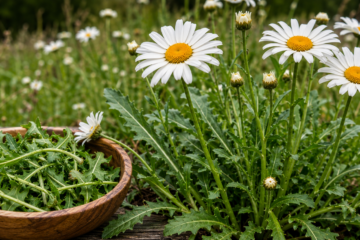
Oxeye daisy identification guide image showing white flowers with yellow centers and harvested edible wild greens in a wooden bowl

Oxeye Daisy Identification Guide: Edibility, Uses, Harvesting, and Complete Field Guide

Oxeye daisy is one of the most recognizable wildflowers in fields, meadows, roadsides, and open sunny places. Most people know the look right away. A bright yellow center. White petals. A simple daisy shape that feels familiar from childhood. However, oxeye daisy is more than just a pretty flower. It is also a useful plant for beginner foragers to understand because it is common, easy to notice, and sometimes used in small culinary ways. It also comes with an important warning. Oxeye daisy is considered invasive or noxious in many areas, including Washington State. Because of that, this is not a plant to spread, plant, scatter, move around, or encourage. If you harvest it where it is legal and appropriate,[…]

Read more
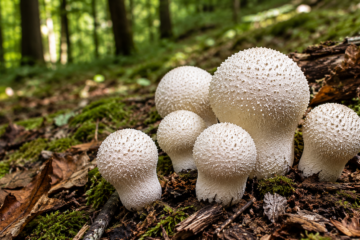
Cluster of common puffball mushrooms growing on the forest floor for a puffball mushroom identification guide

Puffball Mushroom Identification Guide: Edibility, Uses, Harvesting, and Complete Field Guide

Puffballs are some of the most approachable wild mushrooms for beginners, but they also come with one rule that cannot be skipped: Cut every puffball open before eating it. That one step is what separates a safe puffball harvest from a dangerous mistake. The common puffball, also known as the gem-studded puffball or warted puffball, is a small white mushroom that often appears on the forest floor, along trails, in open woods, and sometimes in disturbed grassy areas. Its scientific name is Lycoperdon perlatum, and it is one of the most widely recognized small puffballs in North America. MushroomExpert describes it as probably the most commonly seen woodland puffball in North America, while the Missouri Department of Conservation describes it[…]

Read more
Social Share Buttons and Icons powered by Ultimatelysocial