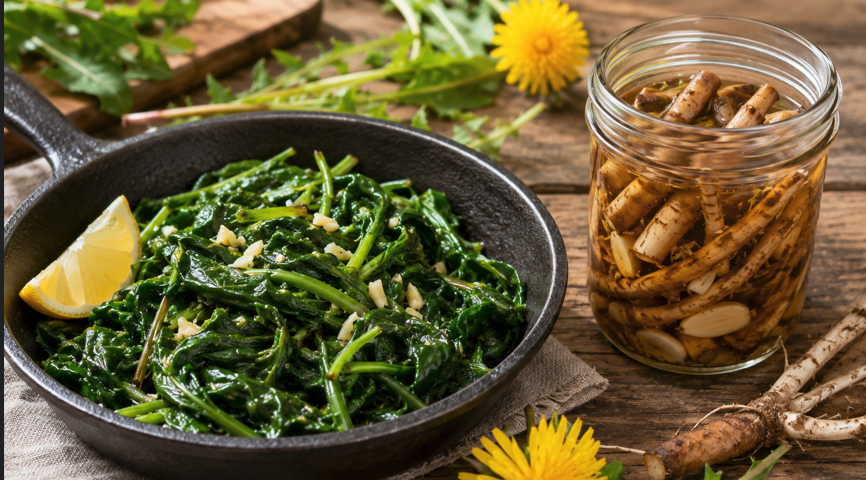
Turn young dandelion leaves and freshly dug roots into two simple wild-food dishes with common kitchen ingredients.
Dandelions may be one of the most familiar plants in the yard, yet many new foragers still wonder what to do with them after harvest.
That is where these two easy dandelion recipes come in.
The first recipe combines tender dandelion leaves with butter, garlic, and lemon. Meanwhile, the second turns small dandelion roots into tangy refrigerator pickles. Both recipes make small portions, so you can try dandelion without preparing a large batch.
I first made pickled dandelion roots while living in Alaska, and they quickly became one of my favorite wild snacks. Since then, I have preferred leaving smaller roots whole because they keep a satisfying bite and look great in the jar.
Before you start cooking, review our complete Dandelion Identification Guide: Edibility, Uses, Harvesting, and Safety. It covers identification traits, edible parts, harvesting, look-alikes, and important safety tips.
Quick Answers About Cooking Dandelions

What is the easiest way to cook dandelion greens?
First, blanch young dandelion leaves in lightly salted water. Then drain them well and sauté them briefly with butter, garlic, salt, and lemon juice.
How do you make dandelion greens less bitter?
Start with young, tender leaves whenever possible. Next, blanch them for a few minutes and taste one before draining the pot. Butter, salt, lemon juice, and a tiny amount of sugar or honey will also help balance the remaining bitterness.
Can you pickle dandelion roots whole?
Yes. In fact, I prefer to pickle small dandelion roots whole. They keep their shape, develop a pleasant bite, and make an easy snack straight from the jar.
Should you slice larger dandelion roots?
Yes, especially when they feel thick, tough, or woody. You can halve them lengthwise, cut them into short sections, or slice them into coins or matchsticks.
What do pickled dandelion roots taste like?
Pickled dandelion roots taste earthy, tangy, mildly bitter, and slightly sweet. Whole roots stay firmer, while sliced roots absorb more brine and soften faster.
Why Dandelions Make a Good First Wild Food
Dandelions grow in many yards, fields, gardens, and disturbed areas. In addition, you can use the leaves, flowers, and roots in different ways.
However, familiarity does not guarantee correct identification.
True dandelions grow in a basal rosette, which means the leaves spread outward from a central crown near the ground. Each hollow, leafless stalk holds one yellow flower head. When you break the stalk, it releases a milky white latex.
Later, the yellow flower develops into the familiar round seed head.
The University of Minnesota Extension dandelion guide provides a useful overview of these features.
Even so, never identify a plant by one trait alone. Instead, confirm the leaf arrangement, flower stalk, sap, flower structure, and growth habit before harvesting.
Choose a Clean Harvesting Area
Where you gather dandelions matters just as much as how you cook them.
Only harvest from places where you know the land-use history. Avoid lawns treated with herbicides, pesticides, or chemical fertilizers. Likewise, stay away from busy roads, railroad tracks, industrial sites, drainage areas, and places where dogs or livestock regularly relieve themselves.
Washing removes dirt and insects. However, it cannot remove every contaminant that a plant may absorb from polluted soil.
Also, ask permission before harvesting on private property. Public parks and natural areas may have their own gathering rules, so check local regulations before collecting plants there.
When you do not know whether a location is safe, leave the dandelions where they are and find another patch.
Easy Dandelion Recipe One: Garlic-Butter Greens
This small recipe works well for anyone trying cooked dandelion greens for the first time.
Instead of preparing a full skillet, you will make just enough for one or two tasting portions. As a result, you can learn whether you enjoy the flavor without wasting a large harvest.
Blanching makes the biggest difference. Young leaves often taste milder than older growth, although some plants still carry plenty of bitterness. Therefore, taste the greens during cooking rather than relying only on the clock.
Butter softens the stronger flavors, while garlic adds a familiar savory note. Finally, lemon juice brightens the finished dish.
Serves: 1–2
Prep time: 10 minutes
Cook time: About 5–8 minutes
Ingredients
- 2 packed cups young dandelion leaves
- 1 tablespoon butter
- 1 small garlic clove, minced
- ½ teaspoon lemon juice or apple-cider vinegar
- ⅛ teaspoon sugar or a small drizzle of honey
- Pinch of salt
- Black pepper, optional
Instructions
- Remove damaged leaves, thick stem ends, and any attached crown pieces.
- Separate the leaves and wash them in several changes of cold water. Because dandelion rosettes grow close to the ground, soil often collects near the base.
- Bring a small pot of lightly salted water to a boil.
- Add the dandelion leaves and cook them for two minutes.
- Remove one small piece, let it cool, and taste it. When the leaf still tastes too bitter or feels too tough, continue boiling it for another minute.
- Taste again and continue cooking only as needed. Young leaves may need two or three minutes, while larger leaves may take longer.
- Drain the greens and rinse them briefly with cool water.
- Gently squeeze out the excess moisture. Then roughly chop the leaves.
- Melt the butter in a small skillet over medium heat.
- Add the minced garlic and cook it for about 20 seconds, just until it smells fragrant.
- Add the dandelion greens and a pinch of salt. Sauté them for one to two minutes.
- Stir in the lemon juice and sugar or honey.
- Taste the greens. Then add another tiny pinch of salt, a few drops of lemon juice, or a little more butter when needed.
Serve the greens warm as a small side dish or sample portion.
First-Time Tips for Better Dandelion Greens
Whenever possible, gather the youngest and most tender leaves. Even then, taste a raw piece before cooking because bitterness can vary from plant to plant.
Also, do not worry when a little bitterness remains. Dandelion naturally tastes stronger than spinach, and that slight edge gives the plant its character.
For an even gentler introduction, mix dandelion with spinach, kale, or chard. That combination spreads the bitterness across a larger dish while still allowing you to taste the wild greens.
Once you know you enjoy them, double the recipe and serve the greens with eggs, roasted potatoes, fish, or grilled meat.
Why Garlic, Butter, and Lemon Work
Dandelion greens respond well to a balance of fat, salt, and acidity.
First, blanching moves some of the bitterness into the cooking water. Next, butter adds richness and softens the stronger flavors. Salt improves the overall taste, while lemon juice adds brightness.
The small amount of sugar or honey does not make the greens sweet. Instead, it rounds off the sharper notes.
Finally, squeezing out the water helps the butter and seasoning coat the leaves. Otherwise, wet greens can dilute the flavor and steam in the pan instead of sautéing properly.
Easy Ways to Change the Greens
After you try the basic version, you can adjust the recipe to match your taste.
For example, add a pinch of red-pepper flakes with the garlic for gentle heat. You can also finish the greens with Parmesan cheese or crumbled bacon.
A fried egg turns the dish into a simple breakfast or lunch. Meanwhile, toasted nuts add crunch, and a spoonful of caramelized onions brings extra sweetness.
Keep the first batch simple, though. That way, you can learn how dandelion tastes before covering it with too many additional flavors.
What Not to Do with Dandelion Greens
Do Not Assume Young Leaves Will Taste Mild
Young leaves often taste better than older ones, but they can still carry strong bitterness. Therefore, taste the greens while they cook.
Do Not Skip Thorough Washing
Dandelion leaves trap dirt, grit, insects, and debris near the crown. One quick rinse may leave plenty behind.
Do Not Add Wet Greens Directly to the Skillet
Excess water weakens the butter, garlic, and lemon flavors. Instead, drain and gently squeeze the leaves before sautéing them.
Do Not Burn the Garlic
Burnt garlic tastes bitter and can overpower the greens. Cook it only until fragrant before adding the dandelion.
Do Not Expect Blanching to Remove Every Bitter Note
Blanching mellows the flavor, but it will not turn dandelion into spinach. A slight bitterness belongs in the finished dish.
Easy Dandelion Recipe Two: Quick-Pickled Roots
This recipe holds a special place for me because I first made pickled dandelion roots while living in Alaska.
Since then, I have preferred leaving small roots whole. They hold their shape, keep a satisfying texture, and make a fun wild snack straight from the jar.
However, larger roots may need a little extra attention. Thick, mature, or woody roots usually taste better when you halve or slice them.
Both methods work. Therefore, let the size and texture of your harvest guide you.
This recipe makes refrigerator pickles. It does not create a shelf-stable product, so you must keep the jar refrigerated.
Makes: One small jar
Serves: 1–2 as a snack or condiment
Prep time: 15 minutes
Pickling time: At least 24 hours; best after 2–3 days
Ingredients
- ½ cup thoroughly cleaned dandelion roots
- ¼ cup commercially produced apple-cider vinegar labeled as 5% acidity
- ¼ cup water
- 1 tablespoon sugar or honey
- ½ teaspoon salt
- 1 small garlic clove, thinly sliced, optional
- Pinch of black pepper or red-pepper flakes, optional
Whole or Sliced Dandelion Roots?
Leave small, slender roots whole whenever possible. Trim away the crown and cut only enough from the ends to help the roots fit inside the jar.
On the other hand, split or slice larger roots when they feel thick or fibrous.
You can:
- Halve them lengthwise
- Cut them into shorter sections
- Slice them into thin coins
- Cut them into short matchsticks
Whole roots keep more texture and create a rustic snack. Sliced roots, however, cook faster and absorb the brine more quickly.
Young roots usually need only a thorough scrubbing. Older roots may have a tougher outer layer, so lightly scrape or peel them when necessary.
Discard any roots that show decay, severe discoloration, or an unpleasant odor.
Instructions for Pickled Dandelion Roots
- Trim away the leaves and crowns. Then scrub the roots thoroughly under running water.
- Leave small roots whole whenever possible. However, halve or slice larger roots when they feel tough or woody.
- Place the prepared roots in a small saucepan and cover them with water.
- Bring the water to a gentle boil.
- Begin checking sliced roots after about three minutes. Check small whole roots after about five minutes.
- Remove one root, let it cool, and test the texture. It should feel tender enough to bite while still holding a little firmness.
- Continue simmering the roots as needed. Slender whole roots often take about five to eight minutes, although thicker roots may need longer.
- Drain the roots and place them in a clean, heat-resistant jar.
- Add the garlic and pepper when using them.
- Combine the apple-cider vinegar, water, sugar or honey, and salt in the saucepan.
- Bring the brine to a gentle boil and stir until the salt and sweetener dissolve.
- Carefully pour the hot brine over the roots.
- Move the roots gently with a clean utensil to release trapped air.
- Make sure the brine completely covers every root.
- Let the jar cool briefly. Then cover it and place it in the refrigerator.
- Wait at least 24 hours before tasting. For the best flavor, let whole roots pickle for two or three days.
How to Serve Pickled Dandelion Roots
Small whole roots make an easy snack straight from the jar.
Their earthy flavor and tangy brine also pair well with cheese, crackers, cured meats, and other snack-board foods.
You can also chop the roots and add them to:
- Sandwiches and burgers
- Green salads
- Rice or grain bowls
- Deviled eggs
- Potato salad
- Tuna or chicken salad
- Tacos and wraps
In addition, chopped pickled roots can replace relish, capers, or diced pickles in many recipes.
Why Both Pickling Methods Work
Whole and sliced roots each offer advantages.
Whole roots preserve the natural shape of the plant and keep a firmer bite. As a result, they feel more like a wild snack than a standard pickle.
Sliced roots cook faster and absorb more brine. Therefore, they work especially well when the roots feel thick, mature, or tough.
The brief simmer softens the fibers and mellows some of the earthy bitterness. Meanwhile, vinegar adds acidity, salt strengthens the savory flavor, and sugar or honey smooths the sharper edges.
For the best results, leave slender roots whole and slice only the roots that need it.
Safe Refrigerator-Pickle Practices
Use commercially produced apple-cider vinegar labeled as 5% acidity.
The National Center for Home Food Preservation recommends vinegar with a known 5% acidity for pickling. Therefore, avoid homemade vinegar because its acidity may vary.
Also, do not reduce the vinegar or increase the water in this recipe.
Keep the roots completely covered by the brine and refrigerate the jar after it cools. In addition, use a clean utensil every time you remove a root.
For a conservative storage period, use the pickled roots within two weeks. NC State Extension’s refrigerator-pickle guidance also recommends allowing quick pickles time to develop flavor and using them within two weeks.
Discard the jar when you notice mold, unexpected bubbling, pressure, sliminess, a swollen lid, an unpleasant odor, or unusual discoloration.
Most importantly, never store these pickles in a pantry. This recipe only works as a refrigerated pickle.
What Not to Do with Dandelion Roots
Do Not Harvest from an Unknown Lawn
Washing cannot undo exposure to herbicides, pesticides, or contaminated soil. Find another patch when you do not know the land’s treatment history.
Do Not Leave Every Root Whole
Although I prefer whole roots, large and woody roots may stay tough. Split or slice those roots so they cook more evenly.
Do Not Follow the Clock Alone
Roots vary in age, thickness, and texture. Therefore, test them with a knife or taste a cooled piece before draining the pot.
Do Not Use Vinegar with Unknown Acidity
Homemade and specialty vinegars may not contain enough acid for this recipe. Use commercial vinegar that clearly lists 5% acidity.
Do Not Treat Refrigerator Pickles Like Canned Food
Hot brine does not make the jar shelf stable. Keep the roots refrigerated and use them within two weeks.
Which Dandelion Recipe Should You Try First?
Choose the garlic-butter greens when you find young leaves and want something you can prepare immediately.
On the other hand, make the pickled roots when you dig dandelions from a clean garden bed and want to use more of the plant.
Better yet, make both.
Cook the leaves on harvest day. Then place the roots in brine and enjoy them a few days later. One plant can provide both a quick side dish and a jar of tangy wild snacks.
More Ways to Cook with Wild Food
Once you feel comfortable cooking dandelions, use the same basic approach with other edible wild plants.
Start with a small amount. Then learn how each plant responds to heat, salt, fat, acidity, and sweetness.
Wild foods do not need complicated recipes. In fact, simple preparations often help you understand the ingredient better.
Explore more ideas in our collection of Wild Food Recipes with Foraged Ingredients.
From Lawn Weed to Wild Snack
Dandelions show how foraging can change the way we see familiar places.
What many people consider a lawn weed can provide tender greens, edible flowers, useful roots, and an opportunity to try something new.
You do not need a large harvest or a complicated recipe. Instead, start with a couple of cups of leaves or a small handful of roots.
Taste a few bites, adjust the seasonings, and learn what you enjoy.
You may discover that dandelions deserve a place in your kitchen rather than your compost pile.
Foraging and Allergy Disclaimer
This article provides general educational information. Never eat a wild plant unless you feel completely confident in its identity.
Confirm several identification traits, consult multiple reliable resources, and ask an experienced local forager for help when you feel uncertain.
Dandelions belong to the Asteraceae family, which also includes ragweed, daisies, chrysanthemums, and sunflowers. People who react to plants in this family may also react to dandelion.
In addition, the plant releases a milky latex that may irritate sensitive skin.
Try unfamiliar wild foods in small amounts, especially when you have plant allergies, latex sensitivity, digestive sensitivities, or other health concerns. Stop eating the plant and seek appropriate care when you experience swelling, breathing difficulty, severe itching, or another serious reaction.


