The Hunter Gatherer Society
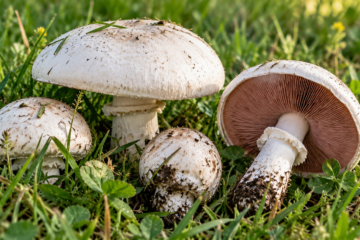
Cluster of common puffball mushrooms growing on the forest floor for a puffball mushroom identification guide

Puffball Mushroom Identification Guide: Edibility, Uses, Harvesting, and Complete Field Guide

Puffballs are some of the most approachable wild mushrooms for beginners, but they also come with one rule that cannot be skipped: Cut every puffball open before eating it. That one step is what separates a safe puffball harvest from a dangerous mistake. The common puffball, also known as the gem-studded puffball or warted puffball, is a small white mushroom that often appears on the forest floor, along trails, in open woods, and sometimes in disturbed grassy areas. Its scientific name is Lycoperdon perlatum, and it is one of the most widely recognized small puffballs in North America. MushroomExpert describes it as probably the most commonly seen woodland puffball in North America, while the Missouri Department of Conservation describes it[…]

Read more
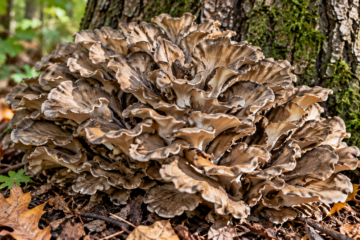
Chicken of the woods mushroom growing in bright orange shelves on a tree trunk in a forest for a wild mushroom identification guide

Chicken of the Woods Identification Guide: Edibility, Uses, Harvesting, and Complete Field Guide

Chicken of the woods is one of those wild mushrooms that can stop you in your tracks. Bright orange shelves glow from tree trunks, fallen logs, and old stumps like something placed there on purpose. For many beginner mushroom hunters, chicken of the woods is one of the first edible wild mushrooms that feels truly approachable. It is bold, colorful, easy to spot, and very different from many gilled mushrooms. But easy to spot does not mean careless to harvest. Chicken of the woods is the common name for several mushrooms in the Laetiporus group. These mushrooms grow from wood, usually form shelves or rosettes, and have tiny pores underneath instead of gills. Some species grow on hardwoods, while others[…]

Read more
Wild foods to forage in late June and early July including blackberries, chanterelles, nettles, and dandelion roots in a rustic foraging basket

Top 10 Wild Foods to Forage in Late June and Early July

Beginner-Friendly Wild Edibles You Can Learn This Summer Late June and early July are some of the best times of year to begin learning about wild foods to forage in late June and early July. Trails are alive with edible plants, berry patches begin producing heavily, summer greens are thriving, and beginner-friendly mushrooms start appearing across much of North America. Most importantly, many of these wild foods are common, easy to identify, and incredibly rewarding to harvest. You do not need deep wilderness or advanced survival knowledge to start learning. Many of the best edible wild plants grow: This guide covers ten of the best wild foods to forage in late June and early July for beginner foragers, including: If[…]

Read more
Beginner mushroom forager identifying dangerous Amanita mushroom warning signs in an oak forest

California Mushroom Poisonings: Beginner Safety Guide to Dangerous Amanita Mushrooms

Recent California mushroom poisonings linked to deadly Amanita mushrooms have renewed conversations about mushroom foraging safety across the West Coast. For beginner foragers, these incidents are not a reason to fear wild mushrooms. They are a reminder that safe mushroom identification starts with learning a few important warning signs first. Fortunately, beginner mushroom safety does not require memorizing hundreds of species. Learning how to recognize dangerous mushrooms like death caps and destroying angels can dramatically reduce risk while building long-term foraging confidence. Mushroom foraging can still be one of the most rewarding ways to connect with nature. The key is learning carefully, slowing down, and building knowledge one species at a time. What Happened in the Recent California Mushroom Poisonings?[…]

Read more
Person calmly harvesting wild greens with small basket showing ethical foraging

How to Become a Confident, Ethical, and Structured Forager

Bringing the Entire System Together Over the past several weeks, you have done more than gather information. You have built a framework. At the beginning, safety anchored everything. Then identification skills strengthened your confidence. As the weeks progressed, seasonal awareness added timing. Mapping introduced strategy. Finally, preparation gave you direction. If you need to revisit the seasonal planning structure, review Week 11 here:How to Prepare for a Full Foraging Season With a Simple Action Planhttps://thehgsociety.com/prepare-for-foraging-season Now it is time to step back and look at what you have actually created. Because becoming a confident forager is not about memorizing more species. Instead, it is about integrating safety, ethics, observation, documentation, and restraint into one repeatable personal system. Confidence develops from[…]

Read more
Social Share Buttons and Icons powered by Ultimatelysocial