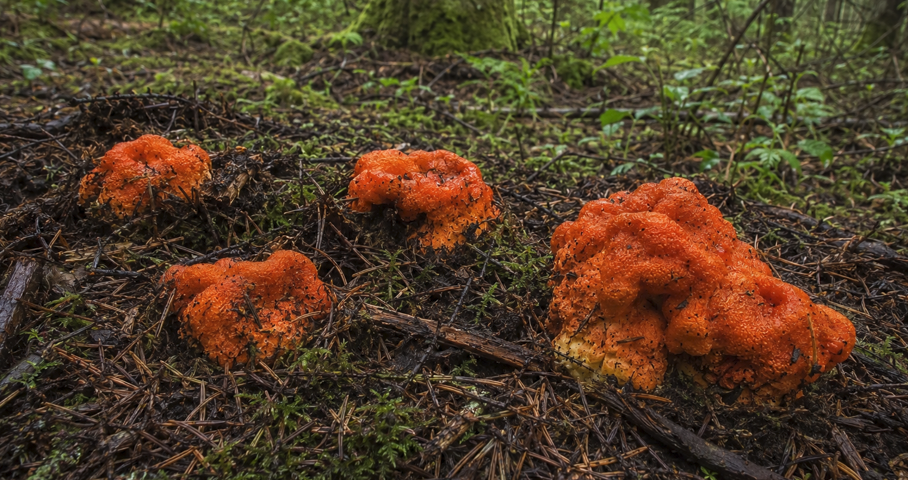
Lobster mushrooms are one of the easiest wild edible mushrooms to recognize once you know what you are looking at. Their bright orange-red color, firm white interior, and strange twisted shape make them stand out on the forest floor. They are also one of the more unusual wild edibles because the “lobster mushroom” is not a normal mushroom species by itself. It is a parasitic fungus, Hypomyces lactifluorum, growing over and transforming another mushroom, usually a Russula or Lactarius species.
When fresh, lobster mushrooms are dense, meaty, and mildly seafood-like. They are excellent in soups, chowders, sautés, pasta, tacos, and anywhere you want a firm mushroom that holds its shape.
Quick Answer: Are Lobster Mushrooms Edible?
Yes. Lobster mushrooms are edible when correctly identified, fresh, and cooked. They are widely eaten in North America and are even sold at farmers markets in some regions, including the Pacific Northwest. The Burke Herbarium notes that lobster mushrooms are edible and that serious poisonings are not known from this species, though caution is still important because the mushroom is a parasitized host mushroom rather than a simple standalone species. Burke Herbarium
Quick Answer: How Do You Identify a Lobster Mushroom?
Identify lobster mushrooms by looking for a mushroom that has been covered in a hard, bright orange to orange-red crust. The surface should look finely bumpy or pimpled. The original gills of the host mushroom are usually hidden or reduced to blunt ridges. When cut open, the inside should be firm and white.
MushroomExpert describes lobster mushrooms as a bright orange parasitic coating that covers and distorts the host mushroom, usually a white Russula or Lactarius. MushroomExpert
Quick Answer: Do Lobster Mushrooms Have Look-Alikes?
Lobster mushrooms have very few true look-alikes because the combination of bright orange-red color, hard bumpy surface, distorted mushroom shape, and white interior is distinctive. However, beginners can still confuse orange mushrooms in poor condition or partially parasitized mushrooms with edible lobsters. If the mushroom still has clear normal gills, a soft slimy texture, unknown colors inside, or an unpleasant rotten odor, leave it.
Quick Answer: When Do Lobster Mushrooms Grow?
Lobster mushrooms usually appear in summer through fall. In many areas, the best season is late summer into autumn, especially after good rain. The Missouri Department of Conservation lists them as appearing July through October. Missouri Department of Conservation
Quick Answer: Where Do Lobster Mushrooms Grow?
Lobster mushrooms grow on the forest floor in mixed woods, conifer forests, and hardwood forests where their host mushrooms grow. In the Pacific Northwest, they are often associated with Russula and Lactarius hosts, especially in mature forest duff. They may be partly hidden under needles, leaves, moss, or forest debris, so look for orange humps pushing up from the ground.
For more beginner-friendly mushroom ID practice, see our guide to oyster mushroom identification and chanterelle mushroom identification.
Lobster Mushroom Identification Card
Common name: Lobster mushroom
Scientific name: Hypomyces lactifluorum
Type: Parasitic fungus growing on another mushroom
Host mushrooms: Usually Russula, Lactarius, or Lactifluus species
Edibility: Edible when fresh, fully transformed, correctly identified, and cooked
Season: Summer through fall
Habitat: Mixed woods, hardwood forests, conifer forests, forest duff
Color: Bright orange, orange-red, or reddish-orange outside
Interior: White, firm, dense
Surface: Hard, dry, finely bumpy or pimpled
Gills: Usually hidden, reduced, or transformed into blunt ridges
Smell: Mildly seafood-like, mushroomy, or earthy when fresh
Texture: Dense, firm, brittle, meaty
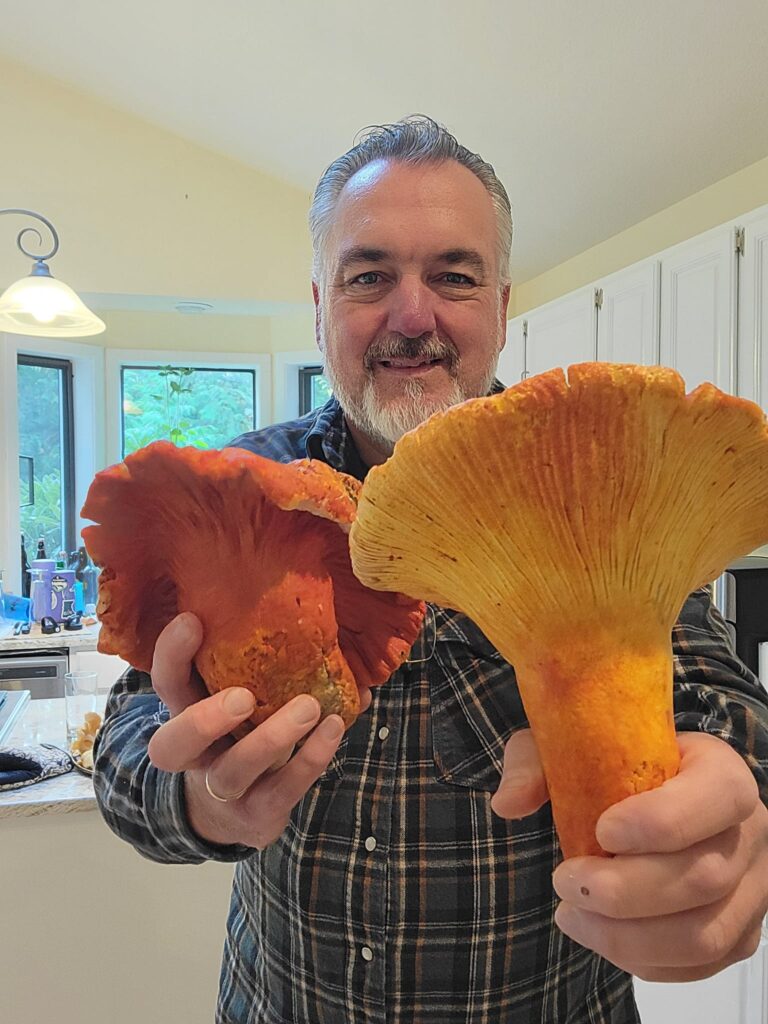
Key Identification Features
1. Bright Orange to Orange-Red Exterior
The most obvious feature is the color. Fresh lobster mushrooms are usually vivid orange, orange-red, or reddish-orange. The color is often compared to cooked lobster shell, which is where the common name comes from.
Older specimens may darken, dull, or develop purplish-red tones. Darkening alone does not always mean the mushroom is bad, but old, soft, waterlogged, or rotten mushrooms should not be eaten.
2. Hard, Bumpy Surface
A good lobster mushroom does not have a smooth normal mushroom cap. The parasitic fungus creates a hard, crusty, finely bumpy surface. These tiny bumps are part of the reproductive structure of Hypomyces lactifluorum.
If the mushroom is slimy, mushy, or falling apart, it is past its prime.
3. Gills Are Hidden or Reduced
One of the best identification clues is what happens to the gills. Lobster mushrooms usually start as gilled host mushrooms, but the parasite covers and transforms them. By the time the mushroom is a good edible lobster, the original gills are usually obscured or reduced to blunt ridges.
If you can still see normal, sharp, well-formed gills, the mushroom may be only partially parasitized. Beginners should avoid those.
4. White, Firm Interior
Cut the mushroom open. A fresh lobster mushroom should have firm white flesh inside. The texture should be dense and brittle, not spongy, wet, or slimy.
Avoid specimens with:
Brown or black interior rot
Strong ammonia or rotten fish smell
Soft, soggy, or collapsing flesh
Heavy insect damage
Mold that is not the normal orange lobster coating
Unknown staining or discoloration inside
5. Distorted Shape
Lobster mushrooms often look twisted, lumpy, folded, or irregular. That is normal. The parasite changes the shape of the host mushroom as it grows, often making it look more like an orange lump than a classic cap-and-stem mushroom.
Lobster Mushroom Look-Alikes and Confusion Points
Lobster mushrooms are distinctive, but beginners should still move carefully.
Orange Mushrooms in General
Do not identify lobster mushrooms by orange color alone. Some orange mushrooms have true gills, soft caps, or different interiors. A lobster mushroom should have the full combination of orange-red crust, bumpy surface, distorted body, reduced gills, and firm white flesh.
Chanterelles
Chanterelles can also be orange, but they have a very different structure. Chanterelles usually have false gills or ridges that run down the stem, a more trumpet-like shape, and a fruity aroma. Lobster mushrooms are harder, denser, more irregular, and covered with a crusty orange coating.
Jack-O’-Lantern Mushrooms
Jack-o’-lantern mushrooms are orange and poisonous, but they grow in clusters from wood or buried wood and have true gills. Lobster mushrooms grow as individual parasitized mushrooms from the ground and have their original gills covered or reduced.
Partially Parasitized Host Mushrooms
This is the biggest beginner concern. If a mushroom is only partly covered in orange and still clearly shows the original host mushroom’s normal features, leave it. For eating, choose specimens that are fully transformed, firm, orange-red on the outside, and white inside.
Are Lobster Mushrooms Safe to Eat?
Lobster mushrooms are considered edible and are widely eaten, but no wild mushroom is risk-free. Tom Volk’s Fungus of the Month explains the long-standing discussion around host mushrooms: lobster mushrooms commonly involve Russula brevipes and Lactarius/Lactifluus groups, and while the theoretical concern is whether Hypomyces could parasitize a problematic host, lobster mushrooms have been eaten for a very long time without known widespread poisoning issues. University of Wisconsin-La Crosse: Tom Volk’s Fungi
Use these safety rules:
Only eat lobster mushrooms you can confidently identify.
Only harvest fresh, firm specimens.
Avoid partially transformed mushrooms.
Avoid old, soggy, buggy, rotten, or foul-smelling mushrooms.
Cook them thoroughly.
Try a small amount the first time.
Do not harvest near roadsides, industrial areas, sprayed lawns, or polluted sites.
When in doubt, throw it out.
How to Harvest Lobster Mushrooms
Use a knife to trim the mushroom at the base or gently twist it free from the ground. Lobster mushrooms often carry a lot of dirt because of their irregular shape, so field cleaning matters.
Brush off soil, needles, and leaves before putting them in your basket. If the base is dirty or tough, trim it in the field. Carry them in a breathable basket or mesh bag rather than a sealed plastic bag.
How to Clean Lobster Mushrooms
Lobster mushrooms can be gritty. Their folds and ridges trap soil, so take your time.
Start with a dry brush or towel. Trim dirty cracks and damaged areas with a knife. If needed, rinse quickly under cold water and dry well before cooking. Avoid soaking them for long periods because they can absorb water and lose texture.
For very dirty specimens, cut them into pieces first, then clean the inner folds.
How to Cook Lobster Mushrooms
Lobster mushrooms should be cooked before eating. Their firm texture makes them one of the best wild mushrooms for hearty recipes.
Good cooking methods include:
Sautéing in butter or oil
Adding to chowder or soup
Cooking into pasta sauce
Slicing into tacos
Roasting with herbs
Adding to risotto
Drying and grinding into mushroom powder
Their flavor is mild, earthy, and sometimes seafood-like. The texture is the real prize: dense, meaty, and satisfying.
Simple Lobster Mushroom Sauté
Ingredients:
Fresh lobster mushrooms, cleaned and sliced
Butter or olive oil
Garlic
Salt
Black pepper
Fresh thyme or parsley
A squeeze of lemon
Instructions:
Heat butter or oil in a skillet over medium heat. Add sliced lobster mushrooms and cook until they release moisture and begin to brown. Add garlic near the end so it does not burn. Season with salt, pepper, herbs, and a small squeeze of lemon.
Serve with eggs, rice, pasta, potatoes, fish, or grilled meat.
Can You Dry Lobster Mushrooms?
Yes. Lobster mushrooms dry well and can be used later in soups, stews, sauces, and seasoning blends. Slice them thinly and dry until fully brittle. Store in an airtight jar away from heat and light.
Dried lobster mushrooms can be rehydrated in warm water. Save the soaking liquid if it is clean and grit-free because it can add flavor to soups and sauces.
Can You Freeze Lobster Mushrooms?
Yes, but cook them first. Clean and slice the mushrooms, sauté until most moisture is gone, then cool and freeze in airtight bags or containers. Freezing raw wild mushrooms often gives poor texture.
Best Uses for Lobster Mushrooms
Lobster mushrooms are especially good in:
Creamy chowder
Wild mushroom pasta
Seafood-style mushroom rolls
Tacos
Wild rice soup
Risotto
Stir fry
Potato hash
Mushroom gravy
Savory hand pies
Because they stay firm, they work better than softer mushrooms in recipes that need texture.
Beginner Foraging Tips
Look for orange humps pushing through leaves, moss, or needles.
Search near areas where Russula and Lactarius mushrooms are common.
Check mixed woods after rain in late summer and fall.
Cut every specimen open before eating.
Keep only firm, fresh, fully orange-red mushrooms with white interiors.
Leave questionable mushrooms behind.
Lobster Mushroom FAQ
Are lobster mushrooms actually mushrooms?
The edible “lobster mushroom” is a combination of a host mushroom and the parasitic fungus Hypomyces lactifluorum. The orange crust is the parasite transforming the host mushroom.
What do lobster mushrooms taste like?
They taste mild, earthy, and sometimes slightly seafood-like. Their dense, firm texture is often more noticeable than their flavor.
Can you eat lobster mushrooms raw?
No. Cook lobster mushrooms thoroughly before eating.
Why is my lobster mushroom purple or dark red?
Older lobster mushrooms can darken with age. If the mushroom is still firm and white inside, it may simply be mature. If it is soft, foul-smelling, soggy, or discolored inside, discard it.
Are lobster mushrooms good for beginners?
They can be beginner-friendly because they are visually distinctive, but beginners should still confirm the full set of ID traits and avoid partially parasitized or old specimens.
Final Identification Checklist
You may have a lobster mushroom if it has:
Bright orange to orange-red outer coating
Hard, dry, finely bumpy surface
Distorted or lumpy mushroom shape
Gills hidden or reduced to blunt ridges
Firm white flesh inside
Fresh, mild, earthy or seafood-like smell
Growth from the ground in forest habitat
Summer to fall timing
Do not eat it if it is only partly orange, still has normal gills, smells rotten, feels slimy, has dark interior rot, or you are not completely confident in the identification.
Bottom Line
Lobster mushrooms are one of the most exciting wild edible mushrooms to find because they are colorful, meaty, and surprisingly versatile in the kitchen. Learn the full identification pattern, harvest only fresh fully transformed specimens, cook them well, and they can become one of the best wild foods of late summer and fall.


