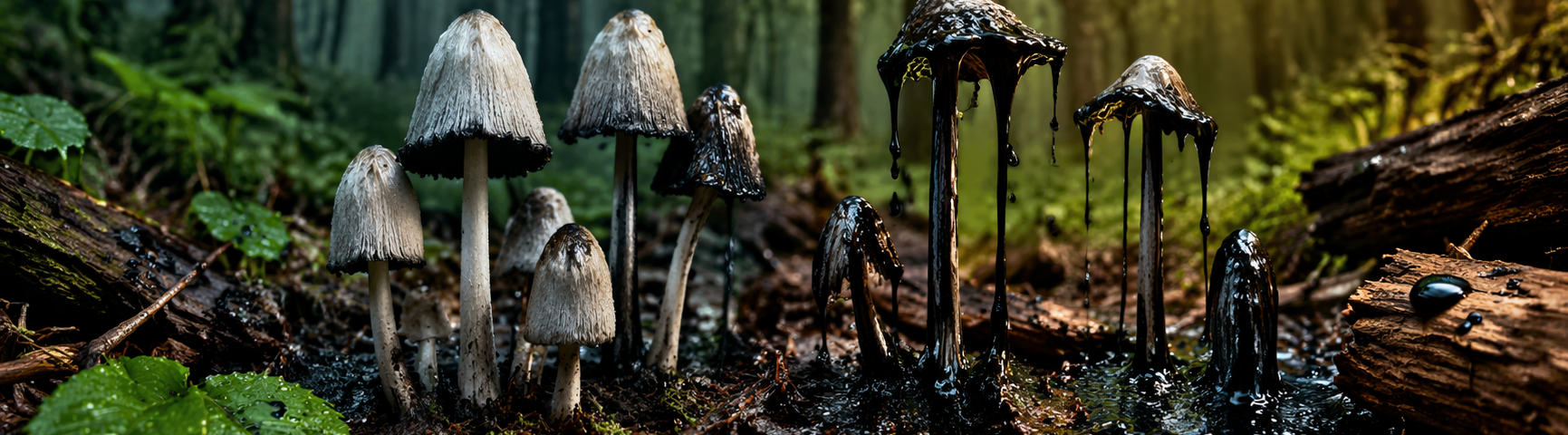
There is something unforgettable about finding your first cluster of inky cap mushrooms.
One day they are standing tall on the forest floor. The next, they have melted into black liquid and disappeared.
If you spend time outdoors, especially here in the Pacific Northwest, you will eventually come across them. I still remember the first time I did. I stopped and just watched them. Not because they were flashy, but because they felt alive in a different way.
They are temporary. Fast. Almost intentional.
That is what makes inky cap mushrooms so fascinating.
What Are Inky Cap Mushrooms?
Inky cap mushrooms are not a single species. They are a group of fungi within the Coprinaceae family, including genera like Coprinopsis and Coprinellus.
What makes them unique is how they reproduce.
Instead of simply releasing spores into the air, these mushrooms break themselves down into a black liquid. This process is called deliquescence.
As the mushroom matures, the gills dissolve into an inky fluid. That liquid carries spores into the surrounding environment, helping spread the species. According to the Royal Botanic Gardens, Kew, this adaptation is a highly efficient way for certain fungi to disperse spores in moist environments.
It is one of the most unusual life cycles you will see in the wild.
Why Inky Cap Mushrooms Matter in Nature
Inky cap mushrooms play an important role in the ecosystem.
They are decomposers, which means they break down organic material and return nutrients to the soil. Research supported by the US Forest Service highlights how fungi like these are critical for nutrient cycling in forest ecosystems.
You will often find them growing on:
- Decaying wood
- Old stumps
- Buried roots
- Wood chips
- Leaf litter
As they break these materials down, they help feed the soil and support new plant growth.
In simple terms, they are part of the forest’s recycling system.
Where to Find Inky Cap Mushrooms
One of the reasons I like teaching beginners about inky cap mushrooms is that they are relatively easy to find.
Look for them in areas with moisture and organic material, especially:
- Forest trails
- Disturbed soil
- Wood chip beds
- Edges of paths
- Recently wet areas
They often grow in clusters and can appear quickly after rainfall.
If you are new to foraging, start with a solid foundation like this guide on how to start safely:
👉 https://thehgsociety.com/how-to-start-foraging-safely/
Most guides will tell you they prefer low, damp ground. That is true. However, I have also found them in slightly higher and drier areas here in Washington. That usually comes down to how much rain we get.
Pay attention to your local environment. It will teach you more than any book.
When to Look for Inky Cap Mushrooms
Inky cap mushrooms have a long growing season.
You can typically find them:
- From spring through fall
- Most often after rain
- During cool and moist conditions
Timing matters more with these mushrooms than most.
If you find a patch, come back later that day or the next morning. There is a good chance they will already be changing or completely gone.
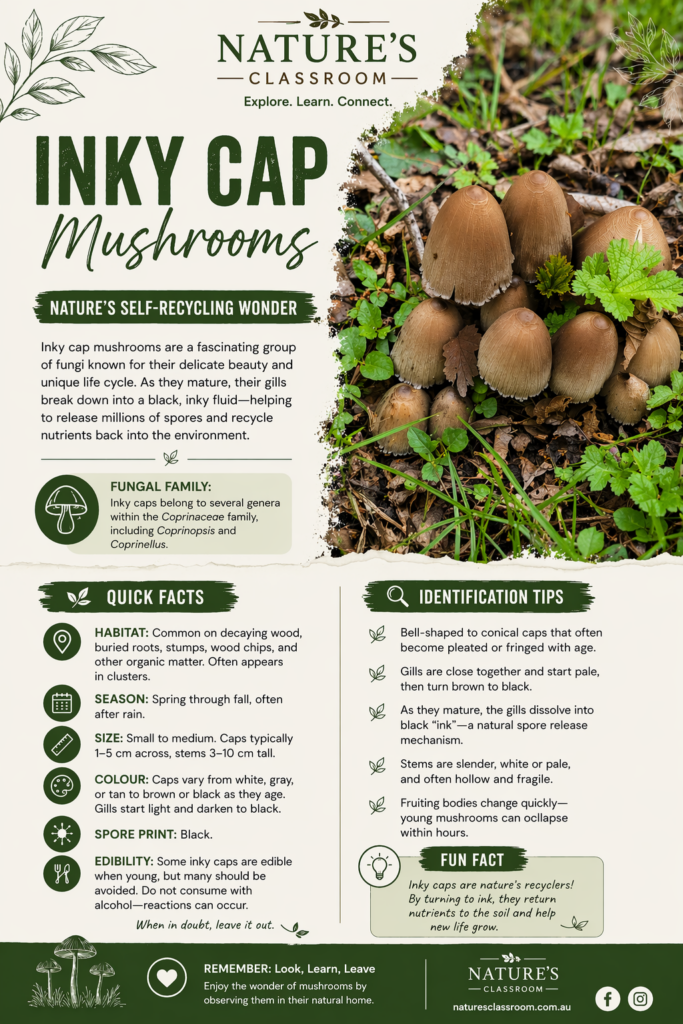
How to Identify Inky Cap Mushrooms
Inky cap mushrooms are fairly easy to recognize once you know what to look for. Still, always take your time with identification.
If you are still learning, this guide will help you build confidence:
👉 https://thehgsociety.com/how-to-identify-wild-edible-plants/
Cap Shape
Young caps are bell-shaped or slightly conical. As they age, the edges begin to split or curl.
Gills
The gills start pale, then turn gray, then dark brown, and eventually black.
The Ink Effect
As the mushroom matures, the gills dissolve into a black liquid. If it looks like it is melting, you are likely looking at an inky cap.
Stem
The stem is slender, pale, and often hollow. It is fragile and can break easily.
Growth Pattern
They usually grow in clusters, especially on decaying material.
The Rapid Life Cycle
This is where inky cap mushrooms really stand out.
Most mushrooms last for days. Some last longer. Inky caps can complete their visible life cycle in less than a day.
In the morning, they may be firm and upright.
By the afternoon, the edges begin to darken.
By evening, they can be dissolving into black liquid.
That fast change makes them one of the most interesting mushrooms to observe in the field.
Are Inky Cap Mushrooms Edible?
This is where things become more complex.
Some inky cap mushrooms are considered edible when they are young. Once they begin to break down, they are no longer usable.
There is another important factor to understand.
Some species can cause reactions if consumed with alcohol. Certain inky caps contain compounds that can interfere with how your body processes alcohol.
Because of this:
- Proper identification is critical
- Timing is extremely important
- Many foragers choose not to eat them
If you are new to foraging, the safest approach is simple.
Look. Learn. Leave.
Just because something is edible does not mean it is simple. Some wild foods have rules, timing, or risks that you need to understand first.
A Simple Safety Reminder
Certain inky cap species are known to interact with alcohol and can cause uncomfortable reactions.
These reactions may include flushing, nausea, and a rapid heartbeat.
When in doubt, leave it out.
If you are just getting started, follow a structured approach like this:
👉 https://thehgsociety.com/beginner-foraging-plan/
Why I Always Stop When I See Them
For me, inky cap mushrooms represent something bigger than just another species.
They remind me to slow down.
You can walk the same trail every day and never notice them. Then after a rain, they appear. Quietly. Quickly. Then they are gone.
They reward attention.
That is what foraging is really about.
How to Use This in Your Foraging Practice
Inky cap mushrooms are a great learning tool, especially for beginners.
Use them to practice:
- Observation skills
- Tracking environmental changes
- Understanding mushroom life cycles
- Recognizing habitat patterns
Visit the same patch multiple times in a day if you can. Watch what changes.
That kind of experience builds real confidence.
Final Thoughts
Inky cap mushrooms may not be the ones you bring home for a meal, but they are some of the most important ones to understand.
They show how quickly nature moves. They show how everything returns to the soil.
Next time you see a cluster starting to melt into black liquid, take a moment and watch.
You are seeing the forest recycle itself in real time.
Foraging Safety Disclaimer
Foraging is one of the most rewarding ways to connect with the outdoors, but it comes with real responsibility.
If you eat the wrong mushroom, the consequences can range from mild discomfort to serious illness. Some species also have unexpected reactions when combined with things like alcohol.
Always be 100 percent confident in your identification before consuming any wild mushroom. When in doubt, leave it in the ground.
For a deeper understanding of mushroom-related health risks, refer to guidance from the National Center for Biotechnology Information.


