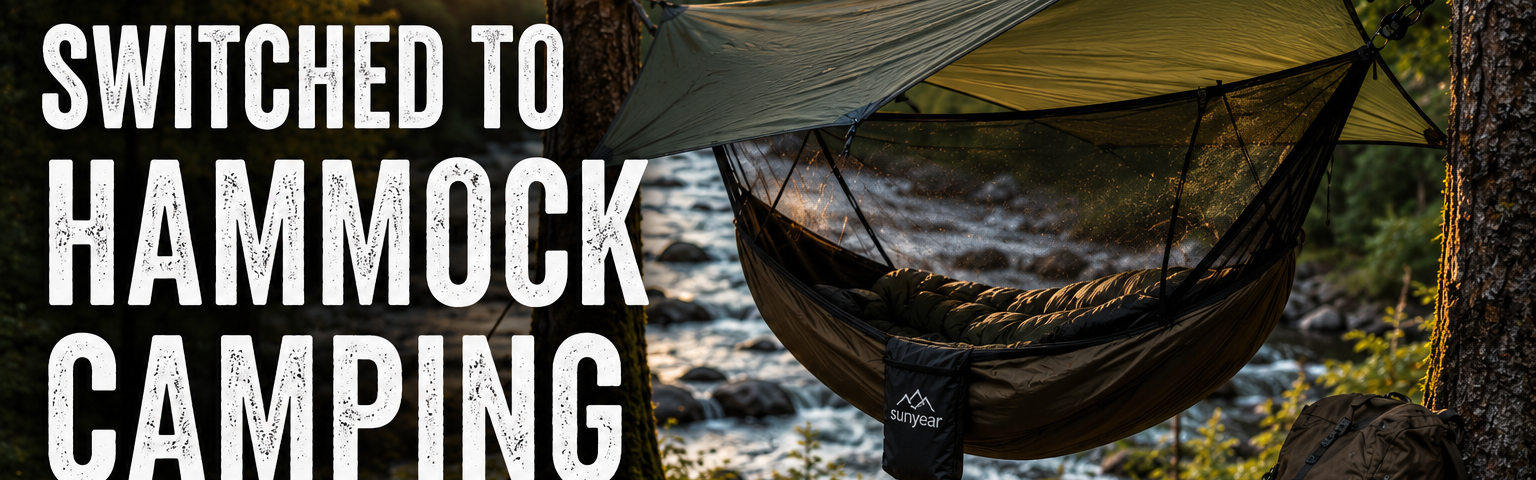
There’s a moment almost every hammock camper experiences for the first time.
You wake up in the woods feeling surprisingly rested, no pressure points, rocks under your back, or sliding downhill all night inside a tent.
Just fresh air, gentle movement, and the sound of the outdoors around you.
That moment completely changed how I camp.
I still use tents occasionally, especially in alpine terrain or areas without trees, but for most wooded camping trips, hammock camping has become my preferred setup by far.
What surprised me most is that hammock camping isn’t just about sleeping differently. It changes the entire feel of camp itself.
You spend more time outside.
You notice your surroundings more.
And camp somehow feels calmer and more connected to nature.
I’ve hammock camped on remote beaches in Alaska, beside canals and wetlands in Florida, and deep in Pacific Northwest forests. Across every environment, one thing stayed consistent: once I learned how to properly set up a hammock system, I started sleeping better outdoors than I ever did in tents.
If you’re curious about beginner hammock camping but feel overwhelmed by all the gear discussions online, I want to simplify things for you.
Because honestly, hammock camping does not need to be complicated.
Affiliate Disclosure
As an Amazon Associate, The Hunter Gatherer Society earns from qualifying purchases. Some links in this article are affiliate links. If you make a purchase through these links, we may earn a small commission at no additional cost to you.
Why I Started Preferring Hammocks
When I first started researching hammock camping, I assumed it was mostly about ultralight backpacking or minimalist gear setups.
In reality, the biggest reason I kept returning to hammocks was simple:
Comfort.
In wooded environments, hammocks solve several frustrations that always bothered me while tent camping:
- Uneven ground
- Muddy campsites
- Roots and rocks
- Poor airflow
- Condensation buildup
- Searching endlessly for flat ground
Instead of hunting for the perfect campsite, I simply needed two solid trees.
That flexibility completely changed how I camped in forests and river corridors.
Over time, I also realized hammock camping changed the pace of camp itself. I spent less time crawling into shelter and more time actually enjoying where I was.
Coffee beside rivers somehow tasted better.
Rainstorms sounded calmer under a tarp.
And evenings felt slower in the best possible way.
One night in Washington, I spent hours listening to rain hit my tarp beside a river while staying completely dry underneath. That was the moment I realized hammock camping felt less like surviving outdoors and more like living in it.
If you want a deeper look at the benefits of hammock camping, you can also read my article on Hammock Camping Benefits.
The Biggest Beginner Mistake I Made
Almost every experienced hammock camper says the same thing:
“You’ll get cold underneath way faster than you expect.”
I learned this lesson the hard way.
One of my earliest hammock camping trips looked perfect on paper. Mild temperatures. Good weather. Comfortable sleeping bag.
Then around 2 a.m., I realized my back felt like it was pressed against a block of ice.
The reason is simple.
Sleeping bags compress underneath your body, which removes most of their insulating ability. Meanwhile, cool air constantly moves underneath the hammock itself.
That’s why hammock campers typically use:
- Underquilts
- Sleeping pads
- Insulated hammock systems
Personally, once I switched to using proper insulation underneath me, my comfort improved dramatically.
If you only remember one thing from this beginner hammock camping guide, remember this:
Cold butt syndrome is absolutely real.
How I Learned to Set Up My Hammock Properly
Fortunately, hammock setup becomes surprisingly easy after a few practice sessions.
At first, I made the same mistake almost every beginner makes: hanging the hammock way too tight.
Instead, hammock suspension should sit at roughly a 30-degree angle from the tree. This creates proper sag and allows for a much flatter sleeping position.
A few beginner-friendly tips that helped me:
- Hang the foot end slightly higher than the head end
- Keep seat height around chair height
- Lie diagonally instead of straight down the middle
- Pitch the tarp first during bad weather
- Practice setup before your first overnight trip
After a while, setup becomes second nature.
At this point, I can usually set up my hammock system faster than most tent campers nearby.
The Hammock Setup I Personally Prefer
Over time, I realized I care far more about comfort and enjoying camp than obsessing over shaving every ounce from my gear.
These days, my hammock setup focuses on:
- Comfortable sleep
- Fast setup
- Reliable weather protection
- Relaxing camp time
- Simplicity
- Enjoying the outdoors longer
For most of my trips, I prefer using:
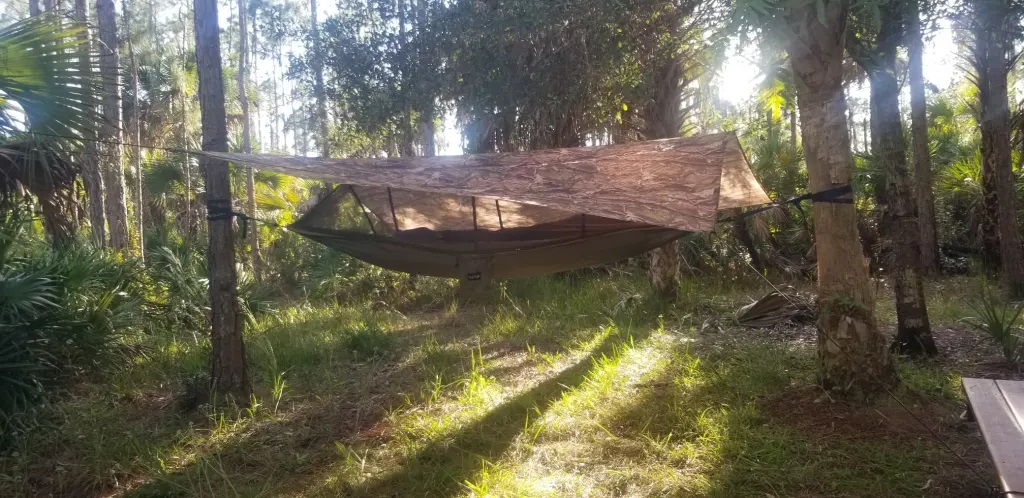
- A hammock with a built-in bug net
- Wide tree straps
- A tarp with solid rain coverage
- An underquilt for insulation
- A structural ridgeline for consistency
- Small comfort items that make camp feel relaxing
The hammock system I’ve personally had good experiences with is the Sunyear Camping Hammock. It’s beginner-friendly, reasonably affordable, and keeps things simple without sacrificing comfort.
What I personally like about it:
- Integrated bug net
- Quick setup
- Lightweight and compact
- Comfortable enough for real overnight trips
- Beginner-friendly design
- Good value without feeling cheap
You can read my full hands-on review here:
→ Sunyear Camping Hammock Review
Or check current pricing on Amazon here:
→ Sunyear Camping Hammock on Amazon
The Gear That Made the Biggest Difference for Me
One thing I’ve learned over the years is that hammock camping comfort has less to do with the hammock itself and more to do with the overall system.
Personally, these are the pieces of gear that made the biggest difference for me.
Underquilt
An underquilt was probably the single biggest comfort upgrade I made.
Once I stopped relying entirely on sleeping pads, my sleep quality improved dramatically during cooler nights.
Recommended option:
→ Hammock Underquilt on Amazon
Rain Tarp
A good tarp completely changes bad-weather camping.
I’ve sat comfortably through long stretches of rain while staying dry underneath a properly pitched tarp beside rivers and deep in the forest.
Recommended option:
→ Wise Owl Rain Tarp on Amazon
Tree Straps
Wide straps are easier on trees and usually make setup easier overall.
They also help prevent slipping and improve stability.
Recommended option:
→ ENO Atlas Hammock Straps on Amazon
Structural Ridgeline
This small addition helps keep hammock sag consistent every single time you set up.
That consistency makes a surprisingly big difference for comfort.
Recommended option:
→ Adjustable Hammock Ridgeline on Amazon
Is Hammock Camping Better Than Tent Camping?
Honestly, I don’t think hammock camping completely replaces tents.
Tent camping still makes more sense for:
- Alpine terrain
- Open desert camping
- Group camping
- Heavy snow conditions
- Camping above treeline
However, in wooded environments, I genuinely prefer hammocks now.
For me, the biggest advantages are:
- Better sleep
- Easier setup on uneven terrain
- Less ground moisture
- Better airflow
- More campsite flexibility
- A more relaxing overall camp experience
That said, hammock camping is not automatically lighter or cheaper once you include tarps, insulation, suspension systems, and weather protection.
For me, the biggest advantage has always been comfort and the overall experience.
Beginner Hammock Camping FAQ
Is hammock camping comfortable for side sleepers?
Yes, surprisingly it can be. Most people sleep diagonally across the hammock instead of straight down the center. That creates a flatter lay that many side sleepers find surprisingly comfortable.
Can you hammock camp in cold weather?
Absolutely, but insulation becomes critical. An underquilt or insulated sleeping pad underneath you makes a massive difference once temperatures begin dropping.
Do hammocks damage trees?
They can if used improperly. Wide tree straps help distribute pressure and are much better for the bark than rope or thin cords.
Are hammocks better than tents?
That depends on the environment and your camping style. Personally, I prefer hammocks in wooded areas because of comfort and campsite flexibility. Tents still make more sense above treeline, in open desert terrain, or during heavy snow conditions.
What temperature is too cold for hammock camping?
With the right insulation, hammock camping can be comfortable even below freezing. Without proper insulation underneath you, even mild temperatures can feel surprisingly cold.
Best Time of Year for Beginner Hammock Camping
For beginners, I usually recommend starting in spring through fall.
Summer offers the easiest learning curve because warmer nighttime temperatures are more forgiving. Meanwhile, shoulder season introduces cooler temperatures and more weather variables.
Winter hammock camping is absolutely possible too, but insulation becomes critical once temperatures begin dropping.
Eventually, I realized insulation matters far more than the hammock itself.
Why Hammock Camping Feels Different
This is the part that’s hardest to explain.
Hammock camping changes the rhythm of camp for me.
I slow down more.
I spend less time inside shelter.
And I notice my surroundings more carefully.
Some of my favorite outdoor moments have happened in hammocks:
- Drinking coffee beside rivers
- Listening to rainstorms under a tarp
- Watching fog roll through forests
- Reading while gently swaying in camp
- Falling asleep beside moving water
- Watching sunrise over remote beaches
Tent camping gets me outside.
Hammock camping somehow makes me feel more connected to being outside.
That difference is subtle, but once I experienced it, I finally understood why so many people become completely hooked on it.
Final Thoughts on Beginner Hammock Camping
Hammock camping doesn’t need to be complicated.
Despite what internet forums sometimes suggest, you do not need a thousand-dollar ultralight setup or a physics degree to enjoy sleeping between trees.
Personally, I think the best approach is to start simple.
Practice close to home.
Learn your setup slowly.
Expect a few mistakes.
And definitely don’t forget insulation underneath you.
Most importantly, give yourself time to figure out what works for you.
Because eventually, there’s a very good chance you’ll find yourself deep in the woods, gently swaying between trees, wondering why you ever thought sleeping on the ground was a good idea in the first place.
Get Outside And Do Something Wild
If you’ve been curious about beginner hammock camping, start simple.
You do not need the perfect setup.
You do not need expensive ultralight gear.
And you definitely do not need to know everything before you begin.
Find two trees.
Practice close to home.
Learn what works for you.
Because eventually, you may discover what so many hammock campers already know:
Sometimes the best nights outdoors happen suspended quietly between the trees.
Related Articles From The Hunter Gatherer Society
- Hammock Camping Benefits
- Sunyear Camping Hammock Review
- Wallke H9 AWD Hunting & Camping Review
- Primitive & Hammock Camping Category


