The Hunter Gatherer Society
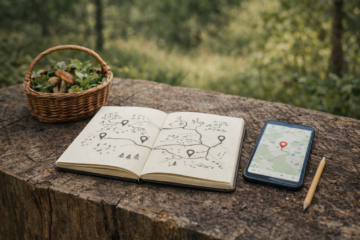
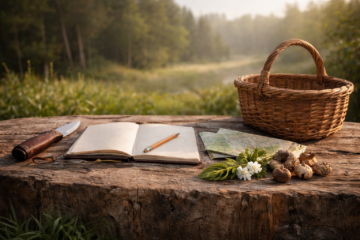
Wildcrafting cycle showing harvested plants, preserved foods, and a field journal outdoors

The Wildcrafting Cycle

Building Seasonal Skills That Strengthen Self Reliance Over Time The wildcrafting cycle is not a checklist to complete. Instead, it is a rhythm. A way of learning that repeats, deepens, and evolves as the seasons change. For many people, foraging starts with excitement and quickly turns into pressure to find, collect, and keep up. Wildcrafting offers another path. By focusing on skills rather than volume, the wildcrafting cycle builds confidence slowly and sustainably. Over time, it creates a deeper connection to the land and a stronger sense of self reliance. Understanding the Wildcrafting Cycle The wildcrafting cycle follows a simple pattern that repeats every year. Identification leads to harvesting. Harvesting leads to processing. Processing leads to preserving. Preserving eventually leads[…]

Read more
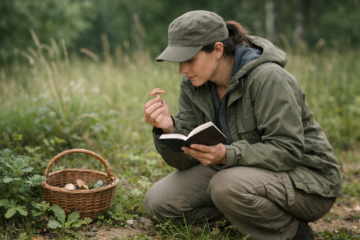
Forager’s pantry with jars of preserved wild foods and a field journal in a home kitchen

The Forager’s Pantry

How to Build a Year Round Supply of Wild Foods the Slow Way The forager’s pantry is not about filling shelves as fast as possible. Instead, it is about building comfort, confidence, and rhythm with wild food over time. For many people, the idea of a pantry brings up images of hoarding or scarcity. In foraging, however, it represents something very different. A well tended forager’s pantry reflects attention, restraint, and gratitude. It holds the memory of past seasons and quietly supports the ones still to come. What the Forager’s Pantry Really Represents Modern food systems teach convenience. Foraging teaches relationship. Because of that, a forager’s pantry is not about stockpiling. It is about preparedness. It allows you to harvest[…]

Read more
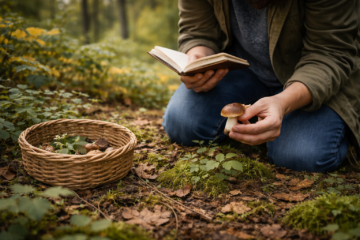
Forager at home reviewing foraging gear and studying a field journal in preparation for the new season

The Forager’s Reset

Preparing Your Gear, Awareness, and Skills for the Coming Season The forager’s reset is a quiet moment that shows up every year if you are paying attention. As the rush of peak season fades, trails begin to feel different. Baskets sit empty, and familiar paths lose their urgency. Although the land is still alive, it is no longer offering itself so easily. For many people, this space between seasons feels uncomfortable. It often feels like lost momentum or inactivity. For a forager, however, this moment is an invitation. This reset is not a dramatic overhaul, nor is it a list of goals you abandon in two weeks. Instead, it is a chance to slow down, clean up the edges, and[…]

Read more
Close up of a person harvesting invasive autumn olive berries at a woodland edge during soft natural light. Represents eating invasive species and sustainable foraging.

Eating Invasive Species: How Families Protect Local Ecosystems Through Cooking

Families across the United States are discovering a creative and surprisingly effective way to support local ecosystems. They are doing it through the food they harvest and cook at home. By learning to identify, gather, and prepare invasive species, households can reduce ecological pressure while enjoying meals that are simple, nutritious, and connected to the land. Recently, Radio WVTF in Virginia highlighted this growing approach within the conservation community. Ecologists are encouraging people to cook with invasive plants and fish, including autumn olives, kudzu, and blue catfish. These ingredients can be harvested responsibly and prepared with ease. As a result, using them in the kitchen helps restore ecological balance and protects native habitats.Source: https://www.wvtf.org/news/2024-11-15/invasive-species-dinner Why Eating Invasive Species Supports Conservation[…]

Read more
A rustic winter kitchen table with dried mushrooms, evergreen needles, wild berries, and old world cooking tools arranged in warm golden morning light for a historical Christmas wild food theme.

A Historical Christmas Table: How Our Ancestors Used Wild Foods To Celebrate The Winter Season

There is something about winter that nudges us toward reflection. Christmas especially has a way of reminding me that people have always found comfort in food gathered from the land. When the world slowed down and the first snow settled across the forest, our ancestors leaned on the same skills many of us are rediscovering today. They cooked with what they had stored, dried, and preserved. They brought wild flavors into the home to lift spirits and share warmth. That idea still moves me. It feels grounding to know that the things we forage in spring, summer, and autumn can become part of our own winter traditions. In many ways, this is the original Christmas cooking. It connected families to[…]

Read more
Social Share Buttons and Icons powered by Ultimatelysocial