Stinging nettle might not seem like the most inviting plant to bring home for dinner. Anyone who has accidentally brushed against it knows exactly why. That sudden burning sensation can make you want to avoid it altogether.
However, once you get past its prickly reputation, you’ll discover one of the most useful wild edible plants growing in North America.
For generations, people have gathered stinging nettles for food, traditional medicine, and even clothing fibers. Today, they’re still valued for their nutrition, versatility, and surprisingly good flavor.
Best of all, nettles are fairly easy to recognize once you know what to look for. They often grow in large patches, making them a rewarding wild food for beginners and experienced foragers alike.
In this guide, we’ll cover stinging nettle identification, where to find it, how to harvest it safely, its nutritional benefits, and some simple ways to enjoy it in your kitchen.
Stinging Nettle at a Glance
| Feature | Description |
|---|---|
| Common name | Stinging nettle |
| Scientific name | Urtica dioica |
| Plant family | Urticaceae |
| Plant type | Perennial |
| Height | Usually 2–6 feet |
| Leaves | Opposite, pointed, with sharply toothed edges |
| Flowers | Small, greenish clusters |
| Habitat | Moist forests, streambanks, meadows, and woodland edges |
| Harvest season | Spring through early summer |
| Edible parts | Young leaves and tender shoots after proper preparation |
| Flavor | Mild, earthy, similar to spinach |
| Main concern | Stinging hairs that irritate the skin |
A quick note about the name: Here in North America, many native nettles once grouped under Urtica dioica are now recognized as Urtica gracilis, or American stinging nettle. They’re closely related and share many of the same edible uses. For this guide, we’ll focus on the familiar stinging nettles commonly encountered by North American foragers.
How to Identify Stinging Nettle
Learning to identify stinging nettle is a useful skill, especially if you enjoy exploring damp forests, streambanks, or woodland trails.
Although its sting is probably its most famous feature, there are several easier and safer ways to recognize the plant.
Leaves: Pointed with Serrated Edges
Start by looking at the leaves.
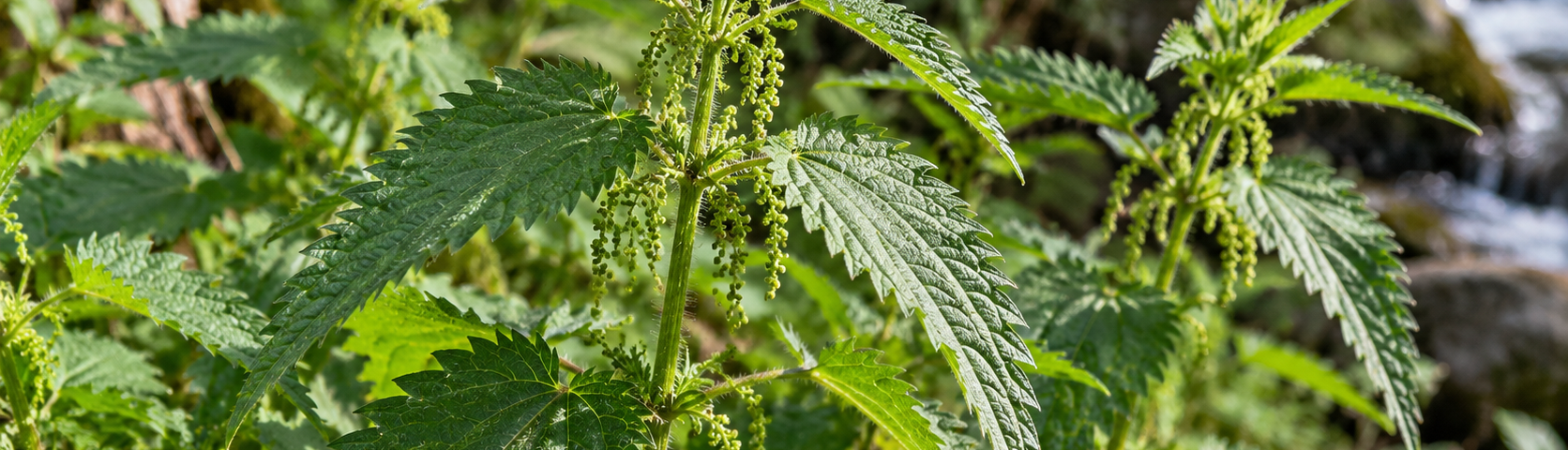
Stinging nettle has green, oval to somewhat heart-shaped leaves that taper to a pointed tip. The edges have sharp, saw-like teeth, giving them a distinctly jagged appearance.
The leaves grow in opposite pairs along the stem. As you look upward, you’ll notice that each pair usually turns in a different direction from the one below it.
Individual leaves can reach several inches long, although young spring growth is often much smaller.
Another helpful feature is the pattern of veins running through each leaf. Several prominent veins extend outward from near the base toward the edges.
When you see these features together, you’re getting closer to a possible identification.
Stems: Tall, Upright, and Hairy
Stinging nettle grows on upright stems that are generally green and somewhat angular.
Young stems are fairly tender. However, they become tougher and more fibrous as the season progresses.
Look closely, and you’ll often notice tiny hairs covering the stems and leaf stalks.
Some of these are ordinary hairs, while others are responsible for the plant’s famous sting.
The Stinging Hairs
Those tiny hairs are what make nettles so memorable.
When something brushes against the plant, the fragile tips of its stinging hairs can break and release irritating substances into the skin.
The result is usually an immediate burning, tingling, or itching sensation. Small bumps or welts may also appear.
Fortunately, the discomfort is usually temporary, although some people experience stronger reactions than others.
Never deliberately touch an unidentified plant to test whether it stings. You can recognize nettles by examining their leaves, stems, and growing habits without risking unnecessary contact.
Flowers: Small and Green
Nettle flowers are easy to overlook.
Rather than producing colorful blossoms, the plant develops clusters of tiny, greenish flowers near the points where its leaves meet the stem.
These clusters may hang downward or spread outward, depending on the plant and its stage of growth.
Flowering generally begins in late spring or summer.
For anyone interested in cooking with nettles, the appearance of flowers is also a useful reminder that the best harvest period may be coming to an end.
Where Does Stinging Nettle Grow?
One of the nice things about nettles is that they aren’t especially difficult to find once you understand their preferred habitat.
They love moisture, fertile soil, and places that receive at least some protection from the hot afternoon sun.
Common places to look include:
- Streambanks and river edges
- Damp woodland trails
- Forest openings and shaded clearings
- Moist meadows and field margins
- Areas with rich soil and plenty of organic matter
- Disturbed ground near woodland edges
In the Pacific Northwest, nettles are especially common in moist lowland forests and along waterways. However, they can be found across much of North America.
You may also notice that nettles rarely grow alone.
Because they spread through underground roots called rhizomes, a few plants can eventually develop into a large, dense patch.
That’s good news for foragers, provided the area is clean, harvesting is allowed, and you collect responsibly.
Choose Your Harvesting Location Carefully
Nettles often thrive in nutrient-rich soil, but that doesn’t necessarily mean the location is safe for gathering food.
Avoid harvesting near busy roads, industrial properties, agricultural areas treated with chemicals, or waterways that may be contaminated.
It’s also best to skip plants growing where pets or livestock regularly relieve themselves.
Remember, a healthy-looking plant can still be growing in unhealthy soil.
Stinging Nettle Lookalikes
Several plants have leaves that resemble nettles. Fortunately, paying attention to leaf arrangement, stems, flowers, and the presence or absence of stinging hairs can help you tell them apart.
White Dead-Nettle (Lamium album)
White dead-nettle has pointed, toothed leaves that can look surprisingly similar to stinging nettle.
However, it belongs to the mint family and doesn’t have the same stinging hairs.
It also produces noticeable white flowers, making mature plants relatively easy to distinguish.
When the plants aren’t flowering, examine several features rather than relying on leaf shape alone.
Wood Nettle (Laportea canadensis)
Wood nettle is another plant you’ll encounter in moist forests, particularly in eastern North America.
Like stinging nettle, it has hairs that can irritate your skin.
One of the easiest differences to recognize is the leaf arrangement. Wood nettle generally has alternate leaves, while stinging nettle has opposite pairs.
Wood nettle also has edible uses when correctly identified and properly prepared.
False Nettle (Boehmeria cylindrica)
False nettle often grows in damp places and has toothed leaves that can resemble true nettles.
However, it lacks the characteristic stinging hairs.
Its overall growth pattern and flower clusters also differ.
Because some plants have variable leaf arrangements, take time to compare several identifying features.
Clearweed (Pilea pumila)
Clearweed is another member of the nettle family.
It grows in moist, shaded locations and has opposite leaves with toothed edges.
However, its stems often have a smooth, somewhat translucent appearance. It also lacks the stinging hairs associated with true nettles.
Foraging tip: Never identify a wild plant by one feature alone. Look at the entire plant, including its leaves, stems, flowers, and habitat. If you’re uncertain, leave it growing.
When Is the Best Time to Harvest Stinging Nettle?
Spring is easily my favorite time to look for edible nettles.
As the weather begins to warm, fresh green shoots emerge from the ground. These young plants are tender, flavorful, and well suited for cooking.
Generally, the best time to harvest is before the plants begin flowering.
Once nettles grow taller and mature, their stems become tougher and their leaves can develop a stronger, less appealing flavor.
If you’re just getting started, focus on young plants with fresh, healthy-looking leaves.
In many areas, the prime harvest season runs from early spring into early summer. However, the exact timing depends on your local climate.
In western Washington, for example, nettles may begin appearing quite early during mild springs.
Can You Harvest Nettles Later in the Year?
Sometimes.
After cutting or natural disturbance, nettle patches may produce tender new growth.
These fresh shoots can provide another opportunity to gather edible greens.
However, avoid old, coarse, or flowering stems. For beginners, young spring nettles remain the easiest and most predictable choice.
How to Harvest Stinging Nettle Safely
Harvesting nettles is simple once you have the right equipment.
The most important thing is protecting your skin from those tiny stinging hairs.
Before heading out, bring:
- Thick protective gloves
- Long sleeves and pants
- Clean scissors or pruning shears
- A basket or breathable gathering bag
When you find a healthy patch, look for the freshest growth near the tops of the plants.
Using your scissors, clip the upper few inches of tender stems and leaves.
There’s no need to pull the entire plant out of the ground. In fact, leaving its roots intact helps the patch continue growing.
Also, avoid taking too much from one location.
A good approach is to move through the patch, gathering a little here and there rather than stripping individual plants.
This leaves plenty behind for wildlife, future growth, and other foragers.
For additional harvesting and preservation guidance, Oregon State University Extension offers an excellent resource on gathering and preparing wild stinging nettles.
How to Remove the Sting from Nettles
One of the first questions people ask is whether cooking really removes the sting.
Fortunately, it does.
Proper blanching or thorough cooking breaks down the delicate stinging structures, allowing the leaves to be handled and eaten safely.
However, fresh nettles should never be treated like ordinary salad greens.
Preparing Fresh Nettles
Here’s a simple method that works well for most recipes.
- Put on protective gloves before handling your harvest.
- Remove any tough stems, damaged leaves, or unwanted debris.
- Rinse the nettles thoroughly under cool water.
- Bring a large pot of water to a rolling boil.
- Add the nettles and keep them submerged in the boiling water for 1½ to 2 minutes.
- Transfer the leaves to cold water to stop the cooking process.
- Drain thoroughly before adding them to your favorite recipe.
Once blanched, the leaves become soft and manageable, much like cooked spinach.
You can chop them, blend them into soups, or add them to other cooked dishes.
Steaming and sautéing are also common preparation methods, provided the leaves are thoroughly heated.
For beginners, though, blanching is a straightforward and dependable place to start.
Stinging Nettle Nutritional Benefits
Nettles are more than just another edible green.
They’re a nutritious wild vegetable that provides several important vitamins, minerals, and other beneficial plant compounds.
In fact, their nutritional value is one of the reasons they’ve remained a traditional food source for so many generations.
Let’s take a closer look at what makes them worth gathering.
Rich in Essential Minerals
Stinging nettles contain calcium, iron, magnesium, and potassium.
Each plays an important role in keeping the body functioning properly.
Calcium helps maintain healthy bones and teeth. It also supports muscle movement and normal nerve function.
Iron is necessary for producing healthy red blood cells and transporting oxygen throughout the body. Nettles provide plant-based iron, although our bodies generally absorb this form less efficiently than iron from meat.
Magnesium contributes to normal muscle and nerve function while helping the body produce energy.
Potassium supports fluid balance, muscle contractions, and healthy nerve signaling.
Together, these minerals make nettles a worthwhile addition to a balanced diet.
A Natural Source of Vitamins
Nettles also provide several vitamins and plant pigments.
Their carotenoids include beta-carotene, which our bodies can convert into vitamin A. This nutrient helps support normal vision, immune function, and healthy skin.
Fresh nettles can also contain vitamin C, although some of it is lost during cooking.
In addition, nettles provide vitamin K, an important nutrient involved in normal blood clotting and bone health.
As with most wild foods, exact vitamin levels depend on growing conditions, plant maturity, and preparation.
Fiber and Plant-Based Protein
Another interesting quality of nettles is their protein content.
Compared with many leafy vegetables, nettles can provide a useful amount of plant protein.
Of course, they aren’t a replacement for beans, meat, eggs, or other major protein sources. However, they can make a meaningful contribution to a varied diet.
Nettles also contain dietary fiber.
Fiber supports digestion and helps make leafy vegetables a satisfying addition to meals.
Antioxidants and Natural Plant Compounds
Like many green plants, nettles contain naturally occurring antioxidants.
These include carotenoids and compounds known as polyphenols.
Researchers study these substances because of their ability to interact with processes associated with oxidative stress.
However, that doesn’t mean eating nettles will prevent or cure disease.
Instead, it’s best to appreciate them for what they are: a nutritious wild vegetable that can help add variety to your diet.
Are Nettles More Nutritious Than Spinach?
You may have heard that nettles are more nutritious than spinach.
There is some basis for that comparison, but the answer isn’t quite that simple.
Studies have found that nettles can provide substantial amounts of certain minerals, including calcium. However, nutritional values vary considerably depending on where and when the plants are harvested.
Cooking also changes their nutrient content.
Rather than worrying about which green is better, consider nettles another excellent option for bringing more variety to your meals.
A published study on the nutritional properties of stinging nettles offers a closer look at how processing affects their nutritional composition.
Traditional Uses of Stinging Nettle
Long before nettles became popular among modern foragers, people were finding practical uses for them.
Indigenous communities have gathered nettles for generations as food, medicine, and fiber. European traditions also include a long history of nettle use.
Their strong stems were once processed into fibers for making cordage, fabric, and fishing nets.
Meanwhile, their leaves became ingredients in soups, cooked greens, and traditional herbal preparations.
Nettles in Herbal Traditions
Throughout history, nettles have been used in traditional preparations associated with joint discomfort, urinary health, and seasonal allergies.
Modern researchers continue studying these potential applications.
However, evidence supporting specific medical benefits remains limited or mixed, depending on the preparation and condition being studied.
It’s also important to understand that eating cooked nettles is not the same as taking concentrated nettle extracts or supplements.
Those products may have different effects and can interact with certain medications.
For everyday foraging, I recommend appreciating nettles primarily as a wild food rather than treating them as a medical remedy.
How to Cook Stinging Nettle
If you’ve never eaten nettles before, you’re probably wondering what they taste like.
The best comparison is spinach.
Nettles have a pleasant, earthy flavor with a mild grassy note. Young leaves are generally more tender and less bitter than mature ones.
Once properly prepared, they’re surprisingly versatile.
You can add them to soups, stews, egg dishes, pasta, rice, and savory breads.
They also work well in pesto, especially when blended with garlic, olive oil, nuts, and Parmesan cheese.
For your first nettle meal, though, I’d recommend keeping things simple.
Easy Wild Nettle and Potato Soup
This comforting soup is an excellent way to introduce wild nettles into your cooking.
It’s easy to make, doesn’t require any unusual ingredients, and allows the flavor of the nettles to come through.
Servings: 4
Preparation time: 15 minutes
Cooking time: Approximately 25 minutes
Ingredients
- 3 packed cups of young stinging nettle leaves
- 2 medium potatoes, peeled and diced
- 1 small onion, chopped
- 2 cloves garlic, minced
- 4 cups vegetable or chicken broth
- 1 tablespoon olive oil or butter
- Salt and black pepper to taste
- Optional splash of cream or squeeze of lemon
Instructions
- Wearing gloves, rinse the nettles and remove any tough stems.
- Blanch the leaves in boiling water for 1½ to 2 minutes. Cool and drain.
- Heat the olive oil or butter in a soup pot over medium heat.
- Add the chopped onion and cook until softened, about 5 minutes.
- Stir in the garlic and cook for another 30 seconds.
- Add the diced potatoes and broth.
- Simmer until the potatoes are soft, usually around 15 minutes.
- Stir in the prepared nettles and continue cooking for another 3–5 minutes.
- Blend until smooth, then season with salt and pepper.
- Add a splash of cream or lemon juice if desired.
Serve with a slice of crusty bread, and you’ve got a delicious meal made with something many people walk past without a second thought.
Once you’ve tried nettles this way, you’ll probably start thinking of other recipes where they could replace spinach.
How to Preserve Nettles for Later
Fresh nettles are wonderful in spring, but that tender growth doesn’t last forever.
Fortunately, you can preserve your harvest and enjoy it long after the season has passed.
Freezing Nettles
Freezing is one of the easiest preservation methods.
Start by blanching your nettles and cooling them quickly.
Next, drain them thoroughly and divide them into portions that work for your favorite recipes.
Pack them into freezer-safe containers or bags, label them, and freeze.
Later, you can add the frozen greens directly to soups, stews, or other cooked dishes.
Drying Nettles
Nettles can also be dried and stored for culinary use.
Wearing gloves, rinse the fresh leaves and drain them.
Spread them in a single layer on dehydrator trays and dry at approximately 95–115°F until crisp, following established food preservation guidance.
Once completely dry, store the leaves in airtight containers in a cool, dark place.
Dried nettles can be crumbled into soups, seasoning blends, or used to make herbal infusions.
Always follow reliable preservation instructions and discard any stored plants that develop moisture, mold, or an unusual odor.
Why Stinging Nettles Matter to Wildlife
One of the things I appreciate most about foraging is learning how useful a single plant can be, not just to people but to the surrounding ecosystem.
Nettles are a great example.
Their leaves provide food for caterpillars of several butterfly species. Dense patches also offer shelter for insects and other small creatures.
Depending on the region, nettles may support butterflies such as the red admiral and other species whose caterpillars feed on nettle leaves.
These relationships are another reason to harvest thoughtfully.
Before collecting, take a closer look at the plants. You may find caterpillars or eggs tucked beneath the leaves.
If you do, leave those plants undisturbed.
There’s usually no reason to take more than a small portion of a healthy patch.
By leaving plenty behind, you’re helping protect the insects, wildlife, and future nettle growth that depend on it.
Important Stinging Nettle Safety Tips
Although nettles are a useful edible plant, a few basic precautions make harvesting and preparing them much safer.
Confirm your identification. Never eat a wild plant unless you’re confident of its identity. Use several identification features and a reliable regional field guide.
Protect your skin. Wear gloves, long sleeves, and pants while harvesting and handling fresh nettles.
Cook them properly. Blanch or thoroughly cook nettle leaves before eating them. Fresh stinging hairs can remain active after harvesting.
Choose clean locations. Avoid roadsides, chemically treated areas, contaminated soil, and polluted waterways.
Start with a small serving. As with any unfamiliar food, individual sensitivities are possible.
Be mindful of medications. Nettles contain vitamin K, and concentrated herbal preparations may interact with certain medications. Anyone with a medical condition, pregnancy-related concerns, or ongoing medication use should seek appropriate medical advice before using nettles medicinally.
Most nettle stings cause temporary discomfort. However, significant swelling, persistent symptoms, or unusual reactions may require medical attention. Difficulty breathing or throat swelling is an emergency.
Frequently Asked Questions About Stinging Nettle
Can You Eat Stinging Nettle Raw?
Fresh nettles have stinging hairs that can irritate your skin and mouth.
Although some experienced foragers use special techniques to handle raw nettles, I don’t recommend that approach for beginners.
Proper cooking is much safer and easier.
Does Cooking Completely Remove the Sting?
Proper blanching or thorough cooking deactivates the stinging hairs.
Once prepared correctly, nettles can be handled and eaten much like other cooked leafy greens.
What Part of Stinging Nettle Is Edible?
The young leaves and tender upper shoots are the most popular edible parts.
Other parts have traditional uses, but their preparation and suitability vary.
For beginners, it’s best to focus on young leaves gathered before flowering.
Can You Harvest Nettles After They Flower?
You may find tender new growth later in the season, but older flowering plants usually have tougher, less desirable leaves.
Spring growth generally offers the best quality.
Do Nettles Grow Back After Harvesting?
Yes. Nettles are perennial plants that spread through underground rhizomes.
When harvested carefully, a healthy patch can continue producing new growth.
Can I Grow Stinging Nettles at Home?
Absolutely.
Nettles can grow in garden beds or containers with suitable moisture and soil.
However, they spread readily, so choose your planting location carefully.
A contained growing area can make them easier to manage while keeping their stinging leaves away from walkways and frequently used outdoor spaces.
Final Thoughts: A Wild Plant Worth Getting to Know
Stinging nettle is one of those plants that can completely change the way you look at the outdoors.
At first, it might seem like nothing more than a nuisance. After all, nobody enjoys brushing against a plant that leaves their skin burning.
But look a little closer, and you’ll find a nutritious wild vegetable with a long history of practical use.
Its young leaves make excellent spring greens. Its stems have provided useful fibers for generations. Meanwhile, its growing patches help support insects and other wildlife.
For anyone just getting started with foraging, nettles offer a chance to practice careful identification, responsible harvesting, and preparing wild foods at home.
The next time you’re walking along a damp woodland trail and notice a patch of nettles, you might see them a little differently.
Just remember to bring your gloves.
Get outside and do something wild.
Continue Your Foraging Journey
Learning about nettles is just one step toward becoming more confident with wild edible plants.
If you’d like to continue exploring, visit our Wild Edible Plant Identification Guides for more plants you can learn to recognize, harvest, and prepare.
You can also explore our complete Foraging Identification Guides library for additional resources covering edible plants, wild mushrooms, and essential field skills.
Additional Research and Resources
For readers who want to explore the research behind this guide, these resources offer additional information:
- Oregon State University Extension: Wild Edibles, Stinging Nettle — Practical harvesting, preparation, and preservation guidance.
- Royal Botanic Gardens, Kew: Urtica gracilis — North American nettle taxonomy and distribution.
- National Library of Medicine: Nutritional Properties of Raw and Processed Stinging Nettle — Research on nutritional content and food preparation.


