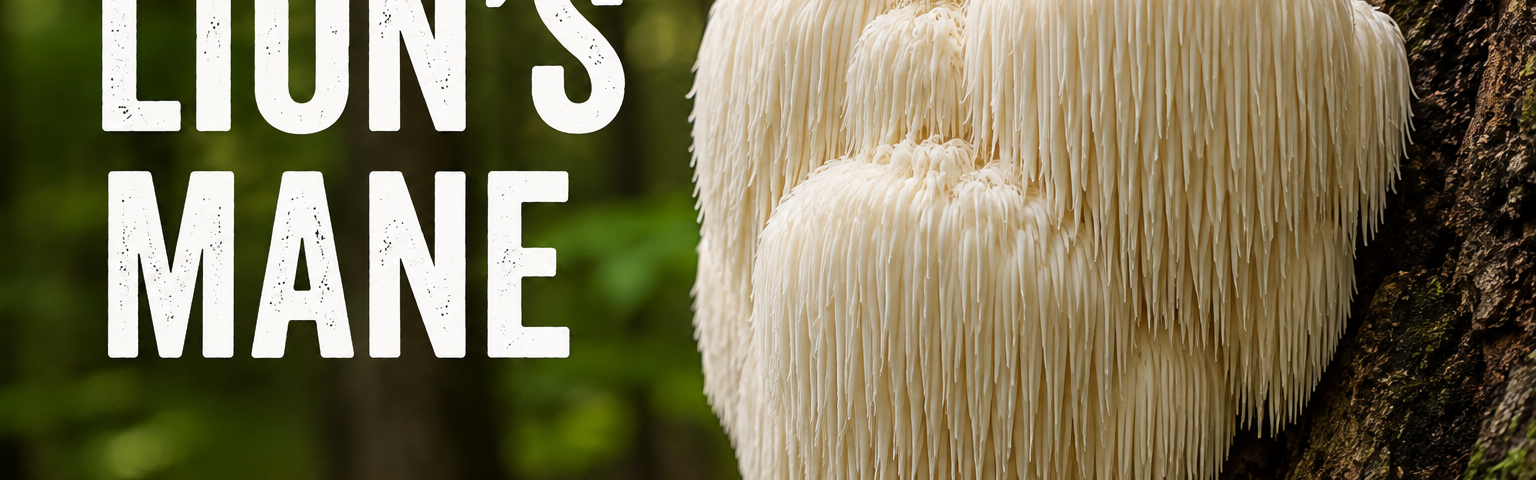
Lion’s mane (Hericium erinaceus) is one of the most distinctive wild edible mushrooms you can find. Instead of a traditional cap and gills, a fresh lion’s mane looks like a white shaggy ball growing directly from wood, covered with long, soft teeth that hang downward like tiny icicles.
For beginning mushroom foragers, that unusual structure is useful. Once mature enough to show its characteristic long teeth, lion’s mane has relatively few convincing lookalikes. The species most likely to be confused with it are other members of the genus Hericium, including comb tooth and bear’s head tooth mushrooms. Fortunately, these close relatives are also generally regarded as edible when young and fresh.
That does not mean you should identify lion’s mane by appearance alone.
Correct identification requires checking the mushroom’s structure, hanging teeth, growth pattern, substrate, color, condition, and the wood it is growing from.
This guide explains how to identify wild lion’s mane, distinguish it from other tooth fungi, find it in the field, harvest it responsibly, and prepare it safely for the table.
If you are just beginning to forage mushrooms, start with the Hunter Gatherer Society guide to how to identify wild mushrooms safely and learn to confirm the entire identification pattern rather than relying on a single photograph.
Quick Answers
Is lion’s mane mushroom edible?
Yes. Hericium erinaceus is considered a choice edible mushroom when young, fresh, correctly identified, and cooked.
What does lion’s mane look like?
It typically forms a white to cream-colored, rounded or irregular unbranched mass covered with long hanging teeth or spines.
Does lion’s mane have gills?
No. Lion’s mane produces spores on its hanging teeth rather than on gills or pores.
Where does wild lion’s mane grow?
It grows directly from hardwood, including living deciduous trees, dead trees, fallen logs, and large woody debris.
When can you find lion’s mane?
Fruiting season varies by region, but late summer through fall is a major season across much of its range.
What are the main lion’s mane lookalikes?
Other Hericium species, particularly comb tooth and bear’s head tooth mushrooms, are the closest lookalikes.
What is the easiest way to separate true lion’s mane from other Hericium mushrooms?
Look at the structure. Hericium erinaceus generally forms a compact, unbranched mass with long teeth hanging from a central base. Several related species develop obvious branches with teeth hanging from those branches.
Quick Field Identification
Before considering a mushroom lion’s mane, look for this combination:
- White to cream when young and fresh
- Growing directly from wood
- Usually on hardwood
- Rounded, cushion-like, or somewhat irregular overall form
- No traditional mushroom cap
- No true gills
- No pores
- No obvious stem
- Numerous soft hanging teeth or spines
- Mature teeth often roughly 1/2 to 2 inches long
- Teeth hang downward from a relatively compact, unbranched central mass
- White spore print
- Older specimens become cream, yellowish, tan, or brownish
A young specimen may not yet have fully developed teeth, making identification more difficult. When important features have not developed, leave it to mature and return later if possible.
What Is Lion’s Mane Mushroom?
Lion’s mane is a wood-decaying fungus in the genus Hericium.
Its scientific name is Hericium erinaceus.
Other names include:
- Lion’s mane
- Bearded tooth
- Bearded tooth fungus
- Pom-pom mushroom
Some regional common names overlap with other tooth fungi, which is one reason scientific names are useful.
The Missouri Department of Conservation describes Hericium erinaceus as a round, unbranched, beard-like mass of long hanging teeth. It grows on living deciduous trees as well as fallen trees and logs.
Unlike familiar cap-and-stem mushrooms, lion’s mane belongs to a group often called tooth fungi because the spore-producing surface consists of downward-pointing spines or teeth.
Those teeth are one of the most important characteristics to examine in the field.
How to Identify Lion’s Mane
Overall Shape
A mature lion’s mane is difficult to forget.
The fruiting body generally appears as a single rounded or irregular white mass attached to wood.
Depending on age and growing conditions, people compare its appearance to:
- A white pom-pom
- A shaggy beard
- A frozen waterfall
- A cluster of icicles
- A lion’s mane
The critical characteristic is that true Hericium erinaceus generally forms a compact, unbranched mass rather than an obvious network of branching arms.
That distinction becomes particularly important when comparing it with related Hericium species.
Teeth or Spines
The hanging teeth are the defining feature.
On mature lion’s mane, look for:
- Numerous soft teeth
- Teeth pointing downward
- Teeth hanging from a central mass
- Teeth often approximately 1/2 to 2 inches long
- White to creamy coloration when fresh
These are not plant-like thorns and are not sharp.
They are soft fungal tissue and form the mushroom’s spore-producing surface.
Young lion’s mane mushrooms can initially look like white blobs because the teeth have not developed fully. Identification becomes considerably easier as the teeth lengthen.
Color
Fresh lion’s mane should generally be:
White to creamy white.
As it ages, it can become:
- Cream
- Yellowish
- Tan
- Brownish
A little cream coloration does not automatically mean a mushroom is unusable, but significant yellowing or browning is a sign that it is aging.
Older specimens can also become bitter or sour.
For eating, young white specimens are generally preferable.
Stem
Lion’s mane does not have the obvious stem you would expect on a conventional cap-and-stem mushroom.
The fruiting body attaches directly to wood from a relatively compact base.
This is another useful field clue.
Gills
Lion’s mane has no gills.
If your mushroom has conventional blade-like gills beneath a cap, it is not lion’s mane.
Pores
Lion’s mane also lacks the pore surface seen on boletes and many bracket fungi.
Instead, it has hanging teeth.
Spore Print
The spore print is white.
For a mature specimen, this can provide another supporting characteristic, although the combination of growth on wood, compact structure, and long hanging teeth is usually much more useful in the field.
Where Does Lion’s Mane Grow?
Lion’s mane grows from wood, not directly from ordinary soil.
Look for it on:
- Living hardwood trunks
- Wounded areas of living trees
- Dead standing hardwoods
- Fallen hardwood logs
- Large dead branches
- Other substantial hardwood material
The Missouri Department of Conservation specifically records H. erinaceus from living deciduous trees as well as fallen trees and logs.
USDA Forest Service material also describes lion’s mane as a wood-decomposing edible fungus associated with hardwood substrates.
This gives beginning foragers an important identification filter:
If a suspected lion’s mane appears to be growing directly from bare soil with no buried wood involved, stop and investigate further.
Look Up, Not Just Down
Lion’s mane hunting requires a slightly different search pattern than hunting many ground-fruiting mushrooms.
Look at tree trunks.
Check:
- Old wounds
- Broken limbs
- Cavities
- Dead portions of living trees
- Standing dead trees
- Fallen trunks
A lion’s mane can fruit several feet above the ground.
Foragers who spend the entire hike looking at their boots can walk directly underneath one.
When Is Lion’s Mane in Season?
Season varies with geography and weather.
Across much of temperate North America, lion’s mane is primarily associated with late summer and fall.
The Missouri Department of Conservation lists August through November for Hericium erinaceus in Missouri.
Farther north, south, east, or west, the fruiting window can shift.
Temperature, rainfall, elevation, and local climate all influence mushroom fruiting, so treat calendar dates as a starting point rather than a guarantee.
A more useful field habit is to learn when lion’s mane fruits in your own region and revisit productive trees from year to year.
Lion’s Mane Can Return to the Same Tree
Finding lion’s mane is worth remembering.
The visible mushroom is only the fruiting body. Most of the fungus exists as mycelium within the wood.
That means a productive tree or log may produce fruiting bodies again under favorable conditions.
Record:
- Location
- Tree species if known
- Date
- Weather conditions
- Height on the tree
- Whether the tree is living or dead
Then revisit the location during the same seasonal window in future years.
Foraging becomes much more productive when you build knowledge of specific habitats rather than searching randomly every season.
Lion’s Mane Lookalikes
One reason lion’s mane is appealing to newer mushroom foragers is that a mature specimen has relatively few convincing lookalikes.
However, there are several related mushrooms you should learn.
Comb Tooth
Comb tooth, Hericium coralloides, is one of the closest relatives.
It is also:
- White when young
- A tooth fungus
- Wood-growing
- Associated with deciduous wood
- Considered edible when young and fresh
The primary structural difference is branching.
Lion’s Mane
Hericium erinaceus:
- Compact
- Generally unbranched
- Long teeth hang from a central mass
Comb Tooth
Hericium coralloides:
- Clearly branched
- Coral-like framework
- Shorter teeth occur along the branches
The Missouri Department of Conservation specifically distinguishes comb tooth by its multiple branches and tufts of hanging teeth, while lion’s mane forms an unbranched beard-like mass.
If you find a beautiful white tooth fungus that looks more like branching coral than a shaggy pom-pom, investigate one of the other Hericium species.
Bear’s Head Tooth
Bear’s head tooth is another closely related Hericium mushroom.
Depending on taxonomy and region, names within this group can be confusing, and older field guides may use names differently.
The practical field distinction is again structure.
Bear’s head-type Hericium fruiting bodies tend to develop branching or lobed structures with hanging teeth, rather than the dense unbranched pom-pom structure typical of H. erinaceus.
This is a good example of why beginning mushroom identification should not rely on common names alone.
Other Tooth Fungi
Not every mushroom with teeth is lion’s mane.
For example, the hedgehog mushroom (Hydnum species) also has downward-pointing teeth.
But its overall form is completely different.
A typical hedgehog mushroom has:
- A recognizable cap
- A stem
- Teeth underneath the cap
- Growth from the ground rather than as a white pom-pom directly from wood
The presence of teeth tells you something about a mushroom, but it does not by itself identify lion’s mane.
Lion’s Mane vs. Comb Tooth Quick Comparison
| Feature | Lion’s Mane | Comb Tooth |
|---|---|---|
| Scientific name | Hericium erinaceus | Hericium coralloides |
| Color when fresh | White to cream | White to cream |
| Grows on wood | Yes | Yes |
| Gills | None | None |
| Spore surface | Hanging teeth | Hanging teeth |
| Main structure | Compact and unbranched | Branched and coral-like |
| Teeth | Long, hanging from central mass | Shorter teeth along branches |
| Edibility | Choice edible when young and fresh | Choice edible when young and fresh |
This comparison is useful because it teaches you to identify the actual species rather than simply calling every white tooth fungus “lion’s mane.”
Is Lion’s Mane Edible?
Yes.
Hericium erinaceus is widely regarded as a choice edible mushroom when young and fresh.
The Missouri Department of Conservation classifies it as edible and notes that young fresh specimens are best, while older mushrooms become sour or bitter.
Wild mushrooms should be cooked before eating.
Correct identification comes first.
What Does Lion’s Mane Taste Like?
Lion’s mane is prized partly because of its unusual texture.
People frequently compare properly cooked lion’s mane to seafood, particularly:
- Crab
- Lobster
- Other shellfish
Those comparisons are subjective, and wild specimens vary.
A young fresh mushroom generally has a mild mushroom flavor and a tender, somewhat meaty texture.
Its ability to brown nicely in a pan makes it especially useful as a simple wild-food ingredient.
When Should You Harvest Lion’s Mane?
The best eating specimens are:
- Young
- White
- Firm
- Fresh
- Clean
- Free from significant insect damage
- Not waterlogged
- Not heavily yellowed or browned
The teeth should be developed enough for confident identification but the mushroom should still look fresh.
Avoid specimens that are:
- Deep yellow
- Brown
- Slimy
- Sour-smelling
- Waterlogged
- Heavily insect-damaged
- Beginning to decay
A large old mushroom is not necessarily a better harvest than a smaller pristine one.
How to Harvest Lion’s Mane
Once you have positively identified a fresh specimen, cut the fruiting body cleanly near its attachment point.
A knife helps minimize unnecessary damage to the surrounding wood and makes cleaning easier later.
Place the mushroom in a basket, mesh bag, or other breathable container rather than crushing it into a tightly packed plastic bag.
Lion’s mane can hold considerable moisture.
Handle it gently.
Responsible Harvesting
Mushrooms are fruiting bodies of a much larger fungal organism living within the substrate.
Harvesting a fruiting body does not normally mean you have removed the entire fungus.
Still, responsible harvesting matters.
Good practice includes:
- Take only what you will use
- Leave old or inaccessible specimens alone
- Avoid unnecessarily damaging living trees
- Do not cut into trees simply to reach a mushroom
- Follow land-specific harvesting regulations
- Obtain permission on private property
- Leave questionable mushrooms where they are
- Record productive trees and revisit them rather than overharvesting every fruiting
If a lion’s mane is high on a living tree, do not damage the tree or put yourself at risk trying to reach it.
No mushroom is worth a fall.
For broader field practices, the Hunter Gatherer Society Wild Mushroom Identification Guides library covers mushroom identification, lookalikes, harvesting, and safety one species at a time.
Cleaning Lion’s Mane
Lion’s mane can be remarkably clean compared with some ground-growing mushrooms, but its many teeth and folds can hide:
- Bark
- Small insects
- Dirt
- Leaf fragments
- Damaged tissue
Begin by trimming away the attachment point and any discolored or damaged areas.
Inspect the mushroom carefully.
A soft brush or gentle cleaning can remove loose debris.
If washing is necessary, keep it brief.
Lion’s mane readily absorbs water, and soaking it can make an already moisture-rich mushroom difficult to brown in the pan.
After cleaning, tear or slice it into manageable pieces.
How to Cook Lion’s Mane
Lion’s mane does not require an elaborate recipe.
In fact, simple preparation is one of the best ways to learn its flavor.
Simple Pan-Seared Lion’s Mane
Clean the mushroom and divide it into slices or pieces.
Place it in a skillet over moderate heat.
Because lion’s mane contains a lot of water, allowing some moisture to cook out before adding much fat can improve browning.
Once excess moisture has evaporated, add:
- Butter or oil
- Salt
- Pepper
Continue cooking until the surfaces become golden brown.
Optional additions include:
- Garlic
- Thyme
- Parsley
- Lemon
- Shallot
Cook the mushroom thoroughly before eating.
Other Ways to Use Lion’s Mane
Once you know how you like it, lion’s mane can be used in:
- Omelets
- Scrambled eggs
- Pasta
- Soups
- Cream sauces
- Stir-fries
- Wild mushroom mixtures
- Sandwiches
- Mushroom cakes or patties
Its fibrous texture makes it particularly useful in preparations where a substantial mushroom texture is desirable.
Can You Eat Lion’s Mane Raw?
For wild-foraged lion’s mane, cook it.
Cooking is the standard conservative practice for wild edible mushrooms.
Even edible mushroom species can cause gastrointestinal upset in some people, and eating them raw adds an unnecessary variable.
When eating lion’s mane for the first time, cook it thoroughly and begin with a small portion.
Wild Lion’s Mane vs. Cultivated Lion’s Mane
Lion’s mane is unusual among prized wild mushrooms because it is also widely cultivated.
Cultivated lion’s mane is commonly produced on supplemented sawdust or hardwood-based substrates.
Wild lion’s mane grows from trees and logs in natural environments.
The USDA Forest Service has specifically included lion’s mane among edible mushrooms that can be produced on hardwood logs.
Cultivation means you may already recognize lion’s mane from farmers markets or grocery stores before finding one in the woods.
Wild specimens, however, still require full identification.
Knowing what a cultivated mushroom looks like does not automatically make you qualified to identify a wild one.
What About the Health Claims Around Lion’s Mane?
Lion’s mane is heavily marketed as a medicinal or “brain health” mushroom.
That subject needs to be separated from mushroom identification and culinary use.
Scientific research has investigated compounds from Hericium erinaceus and their possible biological effects, but supplement marketing frequently goes beyond what can confidently be concluded from current human evidence.
Finding wild lion’s mane does not mean you have discovered a proven treatment for memory loss, dementia, anxiety, depression, nerve damage, or another medical condition.
For this guide, the important distinction is simple:
Lion’s mane is a recognized edible mushroom. That is different from claiming that eating a wild specimen will treat or prevent disease.
Enjoy it as food without turning promising research into unsupported medical promises.
Why Lion’s Mane Is Useful for Beginner Foragers
Lion’s mane has several characteristics that make it a good mushroom to study early:
- It has a distinctive mature appearance
- It grows from wood
- It lacks gills
- It lacks a conventional cap
- Its hanging teeth are obvious
- Its closest convincing lookalikes are other Hericium species
- It is a highly regarded edible
- Productive locations can sometimes fruit again
But “beginner-friendly” should never be interpreted as “identify from a photo and eat.”
The goal is to learn the entire mushroom.
The Hunter Gatherer Society Foraging Identification Guides library is designed around that approach: learn one species well, understand its lookalikes, and build field experience gradually.
Beginner Identification Checklist
Before considering a wild mushroom Hericium erinaceus, confirm:
- It is growing directly from wood
- The substrate is consistent with hardwood
- The fruiting body is white to cream when fresh
- It forms a compact, rounded or irregular mass
- It does not have a conventional cap
- It does not have conventional gills
- It does not have a pore surface
- It does not have an obvious stem
- It has numerous soft hanging teeth
- Mature teeth are long and hang downward
- The main fruiting body is relatively unbranched
- It is not a cap-and-stem hedgehog mushroom
- You have compared it with other Hericium species
- The specimen is young and fresh if being considered for food
If the mushroom does not fit the complete pattern, keep identifying rather than eating.
Common Beginner Questions
Is every white tooth fungus lion’s mane?
No.
Several Hericium species produce white fruiting bodies with hanging teeth. Other unrelated fungi also have tooth-like spore surfaces.
True Hericium erinaceus is characterized by its relatively compact, unbranched mass of long hanging teeth.
Is comb tooth poisonous?
No. Comb tooth (Hericium coralloides) is also considered a choice edible when young and fresh.
That makes confusion between these close relatives less dangerous than many mushroom identification mistakes, but accurate species identification still matters.
Can lion’s mane grow on dead trees?
Yes.
It can occur on both living deciduous trees and dead wood, including fallen trees and logs.
Does lion’s mane grow from the ground?
Lion’s mane is a wood-associated fungus.
If it appears to be emerging from soil, investigate whether buried wood is present and reconsider the identification.
Can lion’s mane turn yellow?
Yes.
Lion’s mane typically changes from white toward cream or yellowish as it ages.
Significant yellowing, browning, softening, sour odor, or deterioration indicates an older specimen that is less desirable for eating.
Should lion’s mane have long teeth?
A mature lion’s mane should develop conspicuous hanging teeth.
Very young fruiting bodies may not yet show them clearly.
If the mushroom is too immature to display the characteristics you need for confident identification, leave it and return later.
Can I eat a wild lion’s mane the first time I identify one?
Only after you have independently confirmed the identification using multiple reliable characteristics and sources.
Then cook it thoroughly and eat a small portion the first time.
Lion’s Mane Field Summary
Common name: Lion’s mane, bearded tooth
Scientific name: Hericium erinaceus
Family: Hericiaceae
Type: Tooth fungus
Color: White to cream when young, yellowing with age
Shape: Compact, rounded to irregular, generally unbranched mass
Underside: No conventional underside
Spore surface: Hanging teeth
Teeth: Long, soft, downward-pointing
Gills: None
Pores: None
Stem: No conventional stem
Spore print: White
Substrate: Hardwood
Growth habit: Usually single fruiting masses attached directly to wood
Season: Primarily late summer through fall, varying by region
Edibility: Choice edible when young, fresh, correctly identified, and cooked
Closest lookalikes: Other Hericium species, especially comb tooth and bear’s head-type tooth fungi
Best harvesting stage: White, firm, fresh, with identification features clearly developed
Final Identification Summary
Lion’s mane (Hericium erinaceus) is a distinctive edible tooth fungus that grows directly from hardwood. A mature specimen forms a white to cream-colored, compact, generally unbranched mass covered with long, soft teeth hanging downward.
It does not have a conventional cap, stem, gills, or pores.
Its closest lookalikes are other Hericium species. Comb tooth is particularly useful to learn because it shares the white color, wood-growing habitat, and hanging teeth but develops an obvious branched, coral-like structure instead of lion’s mane’s compact pom-pom form. The Missouri Department of Conservation’s lion’s mane field account provides a useful authoritative reference for comparing these characteristics.
For eating, choose young, white, fresh specimens, positively identify them from multiple characteristics, cook them thoroughly, and try only a small amount the first time.
The field pattern worth remembering is:
Hardwood + compact white mass + no cap or gills + long hanging teeth + little or no branching = strong lion’s mane characteristics.
Learn the entire pattern rather than relying on its famous shaggy appearance, and lion’s mane can become one of the most recognizable and rewarding wild edible mushrooms in your foraging repertoire.


