The Hunter Gatherer Society
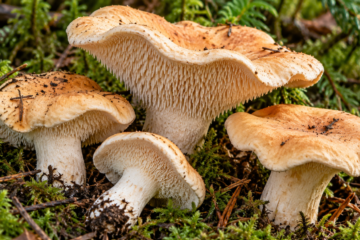
Hedgehog mushrooms (Hydnum species) growing in moss, showing apricot-colored caps and distinctive tooth-like spines beneath the caps.

Hedgehog Mushroom Identification Guide: Edibility, Lookalikes, Harvesting & Uses

There’s something wonderful about finding a mushroom that looks a little like a chanterelle, turning it over, and discovering hundreds of tiny teeth hanging beneath its cap. That’s often the moment you realize you’ve found a hedgehog mushroom. Hedgehog mushrooms are among the most rewarding wild edibles to learn. They have a delicious, slightly nutty flavor, a firm texture, and one of the most memorable identification features in the mushroom world. Instead of gills or pores, these mushrooms have soft, downward-pointing spines beneath their caps. They’re the little teeth that give hedgehogs their name. You’ll often find them tucked into moss, scattered among fallen needles, or growing along quiet forest trails. Here in the Pacific Northwest, they’re especially welcome because[…]

Read more
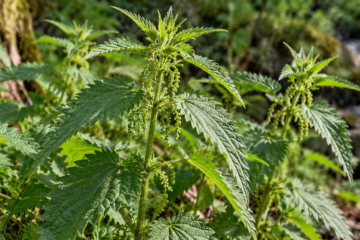
Stinging nettle identification showing green serrated leaves, fine hairs, and hanging flower clusters growing in a woodland habitat.

Stinging Nettle (Urtica dioica): Identification, Harvesting, Benefits, and Uses

Stinging nettle might not seem like the most inviting plant to bring home for dinner. Anyone who has accidentally brushed against it knows exactly why. That sudden burning sensation can make you want to avoid it altogether. However, once you get past its prickly reputation, you’ll discover one of the most useful wild edible plants growing in North America. For generations, people have gathered stinging nettles for food, traditional medicine, and even clothing fibers. Today, they’re still valued for their nutrition, versatility, and surprisingly good flavor. Best of all, nettles are fairly easy to recognize once you know what to look for. They often grow in large patches, making them a rewarding wild food for beginners and experienced foragers alike.[…]

Read more
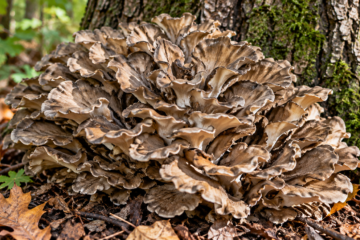
Hen of the woods mushroom (Grifola frondosa) growing in a large gray-brown rosette at the base of a tree

Hen of the Woods Identification Guide: Edibility, Lookalikes, Harvesting & Uses

Hen of the woods is one of those mushrooms that can make you stop in the middle of a fall walk and stare. At first glance, a large cluster looks almost like a pile of gray and brown leaves gathered around the base of a tree. Get closer, though, and the structure becomes much more interesting. Dozens of small, overlapping caps rise from one thick, branching base. Each cap looks like a little fan, spoon, or feather. Together, they form the ruffled shape that gives hen of the woods its name. The scientific name is Grifola frondosa. You may also know it as maitake, especially when you see cultivated versions in grocery stores or restaurants. For foragers, hen of the[…]

Read more
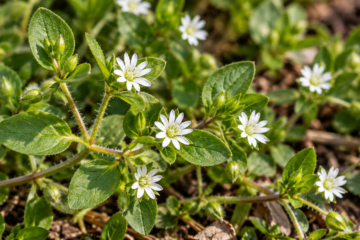
Common chickweed (Stellaria media) with green leaves and small white flowers

Chickweed Identification Guide: Edibility, Lookalikes, Harvesting & Uses

Common chickweed (Stellaria media) is easy to walk past. It creeps through gardens, lawns, paths, field edges, and other disturbed ground, often forming soft green mats during cool weather. For foragers, that little patch of green is worth a closer look. Chickweed is a tender edible plant with a mild flavor. The young leaves, stems, and flowers can be eaten raw or lightly cooked. Better yet, the plant gives us several useful identification features that are easy to check in the field. You still need to identify it carefully. Scarlet pimpernel can grow in similar places and has somewhat similar leaves. Low-growing spurges can also become tangled in a chickweed patch. Both deserve attention before anything goes into your basket.[…]

Read more
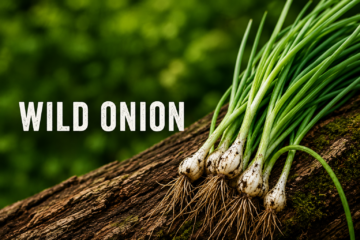
Wild onion plants showing green leaves, white bulbs, and roots for identification

Wild Onion Identification Guide: Edibility, Uses, Harvesting, and Complete Field Guide

Wild onions are one of the easiest wild foods to overlook. Their narrow green leaves often blend into grass, lawns, field edges, and open woods. However, crush a leaf and the smell usually gives the plant away. A true wild onion should release a clear onion, garlic, or chive-like scent. Several species in the genus Allium are commonly called wild onion or wild garlic. Depending on where you live, you may find common wild onion (Allium canadense), field garlic (Allium vineale), nodding onion (Allium cernuum), or another regional Allium species. Many of these plants are edible. In fact, the leaves, flowers, and bulbs can often be used much like cultivated onions, garlic, or chives. There is an important safety concern,[…]

Read more
Social Share Buttons and Icons powered by Ultimatelysocial