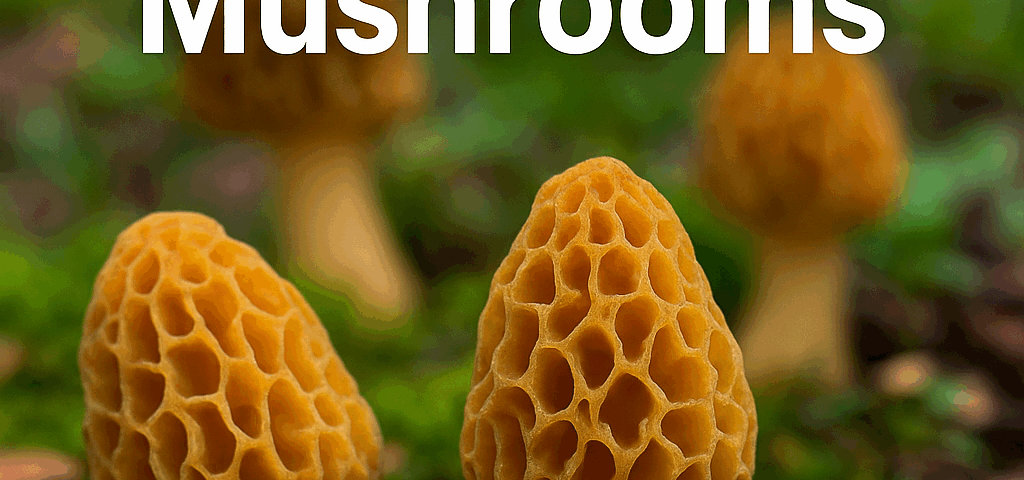
There’s nothing quite like stumbling across a patch of wild mushrooms while out in the woods. I still remember the first time I spotted morels pushing up through the damp spring soil—it felt like striking gold. Over the years, I’ve come to learn that some mushrooms are much better starting points than others. They’re easier to identify, tastier in the kitchen, and less likely to be confused with dangerous look-alikes.
If you’re curious about diving into the world of wild mushrooms, here are my top picks for the best edible mushrooms to forage as a beginner.
1. Morels (Morchella spp.)
What: Morels are the “celebrities” of the mushroom world—beloved by chefs and foragers alike for their nutty, earthy flavor.
Where to Find: Look for them in the spring around dead or dying trees like elm, ash, and apple, as well as in recently burned forests.
How to Identify: Their honeycomb-like caps are filled with pits and ridges, and the cap is attached directly to the stem. When sliced open, a true morel is completely hollow inside. (⚠️ Beware of false morels, which can be toxic.)
How to Harvest: Snip the stem at the base with a knife and carry them in a mesh bag so spores can spread as you walk.
How to Prepare: Simply sauté in butter with garlic—this classic method lets their flavor shine.
How to Store: Eat fresh within a few days or dry them for long-term storage. Dried morels rehydrate beautifully in soups and sauces.
2. Chanterelles (Cantharellus spp.)
What: Golden, trumpet-shaped mushrooms with a fruity aroma that tastes as good as they look.
Where to Find: Summer through fall in mossy, damp forests, especially under conifers and hardwoods like oak or birch.
How to Identify: Their caps have wavy, vase-like edges, and instead of true gills, they feature blunt ridges running down the stem. Chanterelles often smell faintly of apricots.
How to Harvest: Gently twist or cut at the base. Try not to pull, as this can damage the underground mycelium.
How to Prepare: Clean carefully (dirt loves to stick in the ridges), then sauté or add to cream sauces, risottos, or soups.
How to Store: Keep in a paper bag in the fridge for up to a week. You can also sauté and freeze them to preserve their flavor.
Free Resource: Download My Foraging 101 Guide
Want to learn more about foraging beyond just mushrooms? I created a free beginner’s guide to foraging that covers plants, safety tips, and simple ways to use your harvest.
👉 Click here to download your free Foraging 101 Guide
This is a great resource to carry with you or to keep handy when planning your first foraging trips.
3. Chicken of the Woods (Laetiporus spp.)
What: A bright orange “shelf” mushroom that really does taste like chicken when cooked.
Where to Find: Typically found in summer and fall growing on hardwoods, especially oak. Occasionally found on conifers, though those can be less palatable.
How to Identify: Overlapping, fan-shaped shelves with vivid orange tops and yellow edges. The underside has tiny pores instead of gills.
How to Harvest: Cut the tender young edges, leaving the older, tougher parts behind.
How to Prepare: Slice into strips, fry in butter or oil, and use anywhere you’d normally use chicken—like stir-fries or tacos. Always cook thoroughly to avoid stomach upset.
How to Store: Refrigerate for several days or freeze cooked portions. Drying isn’t ideal as it can make them woody.
4. Giant Puffball (Calvatia gigantea)
What: Imagine stumbling on a volleyball-sized mushroom in a field—that’s the giant puffball.
Where to Find: Late summer to fall in open meadows, pastures, and forest edges.
How to Identify: Large, smooth, white ball with no visible stem or cap. The inside must be solid and pure white to be edible. If it’s yellowing or turning brown, skip it. Always slice open to confirm it’s not a poisonous Amanita “button” mushroom.
How to Harvest: Slice cleanly with a knife—you’ll likely have more than enough to share.
How to Prepare: Cut into thick “steaks,” coat in flour or breadcrumbs, and pan-fry until golden brown.
How to Store: Use quickly; puffballs don’t last long. You can freeze slices after cooking, but they don’t dry well.
5. Lion’s Mane (Hericium erinaceus)
What: A shaggy white mushroom that looks like it belongs under the sea and tastes a lot like lobster or crab.
Where to Find: Found on hardwoods like beech, oak, and maple, typically in late summer through fall.
How to Identify: White, cascading spines that resemble icicles or a fluffy pom-pom. Soft and fresh when young.
How to Harvest: Cut at the base with a knife, being careful not to damage the tree bark.
How to Prepare: Tear into chunks, sauté in butter, and finish with a squeeze of lemon juice for a seafood-like flavor.
How to Store: Keep in a paper bag in the fridge for up to a week. Lion’s mane also dries and rehydrates well, retaining much of its flavor.
Final Thoughts For New Foragers
If you’re just starting your mushroom foraging journey, think of it like a treasure hunt where the woods are the map and patience is the key. Morels might make you feel like you’ve struck gold, chanterelles can light up a rainy forest walk, and a giant puffball might surprise you like a hidden prize in plain sight.
The most important rule? Take it slow, double-check your IDs, and never eat anything you’re not 100% sure of. Every outing is a chance to learn—whether you come home with a basket full of mushrooms or just muddy boots and fresh air in your lungs.
So grab a basket, bring a good field guide (and maybe a buddy), and step into the forest with curiosity. Who knows? Your next walk could lead to dinner sizzling in a pan or a brand-new story to share. Happy hunting!
👉 Don’t forget to grab your free Foraging 101 Guide here
Recommended Gear for Mushroom Foraging
Having the right tools makes all the difference when you’re tracking down the best edible wild mushrooms:
- 🍄 Foraging Basket – Keeps mushrooms fresh and spreads spores as you walk. Check it out here
- 🔪 Mushroom Knife with Brush – Cut stems cleanly and brush away dirt. See one here
- 📘 Field Guide to Edible Mushrooms – A trusted reference to cross-check identifications. Grab one here
- 🎒 Cooler Backpack – Perfect for keeping your finds fresh on longer trips. Find it here
Explore My Etsy Shop
If you’re looking for printable foraging journals, trackers, and outdoor-inspired guides, check out my Etsy shop Step Outside Grow. I’ve designed each resource to be simple, practical, and easy to carry into the woods with you.
👉 Visit Step Outside Grow on Etsy
It’s a great place to grab tools that complement what you’re learning here, especially if you like having a dedicated spot to record your foraging adventures.


