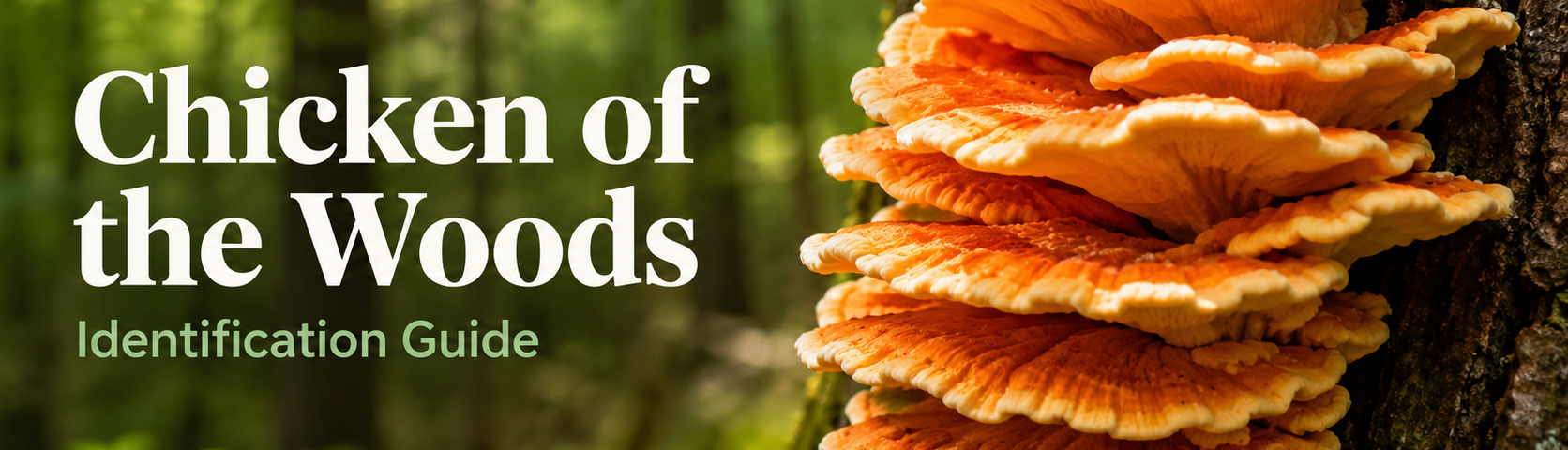
Chicken of the woods is one of those wild mushrooms that can stop you in your tracks.
Bright orange shelves glow from tree trunks, fallen logs, and old stumps like something placed there on purpose. For many beginner mushroom hunters, chicken of the woods is one of the first edible wild mushrooms that feels truly approachable. It is bold, colorful, easy to spot, and very different from many gilled mushrooms.
But easy to spot does not mean careless to harvest.
Chicken of the woods is the common name for several mushrooms in the Laetiporus group. These mushrooms grow from wood, usually form shelves or rosettes, and have tiny pores underneath instead of gills. Some species grow on hardwoods, while others are associated with conifers or other host trees, which is why regional knowledge and careful identification matter.
This guide will walk you through how to identify chicken of the woods, where to find it, when to harvest it, how to cook it, and what safety rules beginners should follow before putting it in the pan.
What Is Chicken of the Woods?
Chicken of the woods is a bright orange to yellow shelf fungus in the genus Laetiporus. It is also commonly called sulphur shelf because many species have a yellow underside.
Unlike classic cap-and-stem mushrooms, chicken of the woods usually grows in overlapping shelves directly from wood. These shelves may appear on standing trees, dead trunks, fallen logs, old stumps, or near the base of a tree where the mushroom is growing from buried roots.
The name “chicken of the woods” comes from its texture and culinary use. When young, fresh, and properly cooked, it can have a firm, meaty texture that many foragers compare to chicken. That texture is one of the main reasons this mushroom has become so popular with wild food enthusiasts.
Quick Field Summary
Common name: Chicken of the woods, sulphur shelf
Scientific name: Laetiporus species
Mushroom type: Polypore shelf fungus
Gills: None
Underside: Tiny pores, usually yellow, cream, or white depending on species
Growth habit: Shelves, brackets, or rosettes growing from wood or buried roots
Best season: Usually summer through fall, depending on region and weather
Best stage to harvest: Young, tender, moist, and brightly colored
Edibility: Edible when correctly identified, young, and thoroughly cooked, but some people react poorly
Beginner caution: Avoid specimens growing on conifers, eucalyptus, or locust unless confirmed by a knowledgeable regional expert
How to Identify Chicken of the Woods
Chicken of the woods has several strong identification features. Do not rely on color alone. Use the full pattern.
Look for Bright Orange, Yellow, or Peachy Shelves
Fresh chicken of the woods is usually vivid orange, yellow-orange, peachy-orange, or salmon-orange on top. The underside may be yellow, cream, or white depending on the species.
Young specimens often look soft, thick, and almost suede-like. Older specimens fade toward pale yellow, tan, or whitish tones and become tough, dry, or crumbly.
The color can be striking, but color alone is not enough. Some unrelated fungi can also be orange. Always check the underside, growth habit, host tree, and texture.
Check the Underside for Pores, Not Gills
Chicken of the woods is a polypore, which means the underside has tiny pores instead of gills.
This is one of the most important beginner identification traits.
If the mushroom has true gills, it is not chicken of the woods. Jack-o’-lantern mushrooms, for example, are orange and sometimes confuse beginners, but they have gills. Chicken of the woods has a smooth-looking pore surface made up of many tiny holes.
Notice the Shelf or Rosette Shape
Many chicken of the woods mushrooms grow in overlapping shelves, almost like shingles on a roof. Some species, especially white-pored chicken of the woods, may form a rosette near the base of a tree or appear to grow from the ground when they are actually connected to buried roots.
The shape matters because different Laetiporus species can look similar but grow in different positions.
Confirm That It Is Growing From Wood
Chicken of the woods grows from wood, wood-influenced roots, or buried wood. It is not a random lawn mushroom growing from plain soil.
You may find it on oak, cherry, beech, willow, other hardwoods, old stumps, fallen logs, standing dead trees, wounded living trees, or buried roots near the base of a tree.
Species in this group cause brown rot in their host trees and may grow on living or dead wood.
Chicken of the Woods Species: Why the Name Can Be Confusing
This is where beginner mushroom guides often oversimplify the topic.
In North America, “chicken of the woods” can refer to several Laetiporus species. For beginners, you do not need to memorize every Latin name on day one. However, you should understand the practical differences.
Laetiporus sulphureus
This is the classic yellow-pored chicken of the woods often described in older field guides. It is commonly associated with hardwoods in eastern North America and often grows in overlapping shelves on standing or fallen oaks and other hardwoods. It usually has a yellow-orange cap and a yellow pore surface.
Laetiporus cincinnatus
This is often called white-pored chicken of the woods. It usually appears near the base of hardwood trees, especially oaks, or seems to grow from the ground when it is actually connected to buried roots. It often has an orange to pinkish-orange upper surface and a whitish pore surface.
Western and Conifer-Associated Chickens
In western North America, chicken of the woods may involve species that grow on conifers or western hardwoods. This is especially important for Pacific Northwest foragers.
If you find a bright orange chicken of the woods on conifer wood, treat it as a more advanced identification and edibility decision, not a beginner slam dunk. Some sources warn that chicken of the woods from conifers or locust may be more likely to cause problems, while other mycologists emphasize that species, cooking, freshness, and individual sensitivity all matter.
For beginner safety, the conservative rule is to start with young, tender specimens from hardwoods.
Where to Find Chicken of the Woods
Chicken of the woods is a wood-loving mushroom. You are looking for trees, logs, stumps, and old wounds in wood.
The best places to check include mature hardwood forests, oak woods, mixed hardwood stands, old stumps, fallen logs, standing dead trees, tree bases, root flares, and trail edges with older trees.
You may also find chicken of the woods in parks or yards with mature hardwoods, but only harvest if foraging is allowed and the area is clean. Avoid trees near roadsides, sprayed lawns, industrial sites, treated lumber, or other contamination risks.
In much of eastern North America, oak is one of the classic host trees. In the Pacific Northwest and other western regions, similar Laetiporus species may appear on conifers or certain hardwoods, which is why regional knowledge matters.
When Is Chicken of the Woods in Season?
Chicken of the woods usually appears from summer into fall, although timing varies by region, rainfall, temperature, elevation, and host tree.
In practical field terms, start watching after warm rain events. Productive trees may fruit again in future years, so mark the location in your foraging journal if you find a healthy patch.
Is Chicken of the Woods Edible?
Yes, chicken of the woods is widely eaten, but the safer answer is more specific.
Chicken of the woods is edible when it is correctly identified, harvested young, taken from an appropriate host, cooked thoroughly, and tolerated by the individual eating it.
That last part matters.
Raw or undercooked Laetiporus mushrooms have been reported to cause gastrointestinal problems, and some people are sensitive or allergic to chicken of the woods. Host tree, age of the mushroom, cooking method, and individual sensitivity can all affect how someone reacts.
For a beginner guide, the conservative rule is simple: harvest young chicken of the woods from hardwood only, cook it thoroughly, and try a small amount the first time.
Beginner Safety Rules
Never Eat Chicken of the Woods Raw
Wild mushrooms should not be eaten raw. Chicken of the woods should be fully cooked before eating.
Cook it thoroughly every time.
Try Only a Small Amount the First Time
Even correctly identified edible mushrooms can bother some people. Chicken of the woods is known for causing reactions in some individuals, so the first serving should be small.
A few bites are enough for a first test. Then wait and see how your body responds before eating more.
Avoid Old, Dry, Faded, or Bug-Riddled Specimens
Older chicken of the woods becomes tough, chalky, crumbly, sour, or difficult to digest. Young flesh is usually softer and more pleasant, while older portions can become woody or chalky.
When in doubt, leave it behind.
Be Cautious With Host Trees
For a beginner-friendly guide, avoid chicken of the woods growing from conifers, eucalyptus, locust trees, treated wood, urban street trees exposed to pollution, or trees in sprayed lawns and contaminated sites.
The host-tree caution does not mean every conifer-associated chicken will make every person sick. The issue is that adverse reactions are reported often enough that beginners should start with the more traditional hardwood-hosted specimens and avoid riskier situations until they have stronger regional knowledge.
Do Not Serve It to a Group the First Time
Chicken of the woods may bother one person while another person eats it without trouble. Try it yourself first, then be cautious with others.
That is good practical foraging advice for any wild mushroom.
How to Harvest Chicken of the Woods
Harvest only the tender parts.
Young chicken of the woods should feel soft, moist, and flexible. The edge is usually the best part. Older inner portions can become dense and woody, especially on large shelf clusters.
Use a clean knife and cut the tender outer sections, leaving the tough base behind. Many foragers prefer the soft growing edges because they are more pleasant to cook and eat.
Carry the harvest in a basket, paper bag, or breathable container. Avoid sealed plastic bags in the field because mushrooms can sweat and degrade quickly.
How Much Should You Harvest?
Chicken of the woods can fruit in large quantities, but more is not always better.
Take only what you can clean, cook, preserve, or share safely. Leave old sections, insect-heavy areas, and tough bases. If a tree produces heavily, you may be tempted to take the entire flush, but selective harvesting gives you better food and less waste.
A good rule is to harvest the tender edges and leave the rest.
Cleaning Chicken of the Woods
Chicken of the woods can hide insects, bark, moss, and dirt between shelves.
To clean it, brush away loose debris, trim off tough or bug-damaged areas, separate shelves into manageable pieces, and wipe the mushroom with a damp cloth if needed.
You can rinse it briefly if necessary, but dry it well before cooking. Because this mushroom can absorb water, avoid soaking it unless you are dealing with a very dirty harvest.
How to Cook Chicken of the Woods
Chicken of the woods should be cooked thoroughly. Do not treat it like a quick garnish.
The texture works well in dishes where you would normally use chicken pieces, especially when the mushroom is young and tender.
Good cooking methods include sautéing, pan frying, breading and frying, simmering in soup, adding to curry, cooking into tacos, making mushroom nuggets, adding to stir-fries, using in pot pie filling, or cooking into pasta and cream sauce.
For a simple first meal, slice the young mushroom into strips and sauté it slowly with butter or oil until fully cooked and lightly browned. Add garlic, salt, pepper, and a splash of lemon juice near the end.
Keep the first meal simple. That way, if your body reacts poorly, you know the mushroom was the likely cause and not a dozen other ingredients.
What Does Chicken of the Woods Taste Like?
Chicken of the woods is mild, savory, and slightly mushroomy. The texture is the real reason people love it. When harvested young and cooked well, it can be firm, juicy, and meat-like.
It does not magically taste exactly like chicken in every dish, but it can play the same role in many recipes. That makes it one of the most popular wild mushrooms for people who want a hearty, satisfying meal from the forest.
How to Store Chicken of the Woods
Fresh chicken of the woods is best used soon after harvest.
For short-term storage, keep it refrigerated in a paper bag or breathable container and cook it within a few days. Before cooking, check for texture changes, sour smell, excessive softness, or signs that the mushroom is past its prime.
For longer storage, many foragers sauté and freeze chicken of the woods, dehydrate young tender pieces, freeze cooked portions for soups or tacos, or pickle young pieces using a tested mushroom-pickling method.
For best quality, cook before freezing. Raw frozen chicken of the woods can become tough or watery.
Chicken of the Woods Lookalikes
Chicken of the woods has fewer dangerous lookalikes than many edible mushrooms, but beginners still need to slow down.
Jack-o’-Lantern Mushrooms
Jack-o’-lantern mushrooms are orange and toxic, but they have true gills and usually grow in clusters from wood or buried roots. Chicken of the woods has pores, not gills.
If you see gills, stop.
Other Orange Shelf Fungi
Some other shelf fungi can be orange, yellow, or rusty colored. Many are tougher, thinner, hairy, zoned, or differently textured than chicken of the woods.
Use the full ID pattern: bright orange to yellow shelf or rosette, growing from wood or buried roots, no gills, tiny pores underneath, soft and tender when young, appropriate host and region, and no signs of decay or age.
Old Chicken of the Woods
One of the most common mistakes is not confusing chicken of the woods with another mushroom, but harvesting chicken of the woods too late.
Old chicken can be faded, dry, brittle, sour, buggy, or woody. It may still be identifiable, but it is no longer a good edible harvest.
Ethical Harvesting Tips
Harvesting mushrooms responsibly keeps the experience better for everyone.
Cut only what you will use, leave old mushrooms to release spores and feed insects, avoid damaging the tree or tearing bark away, do not harvest from private property without permission, follow local park and public land rules, and leave questionable mushrooms in place.
It is also helpful to take photos before harvesting so you can study the growth pattern later.
Chicken of the woods can be a sign that a tree has internal decay. Laetiporus species cause brown rot, which can reduce wood strength in infected trees. Removing the mushroom does not remove the fungus from the tree.
Field Checklist: Chicken of the Woods
Before harvesting, confirm every point:
- It is growing from wood, a stump, tree base, log, or buried root.
- It forms shelves, brackets, or rosettes.
- The upper surface is orange, yellow-orange, peachy, or similar.
- The underside has tiny pores, not gills.
- The flesh is young, tender, moist, and flexible.
- It is not old, chalky, brittle, sour-smelling, or bug-riddled.
- The host tree is appropriate for your region and skill level.
- You can identify the tree or at least rule out high-caution hosts.
- You plan to cook it thoroughly.
- You will try a small portion the first time.
If you cannot confidently check those boxes, do not eat it.
Common Beginner Questions
Can Beginners Forage Chicken of the Woods?
Yes, chicken of the woods can be a good beginner mushroom, but beginners should treat it as a careful learning mushroom, not a reckless free pass. Its bright color, shelf shape, and pore surface make it easier to recognize than many mushrooms, but host tree, freshness, and cooking still matter.
Can Chicken of the Woods Make You Sick?
Yes. Some people experience stomach upset even from properly cooked chicken of the woods. Reactions may be related to individual sensitivity, undercooking, age of the mushroom, host tree, or species.
Can You Eat Chicken of the Woods From Conifers?
Some experienced foragers do, depending on species and region, but this is not the best beginner choice. For a beginner field guide, skip conifer-growing chicken of the woods unless you are working with a knowledgeable local mushroom expert.
Can You Eat Old Chicken of the Woods?
Old chicken of the woods is usually not worth eating. It becomes tough, dry, chalky, brittle, or sour. Harvest young, tender edges instead.
Does Chicken of the Woods Come Back in the Same Spot?
Often, yes. Productive trees may fruit again in future seasons, although timing and abundance vary. Mark the location, tree type, date, weather pattern, and condition of the mushroom in a foraging journal.
Final Thoughts
Chicken of the woods is one of the great rewards of mushroom season. It is bright, exciting, practical, and deeply satisfying to find. Few wild mushrooms feel as generous when you catch them at the right stage.
Still, confidence comes from details.
Look for the shelf shape. Check for pores instead of gills. Pay attention to the host tree. Harvest only young, tender portions. Cook it thoroughly. Try a small amount the first time.
That is how you turn a glowing orange find in the woods into a safe, memorable meal.
Learn one mushroom at a time, respect the process, and let chicken of the woods become part of your field knowledge slowly and carefully.
Get outside. Do something wild.
References and Further Reading
- University of Florida IFAS: Chicken of the Woods Species Complex
- MushroomExpert: Laetiporus sulphureus
- Cornell Mushroom Blog: Eating the Chicken of the Woods
- Michigan State University Extension: Identifying Wild Mushrooms That Are Safe to Eat
- UMass Extension: Root and Butt Rot Caused by Chicken of the Woods


