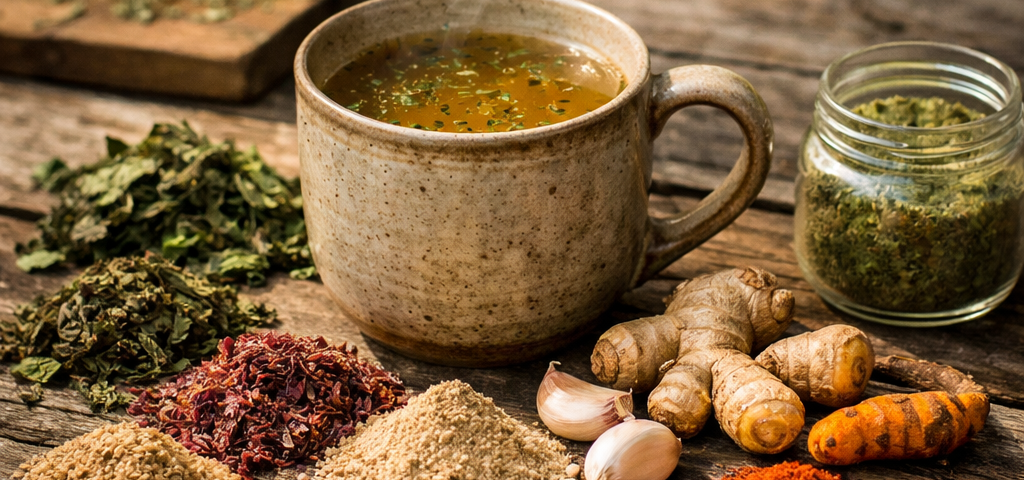
The wild nutrient broth recipe shared here is inspired by traditional hunter gatherer foods. It combines bone broth with wild greens, garden herbs, and simple pantry ingredients to create a mineral rich drink that supports hydration, fasting, and simple nutrition.
One of the most universal traditions across cultures was broth.
Bone broth made from slowly simmered bones has been used for centuries to provide warmth, minerals, and nourishment during periods of light eating, recovery, or fasting.
When that traditional broth is combined with wild greens, garden herbs, and a few practical pantry ingredients, it becomes something even more powerful. It becomes a nutrient dense drink that is low in calories yet rich in plant compounds and minerals.
This wild nutrient broth recipe is built around that simple idea.
The Hunter Gatherer Philosophy Behind This Broth
The philosophy behind this recipe is straightforward.
Use what nature provides and supplement with what is practical.
Some ingredients may come from wild landscapes. Others may grow in your own garden. Many can easily be purchased from grocery stores or online herb suppliers.
The goal is nourishment rather than perfection.
This broth combines three types of ingredients.
Foraged foods
Garden grown herbs
Store bought ingredients
Together they create a warm, satisfying drink that supports nutrition while keeping calories relatively low.
Foraged Ingredients
Wild plants are often far more nutrient dense than cultivated vegetables. Two excellent examples are nettle and watercress.
Nettle has long been used as a traditional wild food. It contains significant levels of potassium, magnesium, iron, and calcium.
Watercress has been ranked among the most nutrient dense vegetables in research published by the Centers for Disease Control and Prevention.
When dried and powdered, these plants create a mineral rich base for this broth.
Wild mushrooms are another excellent addition. Dried mushroom powder adds deep flavor and contains compounds such as beta glucans that support immune health.
Sea vegetables such as dulse add iodine and trace minerals that are often lacking in modern diets.
Garden Grown Herbs
Many of the herbs in this recipe can easily come from a backyard garden.
Parsley contributes antioxidants and vitamin K. Celery leaves and celery flakes add potassium and natural flavor.
Garlic and ginger support digestion and circulation.
Turmeric and cayenne provide warmth and contain plant compounds widely studied for their anti inflammatory properties.
Even a small herb garden can produce enough dried herbs for months of use.
Store Bought Ingredients
Not everyone has access to wild plants or a garden. Fortunately most of these ingredients are easy to find.
Dried nettle, watercress, mushroom powder, and dulse flakes are commonly available online through herb suppliers and natural food stores.
Garlic powder, ginger powder, turmeric, cayenne, parsley, celery flakes, and flaxseed are widely available at grocery stores.
Bone broth and chicken broth can also be purchased ready made if you do not make them yourself.
Using store bought ingredients still creates a highly nutritious broth.
How to Make the Wild Nutrient Broth Recipe Herb Mix
Preparing the herbal blend in advance allows the broth to be made quickly each day.
Store the mix in a sealed glass jar in a cool dark cabinet.
Coarse Ingredients to Grind First
½ cup dried nettle leaf
½ cup dried watercress
¼ cup dried celery flakes
¼ cup dried parsley
2 tablespoons dulse flakes
Blend these ingredients until they form a fine green powder.
Grinding these herbs first ensures the final mix dissolves smoothly in hot broth.
Fine Ingredients to Add
¼ cup ground flaxseed
¼ cup mushroom powder
2 tablespoons garlic powder
2 tablespoons ginger powder
2 tablespoons turmeric powder
1 to 2 tablespoons cayenne pepper
1 tablespoon black pepper
Blend briefly again to distribute the ingredients evenly.
Store the finished powder in an airtight glass jar.
How to Prepare the Wild Nutrient Broth Recipe
Heat the base broth.
1 cup chicken broth
1 cup bone broth
Add one to two teaspoons of the herb mix.
Stir well and allow the herbs to hydrate for one to two minutes.
For additional mineral extraction you may add one teaspoon of apple cider vinegar.
Using the Wild Nutrient Broth Recipe for Healthy Weight Loss
This broth can also be used as a simple tool to support healthy weight loss when combined with a whole food diet.
The goal is not extreme dieting. The goal is reducing calories while still providing minerals, hydration, and protein.
A simple routine may look like this.
Morning
Drink one to two cups of nutrient broth.
Midday
Drink another cup if hunger appears.
Evening
Eat one balanced whole food meal that includes protein, vegetables, and fruit.
Broth works well for weight loss because it has very low energy density. It provides warmth and volume with relatively few calories.
Warm liquids and fiber help increase feelings of fullness. Protein from bone broth helps preserve lean muscle during calorie restriction.
Many people also find that drinking broth reduces the desire for high calorie snack foods.
Consistency matters far more than extreme dieting.
Mineral Broth for Fasting and Light Eating
Many people practice some form of fasting or time restricted eating. During these periods the body still requires hydration and minerals.
This mineral rich broth helps support the body while maintaining a calorie deficit. Minerals such as potassium and magnesium play key roles in hydration and muscle function according to the National Institutes of Health Office of Dietary Supplements.
Wild greens provide potassium, magnesium, and other minerals. Bone broth provides amino acids and collagen.
Drinking broth during fasting periods can help maintain hydration while making fasting feel more comfortable.
Wild Plants That Work Well in Nutrient Broth
Many wild edible plants can work well in this broth.
Chickweed provides a mild green flavor and contains vitamin C and potassium.
Dandelion leaves contribute minerals and have long been used to support digestion.
Plantain leaves add fiber and beneficial plant compounds.
Wild mustard greens provide a peppery flavor and contain compounds found in many cruciferous vegetables.
Wild mushrooms add deep flavor along with beta glucans.
Always positively identify wild plants before consuming them.
Making Broth in Advance
You can prepare several servings of broth and store them in the refrigerator.
Stored in airtight containers, broth keeps safely for three to four days.
For best flavor and nutrient preservation, add the herb mixture after reheating each serving.
Estimated Nutritional Value Per Serving
Approximate values include
30 to 50 calories
6 to 10 grams of protein
1 to 2 grams of fiber
Mineral content may include
10 to 15 percent daily potassium
8 to 12 percent daily magnesium
6 to 10 percent daily calcium
10 to 15 percent daily iron
20 to 40 percent daily vitamin K
Trace minerals increase if mushroom powder and dulse are included.
Related Articles
If you enjoy this wild nutrient broth recipe, you may also enjoy these guides from The Hunter Gatherer Society that explore foraging, wild foods, and simple ways to connect with the landscape.
Learn How to Forage Wild Edible Plants
If you are new to gathering wild foods, this beginner friendly guide explains how to safely identify plants and start foraging with confidence.
👉 https://thehgsociety.com/how-to-forage-wild-edible-plants/
Beginner Foraging Guide for Plants and Mushrooms
This guide walks through the basics of finding edible plants and mushrooms in the wild and how beginners can start building their skills.
👉 https://thehgsociety.com/beginner-foraging-guide/
Best Edible Wild Mushrooms for Beginner Foragers
Learn about some of the easiest and safest mushrooms to identify while building your foraging knowledge in the woods.
👉 https://thehgsociety.com/best-edible-wild-mushrooms/
Foraging Wild Edible Plants and Mushrooms
This article explores the connection between wild foods and traditional cooking while sharing practical tips for harvesting safely.
👉 https://thehgsociety.com/foraging-wild-edible-plants-mushrooms/
Important Health and Foraging Disclaimer
The information in this article is provided for educational purposes only and is not intended as medical advice.
Consult a qualified healthcare professional before making significant dietary changes.
Always positively identify wild plants before consuming them. Many edible plants have toxic lookalikes.
Practice responsible and sustainable foraging.


