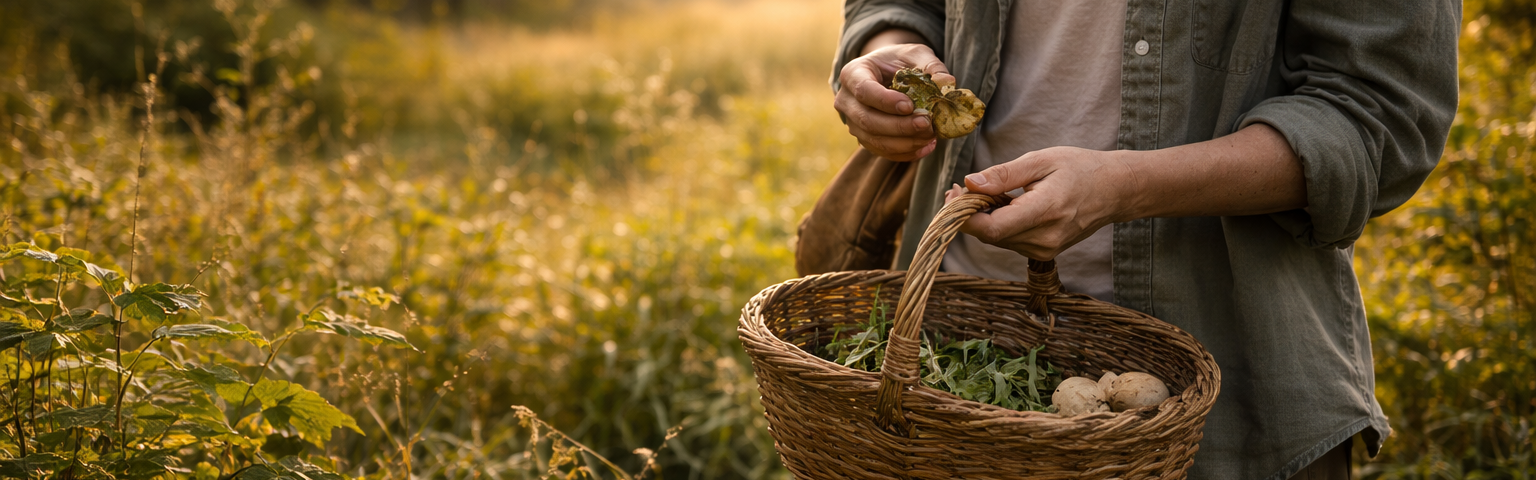
Bringing the Entire System Together
Over the past several weeks, you have done more than gather information. You have built a framework.
At the beginning, safety anchored everything. Then identification skills strengthened your confidence. As the weeks progressed, seasonal awareness added timing. Mapping introduced strategy. Finally, preparation gave you direction.
If you need to revisit the seasonal planning structure, review Week 11 here:
How to Prepare for a Full Foraging Season With a Simple Action Plan
https://thehgsociety.com/prepare-for-foraging-season
Now it is time to step back and look at what you have actually created.
Because becoming a confident forager is not about memorizing more species. Instead, it is about integrating safety, ethics, observation, documentation, and restraint into one repeatable personal system.
Confidence develops from consistency.
The Beginner Forager Framework
New articles every Thursday at 6:00 PM
This article concludes our 12-week Beginner Forager Framework. However, it marks a transition rather than an ending.
At this stage, you are no longer relying on scattered tips. Instead, you are operating from structure.
That shift changes everything.
Process Builds Confidence More Than Memory
Many beginners assume confident foragers simply know more plants and mushrooms. Although knowledge matters, process matters more.
When encountering a specimen, experienced foragers pause first. Next, they confirm multiple identifying features. Then, they assess habitat, timing, and environmental impact before making a decision.
Because that sequence repeats every time, hesitation gradually decreases.
Memory alone can fade under pressure. A structured method, however, remains stable.
As a result, decisions feel calmer and more deliberate.
Ethics Strengthen Skill Over Time
Skill without ethics can damage both ecosystems and access. Therefore, stewardship must remain central.
For example, leaving part of a patch untouched allows regeneration. Likewise, protecting sensitive locations from overexposure preserves future opportunity.
Over time, ethical behavior becomes instinctive rather than forced.
Moreover, restraint builds long-term trust with the land itself. When harvesting stays moderate and thoughtful, seasons remain productive year after year.
Confidence supported by ethics becomes sustainable confidence.
Observation Drives Mastery
Throughout this series, one truth has surfaced repeatedly.
Observation accelerates improvement more effectively than volume.
When you watch a plant move through early growth, maturity, and decline, identification sharpens. When you revisit a mushroom patch across multiple moisture cycles, timing becomes predictable. Additionally, comparing slopes, tree associations, and soil conditions deepens understanding.
Gradually, pattern recognition replaces guesswork.
Attention compounds quietly. Over time, those accumulated observations form instinct.
Mastery, therefore, is simply disciplined awareness applied consistently.
Depth Outperforms Breadth
Enthusiasm often tempts beginners to chase dozens of species at once. However, scattered attention slows long-term growth.
Focused study creates depth.
By committing to one plant and one mushroom per month, you begin noticing subtle variations in structure, habitat, and timing. Consequently, your identification becomes layered rather than surface-level.
After a year of this rhythm, you may know twenty-four species well. More importantly, you will understand how to approach unfamiliar species responsibly.
Learning how to learn matters more than memorizing names.
Systems Convert Skill Into Habit
Occasional success feels encouraging, but habit builds reliability.
For example, you might adopt this sequence:
Before each outing, review seasonal notes.
During the outing, confirm multiple identification features.
After harvesting, record timing and location.
At the end of each month, reflect and adjust.
Because that cycle repeats, improvement compounds.
Without a system, progress becomes inconsistent. With a repeatable structure, growth becomes predictable.
Consistency stabilizes confidence.
Uncertainty Becomes a Tool
Doubt does not disappear entirely. Instead, it changes shape.
Rather than creating anxiety, uncertainty prompts verification. Instead of rushing a decision, you slow down. If necessary, you walk away and research further.
That shift represents maturity.
Confidence does not mean acting without hesitation. Instead, it means responding to hesitation calmly and methodically.
When uncertainty becomes informative rather than intimidating, you know progress has occurred.
Organization Multiplies Insight
Experience alone is valuable. Documented experience is transformative.
When you consistently record species, timing, habitat conditions, and observations, patterns emerge across seasons. Consequently, your field decisions improve.
Documentation also prevents repeating avoidable mistakes.
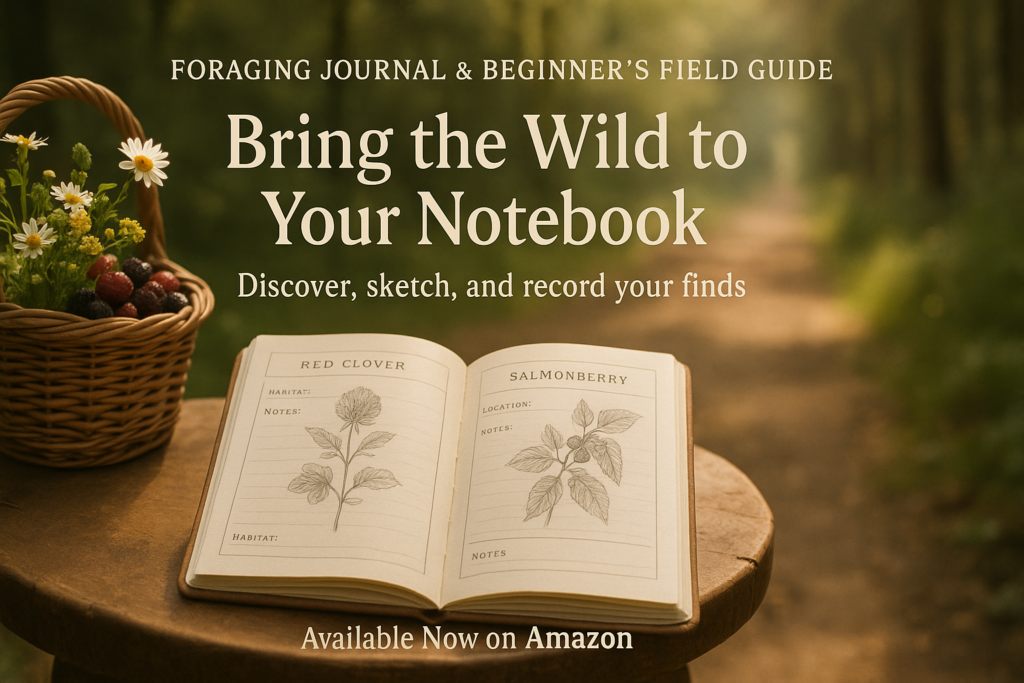
If you want structured support for tracking species focus, seasonal timing, mapping, and reflection, the Beginner Field Guide & Foraging Journal was created specifically to support this long-term system:
https://www.amazon.com/dp/B0FSF3RM3W
When organization reduces friction, attention shifts toward refinement.
What Structured Confidence Looks Like
Structured foragers move deliberately. Their pace appears calm.
They confirm more than one identifying feature before harvesting.
They evaluate habitat context carefully.
They harvest lightly even when abundance invites excess.
They return to productive areas intentionally.
They document consistently and review seasonally.
Skill becomes visible through restraint.
Patience signals experience.
Measured decisions reflect maturity.
The Long View Changes Everything
Foraging unfolds across years rather than days.
Some seasons overflow with abundance. Others feel sparse. Weather patterns shift unpredictably. Growth cycles repeat yet vary.
A structured forager expects variability.
During slower seasons, observation increases. During abundant seasons, restraint strengthens.
Because perspective stretches across years, short-term fluctuations lose their emotional weight.
The long view stabilizes confidence.
Frequently Asked Questions About Becoming a Confident Forager
How long does it take to build true confidence?
Confidence develops through structured repetition across multiple seasons. While noticeable improvement often appears within one year, deeper pattern recognition continues building beyond that.
Should I try to learn as many species as possible quickly?
Depth builds stronger competence than speed. Focused, monthly study produces lasting understanding.
What matters most for long-term success?
Consistent observation, careful verification, ethical restraint, and regular documentation create durable growth.
From Beginner to Practitioner
At the beginning of this framework, you were gathering techniques.
Now you are operating from principles.
Safety guides decisions.
Identification follows structure.
Seasonal timing informs planning.
Stewardship shapes harvesting.
Mapping builds predictability.
Preparation creates direction.
Reflection strengthens adjustment.
That integration marks the shift from beginner to practitioner.
Continue the Rhythm
Although this 12-week framework concludes here, your practice continues.
Move slowly.
Verify carefully.
Harvest lightly.
Document consistently.
Reflect honestly.
Repeat season after season.
Through repetition, confidence deepens. Through structure, skill stabilizes. Through restraint, opportunity remains.
You are no longer chasing knowledge.
You are building a disciplined relationship with the land.
Foraging Safety Disclaimer
The information provided on this website and in this article is for educational and informational purposes only. Wild plant and mushroom identification carries inherent risks, including the possibility of serious illness, injury, or death if misidentification occurs.
Always verify identification using multiple reliable sources before harvesting or consuming any wild species. Never rely on a single source, photograph, or description. If you are uncertain about the identity of any plant or mushroom, do not harvest or consume it.
Foraging laws and regulations vary by location. You are responsible for understanding and complying with all local, state, and federal regulations before harvesting wild species.
The Hunter Gatherer Society and its authors assume no responsibility or liability for any injury, illness, loss, or damage resulting from the use or misuse of the information provided.
By using this content, you acknowledge that all decisions related to harvesting and consumption of wild foods are made at your own risk.


