The Hunter Gatherer Society
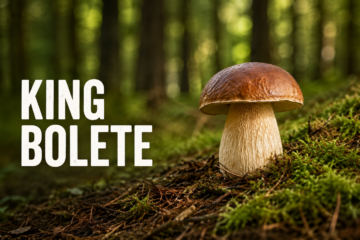
King bolete identification guide showing a mature Boletus edulis with a brown cap and thick reticulate stem

King Bolete Identification Guide: Edibility, Uses, Harvesting, and Complete Field Guide

This king bolete identification guide explains how to recognize Boletus edulis and closely related North American porcini. It also covers habitat, lookalikes, harvesting, cooking, preservation, and safety. Because several mushrooms share the classic porcini shape, confirm the full combination of pores, stem netting, flesh color, staining, habitat, and maturity before eating one. Quick Answers Is king bolete edible?Yes. King bolete is a highly prized edible mushroom. However, cook it thoroughly before eating it. What is its scientific name?The traditional scientific name is Boletus edulis. In North America, however, “king bolete” and “porcini” may also refer to several closely related species. What does a king bolete look like?Look for a rounded brown cap, a thick pale stem, fine white netting near[…]

Read more
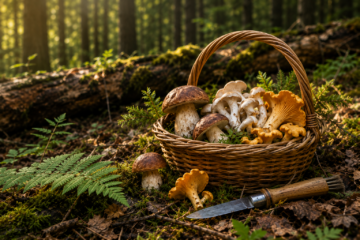
Basket of responsibly harvested wild mushrooms on a mossy forest floor

Responsible Mushroom Foraging: How to Harvest Wild Mushrooms Sustainably

Finding a productive patch of wild mushrooms can turn an ordinary walk into a very good day. One moment you are wandering through the woods. The next, you are kneeling beside a flush of chanterelles, oyster mushrooms, boletes, or puffballs while mentally planning dinner. That excitement is part of mushroom foraging. However, a productive patch is more than an outdoor grocery shelf. It belongs to a larger fungal system connected to soil, trees, decaying wood, insects, wildlife, and the surrounding habitat. Responsible mushroom foraging means enjoying the harvest without damaging the conditions that helped create it. Harvest mushrooms responsibly. Take what you will use, protect the habitat, and leave enough for others to enjoy. Quick Answers About Responsible Mushroom Foraging[…]

Read more
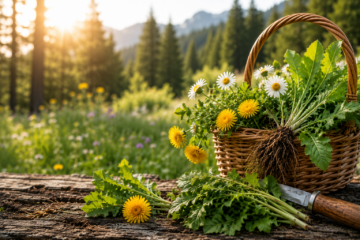
Basket of responsibly harvested wild plants and dandelions in a sunlit meadow

Responsible Foraging: How to Harvest Wild Plants Sustainably

A good foraging trip should end with two things: something useful in your basket and enough left behind that the patch barely notices you were there. That is the heart of responsible foraging. Wild plants may feel free for the taking, especially when a field is overflowing with dandelions or berry canes are bending under ripe fruit. However, every patch is part of a larger living system. Flowers feed pollinators, fruit and seeds feed wildlife, roots hold soil in place, and healthy plants create the next generation. The goal is not to avoid harvesting. It is to harvest in a way that allows wild food, habitat, and future opportunities to continue. Harvest today. Leave plenty for tomorrow. Quick Answer: What[…]

Read more
Oyster mushrooms growing in overlapping clusters on a mossy fallen log in a Pacific Northwest forest

Oyster Mushroom Identification Guide: Edibility, Lookalikes, Harvesting, and Complete Field Guide

Introduction Oyster mushrooms are some of the most useful wild edible mushrooms to learn because they are common, flavorful, and easier to recognize than many gilled mushrooms once you understand the full identification pattern. They grow from wood, often in overlapping shelf-like clusters, with pale gills that run down a short side stem or attach near the base of the cap. This oyster mushroom identification guide covers how to identify oyster mushrooms, where they grow, when to look for them, how to separate them from important lookalikes, and how to harvest and cook them safely. Oyster mushrooms usually refer to mushrooms in the genus Pleurotus. The classic oyster mushroom is Pleurotus ostreatus, but several related oyster species occur across North[…]

Read more
Lobster mushrooms partially buried in forest duff with bright orange tops showing

Lobster Mushroom Identification Guide: How to Identify, Harvest, and Cook Lobster Mushrooms

Lobster mushrooms are one of the easiest wild edible mushrooms to recognize once you know what you are looking at. Their bright orange-red color, firm white interior, and strange twisted shape make them stand out on the forest floor. They are also one of the more unusual wild edibles because the “lobster mushroom” is not a normal mushroom species by itself. It is a parasitic fungus, Hypomyces lactifluorum, growing over and transforming another mushroom, usually a Russula or Lactarius species. When fresh, lobster mushrooms are dense, meaty, and mildly seafood-like. They are excellent in soups, chowders, sautés, pasta, tacos, and anywhere you want a firm mushroom that holds its shape. Quick Answer: Are Lobster Mushrooms Edible? Yes. Lobster mushrooms are[…]

Read more
Social Share Buttons and Icons powered by Ultimatelysocial