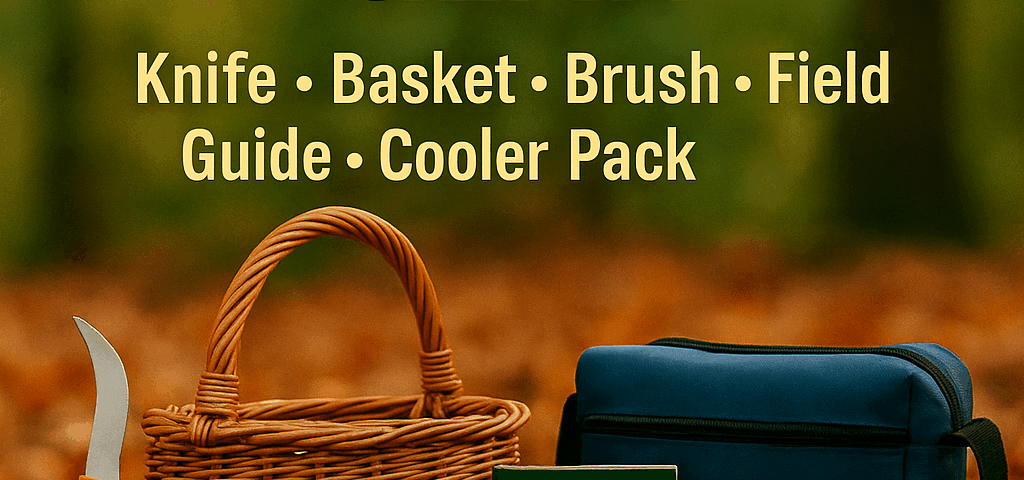
When I first started foraging, I didn’t give much thought to gear. I’d head out with an old backpack, a kitchen knife, and maybe a plastic bag if I remembered. It didn’t take long to realize that the right tools make a huge difference—not only in protecting your harvest but also in making the whole experience easier and more enjoyable.
After years of trial and error, I’ve narrowed it down to a handful of essentials I never leave home without. Here’s my take on the best foraging gear every beginner should have.
My Top Picks for Foraging Gear
1. A Basket or Paper Bags
A basket or paper bag is my first choice for gathering. Both allow airflow so mushrooms and plants don’t get slimy like they do in plastic. Personally, I prefer paper bags because they’re simple, lightweight, and easy to carry in multiples. They also let you separate different finds so they don’t mix together. A basket, on the other hand, is sturdy and reusable for those who like a traditional feel.
2. A Mushroom Knife with Brush
A mushroom knife may not seem necessary at first, but once you try one, you’ll never go back. The curved blade slices cleanly at the stem, which helps protect the rest of the patch for future growth. The built-in brush makes quick work of dirt, leaves, and bugs right in the field. This saves me a lot of cleanup later at home and keeps my harvest fresher.
3. A Good Backpack
Carrying your finds comfortably is just as important as finding them. A good, sturdy backpack makes it easier to bring along paper bags, guides, gloves, snacks, and water. I prefer one with multiple compartments so I can keep my gear organized and separate delicate items from heavier tools. For me, a backpack is essential to keeping longer trips comfortable and efficient.
4. A Good Field Guide
Even after years of foraging, I always carry a field guide. It’s not about doubting myself—it’s about respecting nature and double-checking. A guide gives you multiple photos, descriptions, and tips for identifying plants and mushrooms in different stages of growth. When I’m in doubt, I flip through it before anything goes into my bag. It’s the best safeguard against mistakes.
5. Small Cotton Bags & Gloves
These little extras make a huge difference. Cotton bags let you keep different plants and mushrooms separated so flavors and textures don’t mix. Gloves are handy for stinging nettles or thorny bushes and can save you a lot of irritation. They don’t take up much space, but they add a lot of convenience to the trip.
Personal Tip: Blaze Orange Trail Markers
One piece of gear I always bring along is something you won’t often see on “official” gear lists, but it’s saved me more times than I can count: strips of blaze orange material.
I buy an inexpensive safety vest, cut it into strips, and keep a few in my pack. On one end of each strip, I’ve tied a small piece of rope or string. Whenever I leave a main trail, I tie one of these bright markers up in a tree to make it easy to find my way back.
If I head in deeper, I’ll hang more than one — like leaving a breadcrumb trail — so I never have to second-guess my route back. The bright blaze orange is highly visible, lightweight to carry, and cheap to replace, making it one of my most reliable pieces of foraging gear.
Free Resource: Download My Foraging 101 Guide
Gear will make your adventures easier, but knowledge is just as important. That’s why I put together a free beginner’s guide to foraging. It covers safety basics, beginner-friendly plants and mushrooms, and tips for blending your finds into everyday meals.
👉 Download your free Foraging 101 Guide here
This guide is perfect if you want something simple and practical to carry with you or reference at home.
Final Thoughts
The right gear doesn’t just make foraging more efficient—it makes it more enjoyable. I’ve learned that a good knife, breathable storage, and a reliable guidebook can transform a frustrating trip into a successful one.
So before you head out, pack wisely. You’ll thank yourself later when you return with a haul of clean, fresh, and perfectly preserved wild edibles.
👉 Don’t forget—your free Foraging 101 Guide is waiting here: subscribepage.io/HpwuTH
Recommended Resources
If you’re ready to build your own foraging kit, here are some resources I recommend:
🍄 Foraging Basket – A reusable classic for keeping harvests fresh. Check it out here
🛍️ Paper Bags (Multipack) – My preferred choice for lightweight, breathable storage. See options here
🔪 Mushroom Knife with Brush – For clean cuts and on-the-spot cleanup. See one here
🎒 Sturdy Backpack – Comfortable, practical, and perfect for carrying gear. Find one here
📘 Field Guide to Edible Wild Mushrooms – Cross-check IDs with reliable references. Grab one here
🧤 Lightweight Gloves – For nettles, thorns, and messy digging. Check here
Explore My Etsy Shop
If you’re looking for printable foraging journals, trackers, and outdoor-inspired guides, check out my Etsy shop Step Outside Grow. I’ve designed each resource to be simple, practical, and easy to carry into the woods with you.
👉 Visit Step Outside Grow on Etsy
It’s a great place to grab tools that complement what you’re learning here, especially if you like having a dedicated spot to record your foraging adventures.


