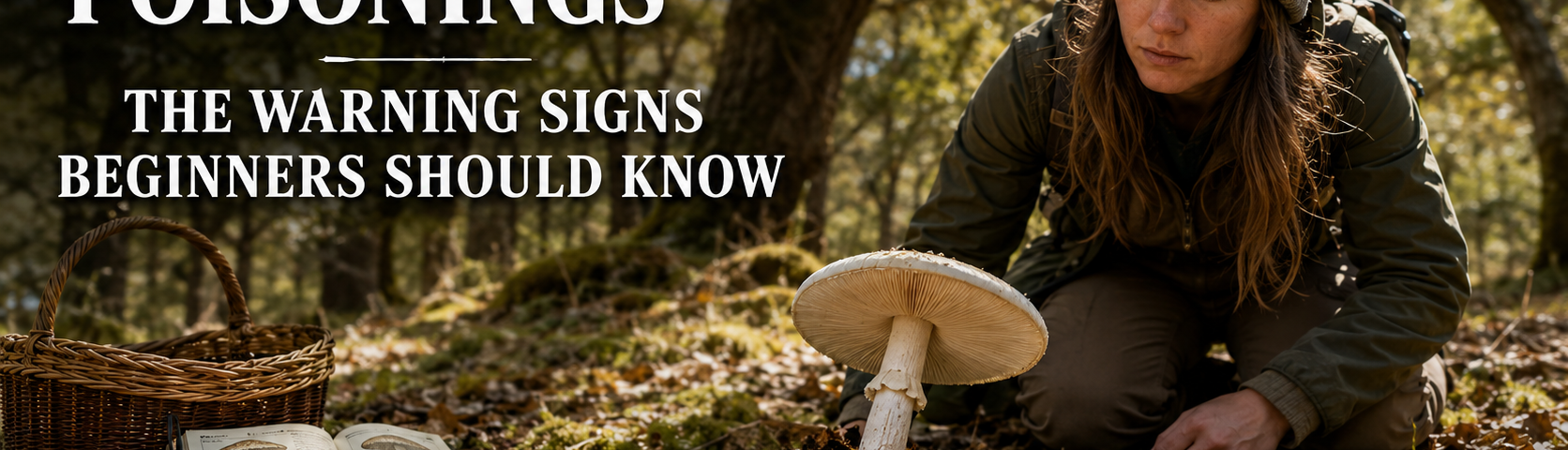
Recent California mushroom poisonings linked to deadly Amanita mushrooms have renewed conversations about mushroom foraging safety across the West Coast.
For beginner foragers, these incidents are not a reason to fear wild mushrooms. They are a reminder that safe mushroom identification starts with learning a few important warning signs first.
Fortunately, beginner mushroom safety does not require memorizing hundreds of species. Learning how to recognize dangerous mushrooms like death caps and destroying angels can dramatically reduce risk while building long-term foraging confidence.
Mushroom foraging can still be one of the most rewarding ways to connect with nature. The key is learning carefully, slowing down, and building knowledge one species at a time.
What Happened in the Recent California Mushroom Poisonings?
As of May 11, 2026, California health officials had reported 47 mushroom poisoning cases linked to toxic wild mushrooms, including four deaths and at least four liver transplants. Health experts believe unusually favorable growing conditions contributed to a heavy fruiting season for dangerous Amanita species across parts of the state.
According to the California Department of Public Health, two mushrooms connected to these incidents include:
- Death Cap (Amanita phalloides)
- Western Destroying Angel (Amanita ocreata)
These poisonous mushrooms contain toxins that can severely damage the liver and kidneys. One of the biggest dangers is that symptoms may not appear for many hours after consumption.
You can review the California Department of Public Health safety warning here:
California Department of Public Health Mushroom Warning
How Can Beginners Identify Dangerous Amanita Mushrooms?
Beginner foragers should immediately avoid mushrooms with:
- White gills
- A ring around the stem
- A bulb or sac-like base
- Growth near oak trees
These warning signs are commonly associated with dangerous Amanita mushrooms like death caps and destroying angels.
While not every mushroom with these features is deadly, beginners should treat this combination with extreme caution until they gain more experience and identification skills.
Dangerous Amanita Mushrooms Beginners Should Learn First
One of the smartest things a beginner can do is learn the dangerous mushrooms before focusing heavily on edible species.
Experienced foragers often recommend learning:
- Deadly Amanitas
- Deadly Galerina species
- False morels
- Toxic mushroom lookalikes
This approach builds confidence while dramatically improving mushroom foraging safety.
The goal is not fear.
The goal is skill.
Death Cap Mushroom Identification Tips
Amanita phalloides
The death cap mushroom is considered one of the most dangerous poisonous mushrooms in the world. Unfortunately, it often looks clean, healthy, and surprisingly ordinary.
One reason death caps are so dangerous is because beginners sometimes assume poisonous mushrooms should look obviously toxic or unusual. In reality, many deadly mushrooms appear calm, beautiful, and harmless.
The Biggest Beginner Warning Signs
If you find a mushroom with:
- White gills underneath
- A ring around the stem
- A bulb or sac-like structure at the base
- Growing near oak trees
Do not eat it.
One of the most important beginner mushroom identification lessons is learning to check the entire base of the mushroom.
Many dangerous Amanita mushrooms hide a cup-like structure underground called a volva. If a mushroom is cut at ground level, that critical warning sign may never be seen.
Important Beginner “Tell”
White gills plus a bulbous base should immediately trigger caution.
According to MushroomExpert.com, death cap mushrooms can vary in color from olive green to yellowish, tan, pale green, or even nearly white. This is why color alone should never be relied on for mushroom identification.
Western Destroying Angel Identification Tips
Amanita ocreata
The western destroying angel is another dangerous Amanita mushroom associated with recent California mushroom poisonings.
Unlike the death cap, this mushroom is often bright white from top to bottom.
Many beginners naturally assume white mushrooms look “clean” or safe. Unfortunately, this is one reason destroying angels can fool inexperienced mushroom hunters.
The Biggest Beginner Warning Signs
If you find a mushroom with:
- White cap
- White gills
- White stem
- Ring around the stem
- Bulb or sac at the base
Do not eat it.
That single rule alone could help prevent many mushroom poisonings.
The East Bay Regional Park District Toxic Mushroom Information Page lists both death caps and destroying angels among the most dangerous mushrooms commonly found in California parks and public lands.
Dangerous Mushroom Warning Signs Every Beginner Should Know
Many poisonous mushrooms share similar warning signs. Learning these basic features can greatly improve beginner mushroom foraging safety.
White Gills
Many deadly Amanita mushrooms have white gills.
A Bulb or Sac at the Base
This hidden cup-like structure is one of the most important warning signs in mushroom identification.
These warning signs are not enough to identify a mushroom as edible or safe to eat. They are red flags that tell beginners to stop, document the mushroom carefully, and avoid consumption unless identification is confirmed by a qualified expert or multiple reliable identification methods.
A Ring Around the Stem
While not dangerous by itself, this feature becomes important when combined with other Amanita characteristics.
Young “Button” Mushrooms
Immature Amanitas can be much harder to identify safely because their features may not be fully developed.
Mushrooms Growing Near Oaks
Many dangerous Amanita mushrooms form relationships with oak trees.
Quick Beginner Mushroom Safety Checklist
Before eating any wild mushroom:
✔ Check the entire base
✔ Verify gill color
✔ Use multiple identification sources
✔ Avoid white-gilled Amanitas
✔ Never rely on apps alone
✔ When uncertain, do not eat it
Why These Poisonous Mushrooms Are So Dangerous
These toxic Amanita mushrooms contain compounds called amatoxins.
One reason poisonous Amanita mushrooms are especially dangerous is because symptoms are often delayed. Someone may feel completely normal for several hours after eating them.
Early symptoms can include:
- Severe stomach pain
- Vomiting
- Diarrhea
- Cramping
- Weakness
- Dehydration
In some cases, symptoms temporarily improve before serious liver damage begins developing later.
According to the Centers for Disease Control and Prevention Mushroom Poisoning Report, death cap mushrooms are responsible for a large percentage of fatal mushroom poisonings worldwide.
Mushroom Foraging Safety Tips for Beginners
Most mushroom poisonings are preventable.
Safe mushroom foraging usually comes down to a few important habits:
- Learn slowly
- Never guess
- Double-check identifications
- Use multiple trusted resources
- Learn dangerous mushrooms before edible mushrooms
- Avoid eating wild mushrooms unless identification is certain
This slower approach builds real confidence and long-term skill.
Good foragers are cautious foragers.
What To Do If Someone Eats a Poisonous Mushroom
If someone may have consumed a dangerous wild mushroom:
- Call Poison Control immediately at 1-800-222-1222
- Seek emergency medical care
- Save leftover mushroom material if possible
- Take photos of the mushroom from multiple angles
- Do not wait for symptoms to become severe
Quick medical treatment can be critical.
Safe Mushroom Foraging Is Still Worth Learning
The recent California mushroom poisonings are serious, but they should not scare people away from foraging altogether.
Instead, they should encourage beginners to approach mushroom identification with patience, respect, and curiosity.
Mushroom hunting teaches observation, habitat awareness, seasonal knowledge, and a deeper connection to the natural world.
The safest foragers are not the people who rush to eat everything they find.
They are the people who slow down enough to learn properly.
Nature is still one of the best classrooms there is.
You just have to approach it carefully.
Related Articles From The Hunter Gatherer Society
Start Your Foraging Journey the Right Way
If you are new to foraging, these beginner-friendly guides can help you build confidence safely and responsibly.
Beginner Foraging Plan
Learn how to simplify the learning process by focusing on one plant and one mushroom at a time.
Responsible Foraging Guide
Discover the principles of ethical, sustainable, and safe wild harvesting.
How to Start Foraging Safely
A practical beginner guide covering safe harvesting practices, research habits, and common mistakes to avoid.
Beginner Foraging Journal & Field Guide
Track your mushroom and plant discoveries while building real-world identification skills season by season.
The Hunter Gatherer Society Beginner Foraging Journal & Field Guide
Affiliate Disclosure: As an Amazon Associate, The Hunter Gatherer Society may earn from qualifying purchases at no additional cost to you.


