Why I Grow Jerusalem Artichokes in Containers
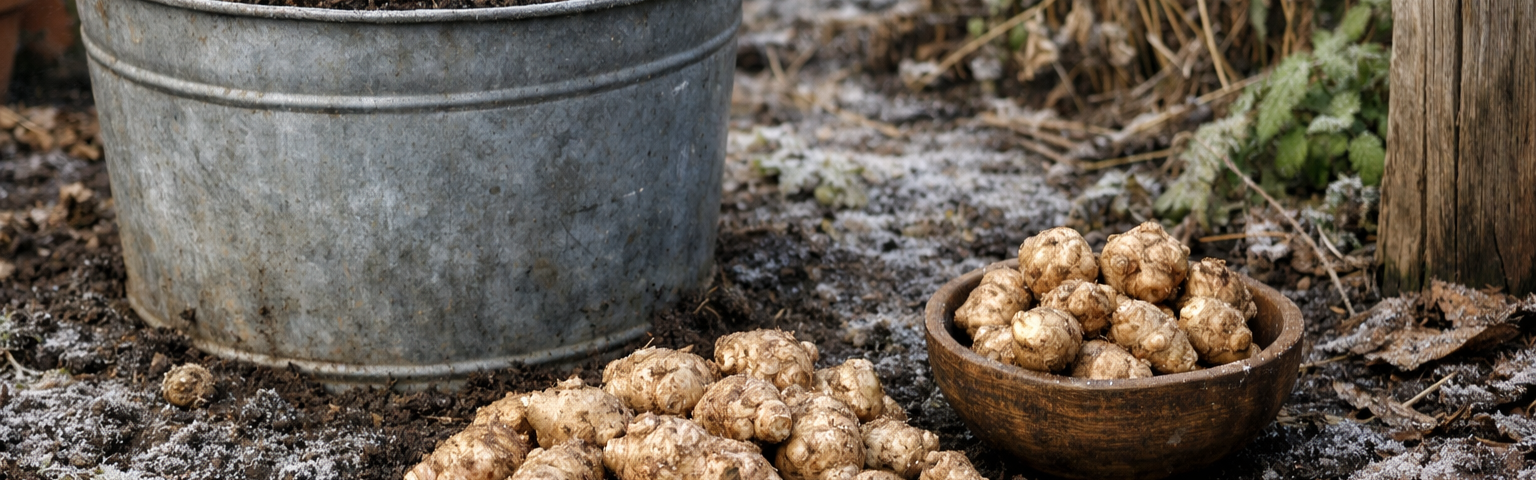
Mid January is not supposed to look like this, yet my Jerusalem artichoke winter harvest proves otherwise.
Most gardens are quiet. Beds sit empty. The work of the growing season feels far away. Yet on a cold winter morning, I tip over a container, brush soil from my hands, and pull fresh food from the earth. Jerusalem artichokes are the one vegetable I grow once and harvest every year, improving after frost and rewarding patience when almost nothing else is growing.
This is the winter vegetable that feeds me every year.
What Jerusalem Artichoke Really Is and Why It Belongs in a Winter Garden
Jerusalem artichoke, often called sunchoke, is a perennial tuber from the sunflower family. Despite the name, it has nothing to do with Jerusalem and it is not related to globe artichokes. What it is, however, is one of the most resilient food plants you can grow.
Through spring and summer, the plant grows tall and leafy, often towering over the rest of the garden. By late summer it produces small sunflower like blooms. As temperatures drop, the energy of the plant moves underground, storing itself in knobby tubers beneath the soil.
Cold weather does not hurt Jerusalem artichokes. It improves them.
Frost converts stored starches into sugars, softening their texture and deepening their flavor. That is why winter is not just an acceptable time to harvest. It is the best time.
For readers who want a deeper horticultural explanation of how this plant grows and survives cold climates, the University of Minnesota Extension article on growing Jerusalem artichokes explains the plant’s cold tolerance, growth habits, and tuber development in detail.
https://extension.umn.edu/vegetables/growing-jerusalem-artichokes
Where Jerusalem Artichokes Grow Best and Why I Avoid Planting Them in the Ground
Jerusalem artichokes grow across much of North America and tolerate poor soil, drought, and neglect better than most vegetables. Full sun is ideal, but they still produce in partial sun.
That adaptability comes with a warning.
In the ground, Jerusalem artichokes spread aggressively. Small tuber fragments left behind will sprout the following year. What starts as a food source can quickly turn into a problem if you are not careful.
That is why I grow mine in containers.
A container gives me control without sacrificing productivity. It allows me to harvest selectively, prevent spreading, and access the crop even when the ground is cold or frozen. When winter arrives, I can simply tip the pot instead of digging.
Why Jerusalem Artichoke Is My Most Reliable Winter Harvest
Winter is when food choices matter most. Fresh produce in stores travels far and often lacks flavor. Having something growing just outside the door changes that relationship.
Jerusalem artichokes bridge the gap between seasons. When summer crops are gone and spring still feels distant, they are waiting underground. Each winter, one container gives me a few honest meals without asking much in return.
This reliable Jerusalem artichoke winter harvest has changed how I think about food availability during the coldest months of the year.
This same seasonal mindset carries into other forms of winter harvesting as well. Whether it is pulling tubers from soil or digging clams during low tides, the rhythm is the same. I approach winter with awareness, patience, and timing, which I also describe in my article on winter harvesting along the Washington coast.
https://thehgsociety.com/winter-clam-digging-washington/
How I Grow Jerusalem Artichokes in Containers Step by Step
I keep this process simple on purpose.
I use a sturdy container between five and ten gallons with drainage holes. Regular potting soil works well. Rich soil and heavy fertilizer are unnecessary and often counterproductive.
In early spring, once hard frosts have passed, I plant one or two tubers four to six inches deep. That is all it takes.
Through summer, the plant largely takes care of itself. I water during extended dry spells and stake the stalks if wind becomes an issue. By fall, the plant begins to yellow and die back on its own.
That is when the real waiting begins.
Jerusalem Artichoke Winter Harvest in Mid January
This mid January Jerusalem artichoke winter harvest is when flavor, texture, and effort finally meet.
After the first few frosts, I know the tubers are ready. I do not rush the harvest. Flavor improves with cold, and leaving them in the soil protects them better than any storage method.
In mid January, I tip the container, harvest only what I need, and return the rest to the pot. The remaining tubers reseed themselves naturally for the next year.
This approach turns one planting into a long term food source rather than a single season crop.
One Simple Way I Cook Jerusalem Artichokes
My favorite preparation is also the simplest.
I scrub the tubers clean and slice them into thin rounds or small chunks. A skillet with olive oil or butter goes over medium heat. The artichokes cook until golden and tender, seasoned with salt and sometimes garlic or herbs.
They come out crisp on the outside, soft in the center, and deeply satisfying on a cold evening. No elaborate recipe needed. Just honest food.
The Best Way to Preserve Jerusalem Artichokes If You Have Too Many
If I harvest more than I can use fresh, refrigeration is my first choice.
I brush off excess soil and store unwashed tubers in a paper bag in the refrigerator crisper drawer. They keep well for several weeks this way.
For longer storage, I blanch and freeze sliced tubers or pickle them for crunch and brightness. Drying is not ideal. The texture suffers and the flavor flattens.
Why This One Plant Has Earned a Permanent Place in My Winter Routine
Mid January is not supposed to look like this.
Yet year after year, I stand in cold air with fresh food in my hands. Jerusalem artichokes do not demand constant attention or perfect conditions. They simply wait. By growing them in a container and harvesting with intention, they have become one of the most reliable food sources I have.
Sometimes resilience looks like effort. Other times it looks like choosing the right plant and letting it do the work.


