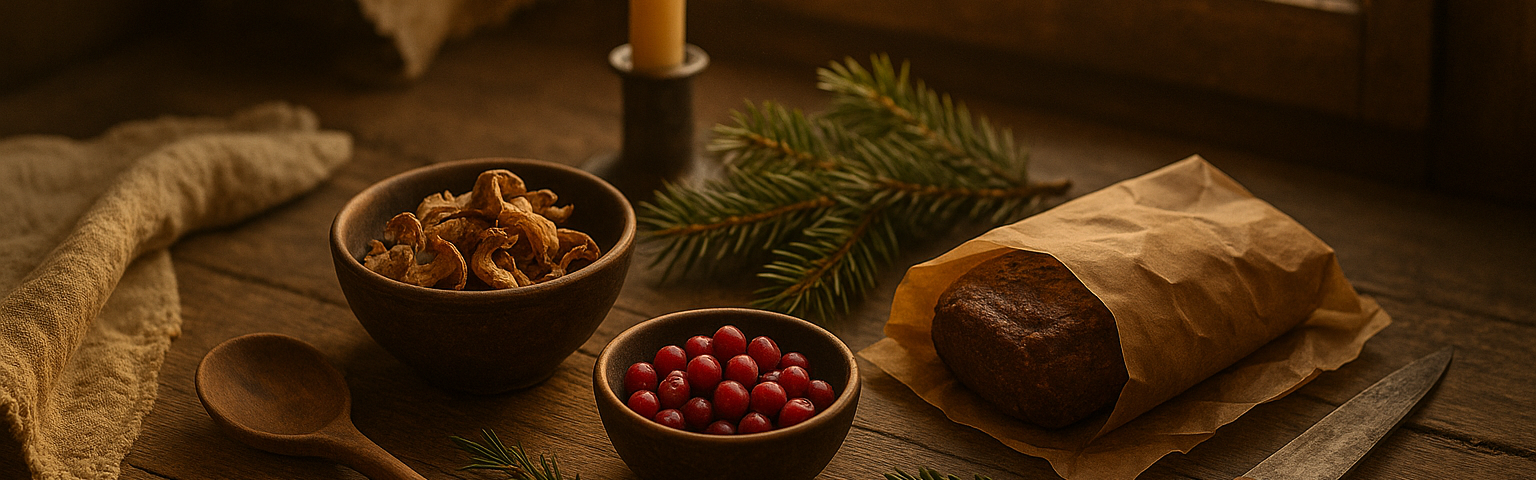
There is something about winter that nudges us toward reflection. Christmas especially has a way of reminding me that people have always found comfort in food gathered from the land. When the world slowed down and the first snow settled across the forest, our ancestors leaned on the same skills many of us are rediscovering today. They cooked with what they had stored, dried, and preserved. They brought wild flavors into the home to lift spirits and share warmth.
That idea still moves me. It feels grounding to know that the things we forage in spring, summer, and autumn can become part of our own winter traditions. In many ways, this is the original Christmas cooking. It connected families to the land and to each other.
Winter Feasts Before Grocery Stores
Long before modern holiday menus were filled with sugar and imported fruit, winter meals relied on hearty ingredients drawn from the local landscape. Every region had its own traditions. People in Europe gathered chestnuts, hazelnuts, and herbs before the first frost. Indigenous communities across North America preserved berries, roots, and wild meats. Settlers added their own methods of smoking, salting, fermenting, and drying to stretch food through the cold months.
Families prepared meals over firelight and candle glow. The aromas of pine, game meat, dried mushrooms, and stored roots filled homes. These were not fancy dishes. They were deeply practical and incredibly meaningful because they represented earlier seasons of effort.
I still feel that sense of connection when I open a jar of dried mushrooms or grab a bundle of herbs I hung in the summer heat.
Wild Gifts That Once Made The Christmas Table
Throughout history, the winter holiday table celebrated survival and gratitude. Many of the ingredients that appeared in traditional feasts still show up in our kitchens today. Others have been forgotten, even though they grow abundantly around us.
Dried Mushrooms
Foraged mushrooms were prized during winter because they added depth and umami to simple meals. Families dried boletes, morels, oyster mushrooms, and chanterelles on strings above the hearth. A handful could turn broth into a feast.
I still do this every season. It feels like carrying the forest into winter.
Wild Game
Deer, elk, rabbit, duck, and pheasant all played a role in winter celebrations. Game stews and roasts were often the centerpiece of historical Christmas meals. The flavor of wild meat felt more meaningful than livestock because it came from the land surrounding the home.
Today you can still honor that tradition, whether you cook venison from a fall hunt or choose a store bought alternative like beef roast, pork shoulder, or chicken.
Preserved Berries
Wild cranberries, blackberries, huckleberries, and lingonberries were simmered into sauces or added to breads. Families kept them dried, frozen, or stored in natural cold rooms that stayed just above freezing.
I do something similar with berries I gather during the summer. Every jar becomes a reminder of warm days when the forest was full of color.
Roots And Winter Greens
Winter meals often included roasted roots like parsnips, carrots, burdock, and wild turnip. People added dried or fermented greens to stews for vitamins they would not otherwise get.
This was as close to a winter garden as anyone had.
Herbs And Evergreen Aromatics
Pine needles, spruce tips, juniper berries, sage, and rosemary all found a place in historical cooking. These ingredients symbolized life that stayed green through the coldest time of year. They also tasted like the season itself.
When I cook with evergreen needles now, I understand why they felt special.
A Return To Seasonal Living
Modern life tries to convince us that food must come from a store, yet history tells a different story. People once relied on the land and their own effort to bring meaning to the winter table. They knew Christmas was not about excess. It was about gratitude for the harvest that carried them through the darkest part of the year.
Seasonal living is not trendy or complicated. It carries an emotional weight that feels grounding. This way of life keeps us connected to our own effort. It also reminds us that comfort can grow from simple things.
I feel that every time I reach for something I gathered earlier in the year. It creates a different kind of holiday memory. One that honors the past and builds a more grounded present.
Bringing Historical Wild Food Into Your Modern Christmas
You can bring some of these traditions back into your home with a few simple ideas.
• Use dried mushrooms in gravies, soups, or noodle dishes
• Add evergreen needles to warm winter teas
• Roast root vegetables with sage or juniper
• Make a simple berry sauce with preserved foraged fruit
• Include venison or other wild game in a holiday meal if you have it available
• Light a candle and cook something with ingredients you gathered by hand
When you do this, your Christmas table becomes more than a set of recipes. It becomes a story. It becomes part of a lineage that reaches back through centuries of people who lived close to the land and used food to survive winter with hope.
I believe this is how the season was meant to feel. Slower. Warmer. More connected.
Wild Mushrooms: A Cookbook and Foraging Guide
By Kristen Blizzard and Trent Blizzard
If you love bringing the flavor of the forest into your kitchen, this book belongs on your shelf. It offers everything you need to turn mushrooming into a lifestyle, including how to find, identify, store, preserve, and cook a wide range of wild species. The authors gathered insight and lore from more than twenty skilled foragers across the country, creating a guide that feels both practical and rooted in community.
The recipes are approachable, and the tips on transporting, cleaning, and drying your harvest add real value for anyone who forages regularly. Every time you open your dried mushrooms, their aroma brings you right back to the forest and the day you gathered them. Few foods offer that kind of connection.
Buy on Amazon: https://amzn.to/3Mphxm6


