Most people live in two worlds without realizing it. One world is built around grocery aisles, refrigerators, and packaged convenience. The other is quiet and timeless. It exists in the forest, along the shoreline, and in open fields where food still grows wild and free.
I live somewhere in between. I am a modern hunter gatherer.
For me, foraging is not about living completely off the land or rejecting modern life. It is about balance. I harvest wild mushrooms, edible plants, seafood, and game responsibly, then bring them home to prepare alongside everyday foods from the store. Some meals are fully wild, while others mix wild greens, mushrooms, and simple store ingredients. Together, they tell a story of connection.
Before exploring what it means to live as a modern hunter gatherer, it helps to understand the people who inspired me to learn.
The Mycologist and the Citizen Mycologist
When it comes to mushrooms, there are two types of people you often meet in the woods.
A mycologist is a professional scientist who studies fungi in incredible detail. They understand how mushrooms grow, how they form symbiotic relationships with trees, and why each species matters to the ecosystem. Their focus is on research, documentation, and the scientific side of fungi.
A citizen mycologist shares that same curiosity, but often without formal training. They are passionate hobbyists who spend countless hours in the field photographing, identifying, and cataloging mushrooms for community projects or databases like iNaturalist.
Both groups share a deep respect for fungi. They speak in scientific names like Cantharellus formosus rather than “golden chanterelle.” They are patient observers who can spend hours studying a single patch. While many do enjoy eating wild mushrooms, their main focus is often identification and preservation rather than the dinner plate.
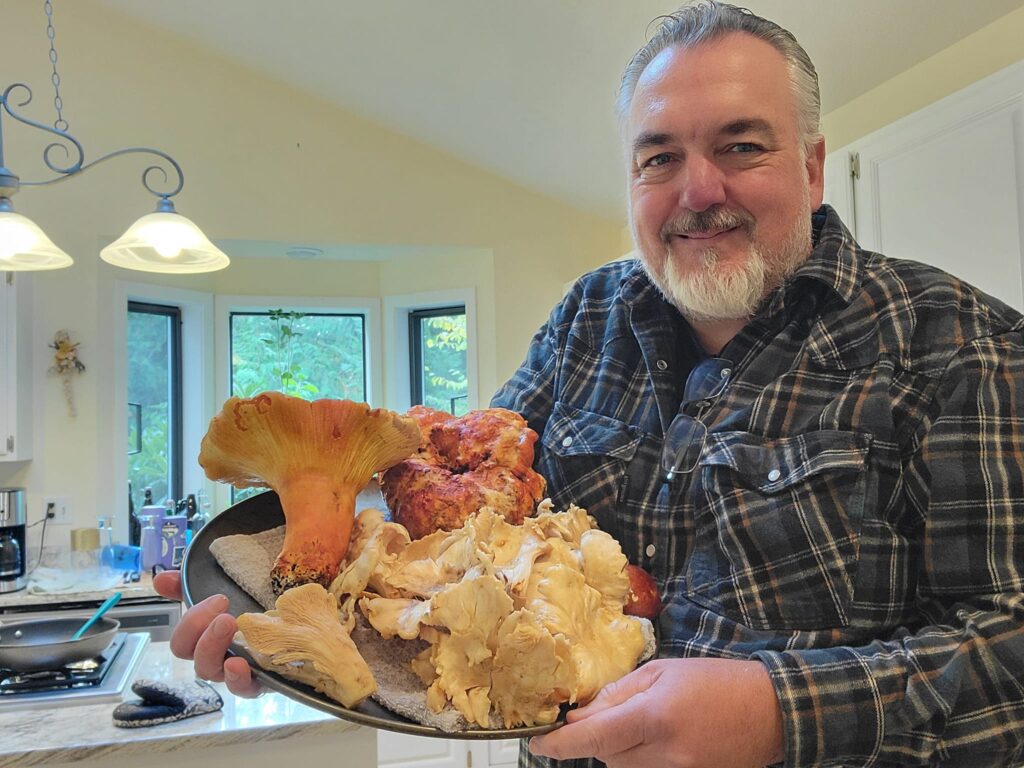
As a forager, I admire their dedication. I often learn from their books, photos, and lectures. But where a mycologist might photograph one mushroom for an hour, I am probably already down the trail filling my basket with oysters and chanterelles for supper.
We walk the same path but at a different pace.
🟢 Explore related posts: Wild Edible Mushrooms | Foraging Wild Edibles
The Herbalist
An herbalist studies plants for their healing and medicinal qualities. Their craft is ancient, rooted in the belief that nature provides remedies for both body and mind. Herbalists know which roots calm the stomach, which flowers help promote sleep, and which leaves can ease a cold.
They gather to create teas, tinctures, salves, and tonics. Their shelves are lined with labeled jars, each one holding the promise of balance and wellness.
While I respect that art, my relationship with plants is usually more about flavor than medicine. I may brew wild mint tea or sprinkle dried yarrow over roasted potatoes, but my focus is nourishment first and healing second. Herbalists teach valuable lessons about mindfulness and respect for plants, and I try to carry those lessons into the kitchen.
🟢 Read next: Wild Edible Plants | Wild Food Recipes
The Botanist
A botanist studies the world of plants from the scientific perspective. They focus on how plants grow, reproduce, and interact with their environments. Their work helps protect ecosystems, preserve biodiversity, and reveal the complex relationships that sustain life on Earth.
A botanist might spend an entire season studying how a rare flower pollinates or how soil composition affects moss growth. They understand every Latin name and every detail of plant anatomy.
I respect that kind of precision. But my own learning happens through experience. I might not know the taxonomy of miner’s lettuce, but I know exactly where it grows and how fresh it tastes in a spring salad. I may not analyze chickweed in a lab, but I know when to find it and how to cook it.
The botanist studies plants under a microscope. The forager studies them through seasons, touch, and taste.
🟢 Related reading: Wild Edible Plants Foraging Guides | Spring Foraging Tips
The Forager: The Modern Hunter Gatherer
Then there is us, the foragers, the modern hunter gatherers.
We exist between science and supper. We may not use Latin names, but we know the stories behind the common ones. We know which plants feed us and which teach us caution.
Our freezers hold fish we caught ourselves. Our cupboards are lined with dried mushrooms, herbs, and teas we gathered by hand. We preserve food not because we must, but because it connects us to the rhythm of the seasons.
Being a modern hunter gatherer is not about rejecting the grocery store. It is about bringing the wild back into daily life. It means filling a basket with chanterelles in autumn, freezing a few extra fillets for winter, and walking the woods not to escape life but to be part of it.
We share recipes and stories around the fire. We teach our children to respect what they harvest. We take only what we need and leave enough for the land to heal and renew.
This lifestyle is not only about self reliance. It is about connection — to nature, to family, to food, and to community.
🟢 Discover more: Cooking with Wild Foods | Primitive and Hammock Camping
Bridging the Worlds
Each of these groups has its own kind of wisdom. The mycologist brings knowledge. The herbalist brings healing. The botanist brings understanding.
The modern hunter gatherer brings all three together. We learn from experts, but we live what we learn. We blend curiosity with experience, science with supper, and respect with gratitude.
That is what The Hunter Gatherer Society is about. It is a community of people who explore, forage, and reconnect with nature in meaningful ways. Whether you identify as a forager, an herbalist, or simply someone who wants to live closer to the land, you belong here.
So come join us. Share your harvests, your stories, and your favorite recipes. Together we will keep the ancient art of gathering alive in a modern world.
🟢 Join the community: The Hunter Gatherer Society on Facebook | Foraging Journal and Beginner Field Guide


