Public lands have always been a place of renewal for me.
Forests, riverbanks, and remote trails are where I go to reset. These places provide food, clarity, and perspective. They are where I find mushrooms pushing through the soil, berries ripening in the sun, and the quiet reminder that life does not need to be complicated.
Recently, researchers began warning about a hidden threat spreading across America’s public forests. Scientists studying illegal cannabis cultivation sites describe abandoned pesticide containers as “little death bombs” because wildlife chew into them and die from exposure.
This is not isolated damage. It is a growing environmental threat affecting ecosystems that foragers, hunters, and outdoor enthusiasts depend on.
Understanding this risk is essential for anyone who gathers food from the land.
What Are Illegal Grow Sites and Why Are They Dangerous?
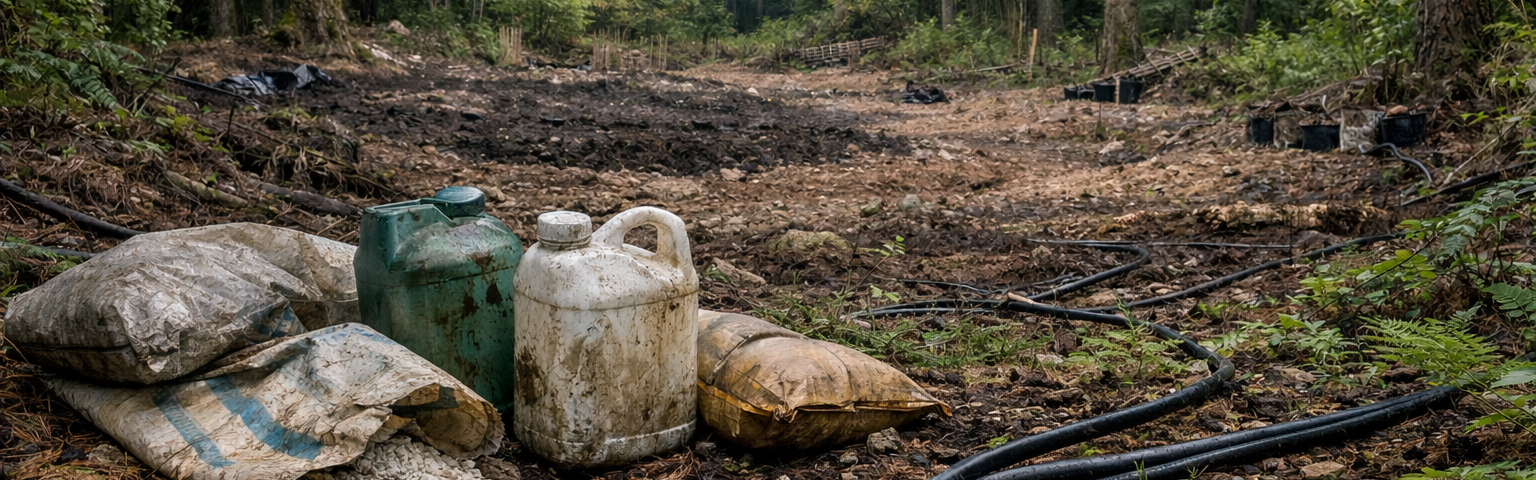
Illegal grow sites, sometimes called trespass grows, are unauthorized cannabis cultivation operations hidden deep within public forests. These sites often use large amounts of pesticides, fertilizers, and toxic rodenticides to protect crops.
When growers abandon the sites, they leave behind hazardous contamination, including:
Pesticide containers
Chemical soaked soil
Fertilizer bags
Plastic irrigation tubing
Trash and synthetic materials
Wildlife encounter these toxins quickly. Rodents chew into pesticide containers. Predators consume poisoned animals. Toxic exposure spreads through the food chain, killing multiple species. Researchers and federal agencies have documented cases where squirrels, foxes, birds, and even insects died after exposure to chemicals at illegal grow sites.
Some of these chemicals, including carbofuran, are among the most toxic pesticides ever used. Even small amounts can kill mammals, birds, and fish, and may remain in soil and water long after the grow site is abandoned.
Why This Matters Directly to Foragers
If you forage for mushrooms, berries, or wild plants, ecosystem health directly affects your safety.
Wild foods reflect their environment. Contaminated soil and water allow toxins to enter plants, fungi, and animals. These toxins persist in ecosystems and move through food webs over time.
This affects:
Wild edible plants
Mushrooms and fungi
Game animals
Freshwater sources
Soil and ecosystem health
As foragers, we depend on clean environments. Contamination threatens both ecosystem sustainability and food safety.
If you are new to safe and responsible harvesting, read our full guide here:
Internal link: https://thehgsociety.com/foragers-reset-preparing-foraging-season/
Responsible foraging always begins with understanding ecosystem health.
The Scale of the Problem Is Larger Than Most People Realize
Researchers studying illegal cultivation have documented thousands of abandoned grow sites across public lands. One ecological research team alone has identified nearly 7,000 sites in California, with only a small percentage cleaned up.
Scientific studies have also found illegal pesticide use, fertilizer contamination, and wildlife deaths at many sites, demonstrating widespread environmental impact.
These sites can remain hazardous for years.
Cleanup is difficult and expensive. Limited staffing, funding shortages, and remote terrain slow remediation efforts.
Without intervention, toxic chemicals continue contaminating soil, water, and wildlife habitat.
How to Identify Illegal Grow Sites in the Forest
Most people will never encounter one, but awareness is critical.
Watch for warning signs such as:
Black irrigation tubing on the ground
Fertilizer or pesticide containers
Plastic tarps or artificial clearings
Trash piles deep in remote areas
Unnatural planting patterns
If you encounter a suspected grow site:
Leave immediately
Do not touch anything
Avoid breathing dust or contacting surfaces
Report the location to local authorities or the U.S. Forest Service
These sites can pose serious health risks.
Long Term Impact on Public Lands and Wild Food Systems
Public lands provide clean water, wildlife habitat, and food resources.
Illegal grow sites disrupt this balance.
Pesticides contaminate soil and waterways. Wildlife deaths increase. Native vegetation suffers. Ecosystems weaken over time.
Foragers, hunters, and outdoor enthusiasts are directly affected because wild food systems depend on ecosystem health.
Protecting public land protects the future of wild food.
Stewardship Is Part of the Hunter Gatherer Mindset
Foraging is not just about collecting food. It is about building a relationship with the land.
That relationship carries responsibility.
Follow these principles:
Harvest responsibly
Leave areas cleaner than you found them
Avoid disturbing wildlife
Report environmental hazards
Protect ecosystem health
Every person who spends time on public land becomes part of its future.
Original Research Source and Further Reading
This article is based on verified reporting and ecological research documenting illegal cannabis grow site contamination:
Original reporting source:
CalMatters Environmental Investigation
https://calmatters.org/environment/water/2026/02/marijuana-cannabis-california-public-land/
Scientific research on pesticide contamination at illegal grow sites:
ScienceDirect ecological contaminant study
https://www.sciencedirect.com/science/article/abs/pii/S0048969725022168
Federal environmental impact documentation:
U.S. Department of Agriculture
https://www.usda.gov/about-usda/news/blog/cleaning-illegal-marijuana-grow-sites
Final Thoughts: Awareness Protects Wild Places
Public lands are resilient, but they are not immune to damage.
Illegal grow sites represent a serious environmental threat to wildlife, water, and wild food systems.
Awareness is the first step toward protection.
When you step into the forest, you become part of that ecosystem.
Respect it.
Protect it.
Help ensure it remains healthy for generations to come.


