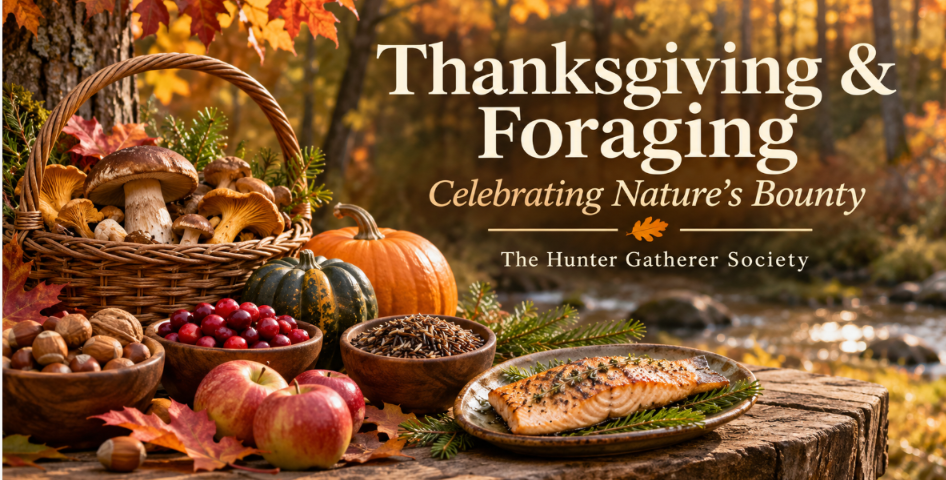
So Much to Be Thankful For
There is something special about sitting down to a meal when you know where your food came from. Perhaps it is a handful of mushrooms gathered along a forest trail, a fish caught on a quiet morning, or vegetables you spent the summer growing in your garden.
Every harvest has a story. Behind it are moments of discovery, patience, learning, adventure, and sometimes a little good fortune.
As Thanksgiving arrives, I find myself reflecting on how much we have to be thankful for. The forests we explore, the waters we fish, the mountains we climb, and the people who share these experiences with us bring so much richness to our lives.
The connection between Thanksgiving and foraging stretches back generations. Long before Thanksgiving became a national holiday, gathering food from the land and water nourished families, strengthened communities, and brought people together.
Those traditions continue today, and they remind us that some of life’s greatest gifts can be found simply by stepping outside.
This year, I wanted to take a moment to celebrate those gifts. Our Thanksgiving video, A Thankful Cap: Celebrating Nature’s Bounty, is dedicated to the natural world, our outdoor traditions, and the wonderful people who make up our gathering community.
Nature gives us so much more than food. It gives us adventure, knowledge, connection, friendship, and countless reasons to be thankful.
The Historical Connection Between Thanksgiving and Foraging
When we think about Thanksgiving, many of us picture a table filled with turkey, cranberry sauce, mashed potatoes, and pumpkin pie. However, the harvest celebration that helped inspire our modern holiday looked quite different.
In the autumn of 1621, English colonists at Plymouth celebrated a successful harvest. Wampanoag leader Ousamequin, also known as Massasoit, and approximately 90 Wampanoag men joined the gathering, which lasted three days.
Edward Winslow, an English colonist who witnessed the event, recorded that the colonists hunted wild birds. He also described how the Wampanoag brought five deer to the gathering.
Although wild turkeys lived in the area, historical records do not confirm whether turkey appeared on the menu. Fish, shellfish, native fruits, corn, and squash were familiar foods in the region. However, we do not know everything the participants ate during those three days.
What we do know is that hunting and agriculture contributed directly to the celebration. Fishing and gathering wild foods also played important roles in everyday life.
At the time, understanding the changing seasons was essential. People needed to know when fish returned to the rivers, when berries ripened, and how to preserve food for winter.
The Wampanoag possessed generations of knowledge about the land and its resources. Their understanding of local agriculture and seasonal foods helped the colonists adapt to an unfamiliar environment.
Of course, Thanksgiving as we know it today developed much later. President Abraham Lincoln proclaimed a national Thanksgiving observance in 1863. In 1941, federal legislation established the fourth Thursday of November as Thanksgiving Day.
Although the holiday has changed considerably, the connection between food, harvests, community, and gratitude remains meaningful.
For a closer look at this history, I encourage you to explore the resources available through Plimoth Patuxet Museums.
Indigenous Gathering Traditions: Rooted in Gratitude
Long before European settlers arrived, Indigenous nations throughout North America had developed rich traditions of fishing, hunting, foraging, agriculture, and food preservation.
Each community developed knowledge suited to its surroundings. Coastal nations understood the rhythms of the tides and the abundance of marine life. Meanwhile, woodland communities gathered nuts, berries, roots, and other wild foods.
Across the continent, generations passed down knowledge about growing crops, caring for natural resources, and gathering food throughout the changing seasons.
For many Indigenous communities, giving thanks extends far beyond a single day of the year. For example, Wampanoag seasonal traditions recognize important foods such as strawberries, herring, corn, and cranberries.
These traditions continue today and remind us that gratitude can be part of our everyday relationship with nature.
However, it is equally important to recognize that Thanksgiving holds different meanings for different people. For many Indigenous Americans, the holiday brings reflection on the painful history of colonization, displacement, and the loss of ancestral lands.
Since 1970, Indigenous people and their supporters have gathered in Plymouth to observe the National Day of Mourning.
We can celebrate nature’s abundance while respecting these experiences. We can also appreciate the knowledge Indigenous communities choose to share and recognize their continuing cultural traditions and harvesting rights.
After all, gratitude and respect belong together.
Thanksgiving and Foraging Traditions Across America
One of the things I love about exploring America is the incredible diversity of our natural landscapes.
Every region offers something different. From the rocky coastlines of New England to the lakes of the Midwest, the mountains of Appalachia, and the forests of the Pacific Northwest, nature provides countless opportunities to learn and gather.
Each region also has its own traditions shaped by the seasons, local resources, and the people who call it home.
Just as we explore these regional differences on our HG News page, let’s take a journey across America and celebrate some of the gathering traditions that connect us.
Northeast: From Forests to Coastal Waters
Imagine a crisp autumn morning in New England. The leaves have fallen, the air carries a chill, and families are enjoying the last of the year’s harvest.
For generations, the forests, rivers, and coastal waters of the Northeast have provided a wonderful variety of foods.
The Wampanoag and other Indigenous nations developed extensive knowledge of seasonal fishing, shellfish gathering, agriculture, and woodland resources.
Along the Atlantic coastline, fish, clams, and oysters have helped nourish families and communities. Farther inland, forests provide opportunities to gather berries, nuts, and mushrooms, as well as hunt deer and wild turkeys.
Maple sugaring is another beautiful example of a regional gathering tradition. Indigenous peoples developed methods of collecting and processing maple sap long before Europeans arrived.
Although maple sugaring typically takes place during late winter and early spring, we can enjoy its sweetness throughout the year. A little maple syrup drizzled over roasted squash makes a wonderful addition to a Thanksgiving meal.
Similarly, Maine’s wild blueberries ripen during summer, while cranberries typically reach harvest season in autumn. Families can preserve both fruits and enjoy them well into winter.
By Thanksgiving, much of the region’s gathering season has shifted toward hunting, selected fishing opportunities, and enjoying stored foods. Some coastal areas also offer shellfish harvesting during colder months, depending on regulations and water quality.
A meal featuring venison, cranberry sauce, maple syrup, and a wild blueberry dessert brings together the gifts of several seasons.
What a wonderful reminder that nature’s bounty can continue nourishing us long after the harvest.
Midwest: Nourishment from the Heartland
The Midwest offers an incredible combination of freshwater fishing, woodland foraging, hunting, gardening, and agriculture.
Its lakes and rivers provide walleye, perch, northern pike, and many other fish. In addition, the Great Lakes have supported Indigenous fisheries and generations of fishing communities.
Among the region’s most culturally significant wild foods is manoomin, commonly known as wild rice.
For the Anishinaabe, including Ojibwe communities throughout the upper Great Lakes, wild rice holds deep cultural, spiritual, and historical importance.
Traditional harvesting continues today. Harvesters often use canoes and wooden harvesting sticks to collect ripe grains while caring for the rice beds.
Because wild rice generally ripens during late summer and early autumn, families can process and store it for the months ahead. Its rich, earthy flavor makes it a wonderful addition to Thanksgiving soups and casseroles.
The Great Lakes Indian Fish and Wildlife Commission offers resources for learning more about wild rice and tribal harvesting traditions.
Family Traditions and Sharing the Harvest
Spring morel hunting is another favorite Midwestern gathering tradition. Later in the year, forests offer berries, nuts, and other seasonal wild foods.
Although morels typically appear in spring, properly dried mushrooms can bring a little taste of that season to our Thanksgiving tables.
Fall deer hunting also holds a special place in many Midwestern families. For some, hunting camp means early mornings, shared meals, laughter, and stories around the fire.
Perhaps most importantly, it offers opportunities for experienced hunters to teach younger generations about patience, responsibility, and respect for wildlife.
The tradition of sharing extends beyond the family, too.
In November 2026, the Wisconsin Department of Natural Resources reported that hunters had donated more than 100,000 deer through its Deer Donation Program since 2000. Together, those donations provided over four million pounds of ground venison for people in need.
What a wonderful example of using nature’s abundance to care for others.
Family gardens and farms also contribute to the region’s gathering heritage. Home canned vegetables, stored potatoes, winter squash, and homemade preserves allow families to enjoy their summer harvests throughout winter.
Whether the food comes from a lake, a forest, or a backyard garden, each harvest represents something worth celebrating.
South: Mountain, Woodland, and Coastal Traditions
From the Appalachian Mountains to the warm waters of the Gulf Coast, the South offers some of America’s most diverse gathering traditions.
Throughout Appalachia, generations of families have shared their knowledge of wild plants, mushrooms, fruits, and woodland nuts.
The arrival of ramps, a strongly flavored native wild onion, has long marked the return of spring. Community ramp suppers bring people together to celebrate fresh seasonal foods and longstanding traditions.
Ramps also hold cultural significance for Cherokee communities. Responsible gathering helps protect this important food source and the traditions associated with it.
As spring turns to summer, wild blackberries and other fruits begin to ripen. Later, autumn brings native persimmons, hickory nuts, and various woodland mushrooms.
Depending on local weather, some ripe persimmons and late season mushrooms may remain available around Thanksgiving. However, spring ramps and summer berries generally reach our holiday tables through preservation.
That is part of the beauty of gathering throughout the year. Each season brings something new to discover and something to look forward to.
Gifts from Southern Waters
Southern food traditions also reflect the contributions of Indigenous peoples, African Americans, European settlers, and many other cultural communities.
Along the southeastern Atlantic coastline, Gullah Geechee communities maintain rich culinary traditions with West African roots. Fishing, farming, seafood preparation, and knowledge of coastal environments remain important parts of their heritage.
You can learn more through the National Park Service’s Gullah Geechee cultural resources.
Meanwhile, the Gulf Coast offers its own abundance of fish, shrimp, crabs, and oysters. These resources have supported families and coastal communities for generations.
In some areas, Thanksgiving arrives during productive fishing and shellfish seasons. However, responsible gathering means paying attention to changing conditions and local regulations.
For example, Texas Parks and Wildlife announced an oyster harvesting closure in part of Galveston Bay in November 2026. Monitoring showed that the area needed protection because too few oysters had reached legal harvest size.
While closures can be disappointing, they remind us that nature’s resources need time to recover.
Whether families gather around a pot of seafood, enjoy wild game, or share vegetables from the garden, Southern food traditions celebrate the wonderful relationship between food, culture, and community.
West: From Mountains to the Pacific
The American West encompasses an incredible variety of landscapes. From Southwestern deserts and mountain forests to the Pacific coastline and the wilderness of Alaska, each environment offers its own gathering opportunities.
Here in the Pacific Northwest, autumn is an especially exciting time for those of us who enjoy mushroom foraging.
When rainfall and temperatures cooperate, forest trails may reveal chanterelles, hedgehog mushrooms, and other seasonal fungi. Depending on weather and elevation, some mushroom gathering opportunities continue into late November.
Of course, earlier seasons bring their own abundance. Salmonberries, thimbleberries, blackberries, and huckleberries are among the many wild foods that make exploring this region so rewarding.
The Indigenous nations of the Columbia River region have long maintained seasonal food traditions centered on salmon, roots, berries, and wild game.
For example, the Confederated Tribes of the Umatilla Indian Reservation describe seasonal journeys that followed the availability of these important foods.
Spring brought salmon fishing and root gathering. Summer offered berry harvests, while fall brought additional fishing and hunting opportunities. Drying and preserving food helped sustain communities throughout the colder months.
These traditions remain important today. The tribes’ First Foods resource offers a meaningful opportunity to learn about their relationships with the natural world.
Gathering from the Mountains and Sea
Along the Pacific coastline, shellfish and edible seaweeds offer additional gathering opportunities. Harvesting these foods requires an understanding of tides, marine environments, water quality, and local regulations.
Farther south, piñon nuts have long provided nourishment for Indigenous communities in the Southwest and Great Basin. These flavorful nuts generally mature during late summer or autumn, although harvests vary from year to year.
Meanwhile, Alaska offers rich traditions of fishing, hunting, berry gathering, and food preservation.
Salmon, halibut, berries, and other local foods help nourish communities throughout the year. Sharing harvested food with elders and others who cannot gather it themselves remains an important part of many subsistence traditions.
This spirit of sharing also inspires new ways to bring communities together.
In November 2026, university students in Sitka, Alaska, hosted a community kelp cook-off. Participants prepared creative dishes using locally farmed seaweed, including quiche, dumplings, and even cookies.
I love the idea behind gatherings like this. People come together, share what they know, try something new, and discover another way to appreciate the foods nature provides.
Whether we are gathering mushrooms in Washington, enjoying piñon nuts in New Mexico, or sharing salmon in Alaska, the West offers countless reasons to be thankful.
Traditions That Live On
Modern grocery stores have certainly changed how we obtain our food. However, the traditions of gathering, growing, fishing, and hunting remain very much alive.
They continue every time someone teaches a child to fish, helps a friend identify a mushroom, or shares a family recipe for preparing wild game.
Traditional fishing methods, including handlines, nets, spears, and weirs, reflect generations of knowledge about fish behavior and seasonal movements.
Although modern equipment has changed how many people fish, understanding the water and developing patience remain valuable skills.
The same is true of hunting. Equipment has evolved, but observation, preparation, ethical decisions, and respect for wildlife remain at the heart of responsible hunting.
Gardening also offers a wonderful opportunity to reconnect with our food. There is something rewarding about planting a seed, caring for it throughout the season, and eventually sharing the harvest with someone else.
Each of these activities teaches us to pay closer attention to the world around us.
For those just beginning their gathering journey, our Foraging Identification Guides offer a place to start. You can also explore our wild edible plant guides and wild mushroom guides.
Start with a few familiar species, ask questions, and enjoy the learning process.
Above all, remember that a successful day outdoors does not always require bringing something home. Sometimes the greatest reward is what we learn, the people we meet, and the memories we create along the way.
Being Thankful Means Giving Back to Nature
As much as we appreciate what nature provides, we also have a responsibility to care for it.
Healthy forests, clean waterways, productive fisheries, and thriving wildlife populations are gifts we should protect for future generations.
One of the principles I encourage through The Hunter Gatherer Society is simple: take only what you need and leave plenty for others.
Harvest responsibly. Respect wildlife, sensitive habitats, landowner permissions, tribal harvesting rights, and local regulations. When possible, leave the places you visit a little better than you found them.
Similarly, approach wild food identification with patience and care. Always verify a plant or mushroom’s identity using multiple reliable sources before considering it for consumption.
If you cannot name it with confidence and verify its edibility, do not eat it.
When gathering shellfish, check both harvesting regulations and current public health advisories. Dangerous marine toxins may be present even when shellfish look and smell perfectly normal. Unfortunately, cooking does not reliably remove these toxins.
For more practical guidance, explore our article on how to forage responsibly and protect the ecosystem.
Putting Our Gratitude Into Action
This Thanksgiving, consider finding a meaningful way to give back.
Perhaps you could introduce a friend to foraging, take a child fishing, or prepare a meal using responsibly harvested wild foods.
You might share your knowledge with someone who is just beginning their outdoor journey. Alternatively, consider donating legally harvested game through an approved program, supporting local conservation efforts, or volunteering for a habitat restoration project.
Our Outdoor Event and Class Calendar is another place to discover opportunities to learn, connect, and get involved in the outdoor community.
Of course, expressing gratitude does not need to involve a big project. Simply picking up litter along a trail, respecting a harvest limit, or sharing your garden’s abundance with a neighbor can make a difference.
Being thankful for nature also means taking care of it.
Thankful for Our Gathering Community
As much as I appreciate the foods nature provides, I am equally thankful for the people who make this lifestyle so rewarding.
I appreciate the experienced foragers who patiently share their knowledge, the anglers who help others catch their first fish, and the hunters who teach younger generations to respect wildlife.
The gardeners who share their harvests, the outdoor enthusiasts who encourage others, and the beginners who bring fresh curiosity to every adventure all contribute something special.
We each bring different experiences, perspectives, and skills to this community. Because of that, there is always something new we can learn from one another.
No matter how many years we spend outdoors, there will always be another plant to discover, another trail to explore, and another adventure waiting for us.
Better yet, there will always be opportunities to share those experiences with others.
To everyone who has taken the time to teach someone, answer a question, share a discovery, or encourage another person to explore the outdoors, thank you.
You are helping keep these wonderful traditions alive.
Happy Thanksgiving from The Hunter Gatherer Society
As we reflect on the connection between Thanksgiving and foraging, I hope we also remember everything nature brings into our lives beyond the food we gather.
Think about the peaceful mornings beside the water, the excitement of discovering something new, the conversations around the campfire, and the friendships we have developed along the way.
These are gifts worth celebrating, too.
Whether you are an experienced forager, an angler, a hunter, a gardener, a camper, or someone just beginning to discover the joys of the outdoors, I am thankful that you are part of our community.
Thank you for reading our articles, watching our videos, sharing your adventures, and supporting one another. Most importantly, thank you for sharing your appreciation for this incredible natural world.
There is so much to discover, so much to learn, and so much to be thankful for.
From The Hunter Gatherer Society to you and your loved ones, I wish you a wonderful and Happy Thanksgiving!
May your table be filled with good food, your home with laughter, and your life with plenty of outdoor adventures.
Be thankful, get outside, and do something wild!
Foraging Safety Disclaimer
This article is for educational and historical purposes. Never consume wild plants or mushrooms without completing a reliable identification and verifying their edibility and safe preparation. Always follow local harvesting laws, land access restrictions, hunting and fishing regulations, and public health advisories. All harvesting and consumption decisions are made at your own risk.


