
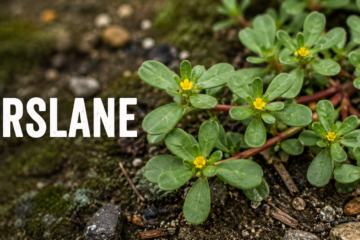
The Hunter Gatherer Society
Common purslane identification showing fleshy green leaves, reddish stems, and yellow flowers

Purslane Identification Guide: Edibility, Uses, Harvesting, and Complete Field Guide

Common purslane (Portulaca oleracea) is one of those wild edible plants that can be hiding in plain sight. It grows low to the ground in gardens, disturbed soil, sidewalk cracks, farm fields, and other sunny places, where its thick leaves and reddish succulent stems are often dismissed as weeds. For foragers, purslane is much more interesting. The tender leaves and stems are edible raw or cooked, with a pleasantly tart, slightly salty flavor and a crisp, succulent texture. Purslane also has a long history as a food plant and is still eaten in many parts of the world. It can be an excellent beginner wild edible, but there is one particularly important identification lesson: learn to distinguish purslane from prostrate[…]

Read more
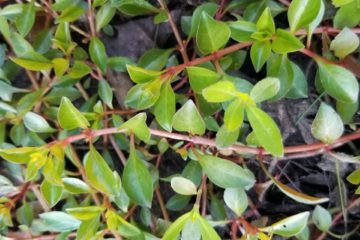
Identifying water purslane

Foraging and Using Water-Purslane: Identification, Culinary and Medicinal Uses

Foraging for wild edible plants brings endless joy: time outdoors, the thrill of discovery, and the satisfaction of finding new, edible species. But when foraging unfamiliar plants, caution is key to ensuring a safe and enjoyable experience. On a recent urban stealth camping trip, I came across a plant that resembled purslane at first glance. Its stem looked familiar, but the leaves seemed off. Intrigued, I photographed the plant from all angles and submitted it to an online plant identification forum. After some back and forth, one user suggested it might be Lythrum portula, also known as water-purslane. Further research confirmed this identification. Lythrum portula, a flowering plant in the loosestrife family, is native to Europe and has spread to[…]

Read more
Social Share Buttons and Icons powered by Ultimatelysocial