
The Hunter Gatherer Society
Forager at home reviewing foraging gear and studying a field journal in preparation for the new season

The Forager’s Reset

Preparing Your Gear, Awareness, and Skills for the Coming Season The forager’s reset is a quiet moment that shows up every year if you are paying attention. As the rush of peak season fades, trails begin to feel different. Baskets sit empty, and familiar paths lose their urgency. Although the land is still alive, it is no longer offering itself so easily. For many people, this space between seasons feels uncomfortable. It often feels like lost momentum or inactivity. For a forager, however, this moment is an invitation. This reset is not a dramatic overhaul, nor is it a list of goals you abandon in two weeks. Instead, it is a chance to slow down, clean up the edges, and[…]

Read more
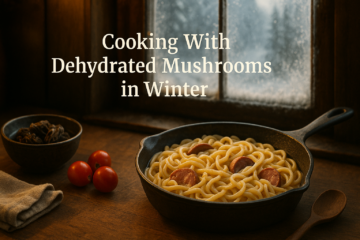
Cooking with dehydrated mushrooms in winter using morels, buttered noodles, sausage, and cherry tomatoes

From Forest to Frost: Cooking with Dehydrated Mushrooms All Winter Long

When winter settles in and the forest goes quiet, this is the season when stored food becomes something more than convenience. It becomes a reminder. Every jar, bag, and bundle of dried food carries a memory of earlier months. The warmth of sun. The hum of insects. The weight of a full harvest basket on your arm. Dehydrated mushrooms are one of the most powerful examples of this. What you foraged or sourced during spring and summer can still bring deep, earthy flavor to your table when the days are short and the nights come early. Morels, chanterelles, oysters, and boletes all dry beautifully and rehydrate into rich, satisfying meals when the cold finally settles in. Winter is not the[…]

Read more
Close up of a person harvesting invasive autumn olive berries at a woodland edge during soft natural light. Represents eating invasive species and sustainable foraging.

Eating Invasive Species: How Families Protect Local Ecosystems Through Cooking

Families across the United States are discovering a creative and surprisingly effective way to support local ecosystems. They are doing it through the food they harvest and cook at home. By learning to identify, gather, and prepare invasive species, households can reduce ecological pressure while enjoying meals that are simple, nutritious, and connected to the land. Recently, Radio WVTF in Virginia highlighted this growing approach within the conservation community. Ecologists are encouraging people to cook with invasive plants and fish, including autumn olives, kudzu, and blue catfish. These ingredients can be harvested responsibly and prepared with ease. As a result, using them in the kitchen helps restore ecological balance and protects native habitats.Source: https://www.wvtf.org/news/2024-11-15/invasive-species-dinner Why Eating Invasive Species Supports Conservation[…]

Read more
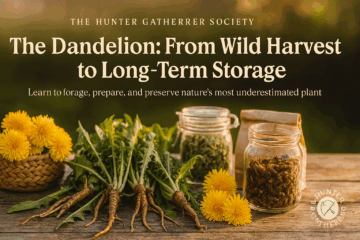
Freshly harvested dandelions with roots, leaves, and flowers arranged beside jars and baskets for long-term storage on a rustic wooden table in soft natural light.

Discovering the Dandelion: A Wild Plant with Deep Roots in Food, Medicine, and Culture

When most people see dandelions, they think of pesky weeds that take over lawns in spring. But I’ve learned to see them differently — as one of nature’s most generous and overlooked gifts. Every part of this bright little plant, from root to flower, has a purpose. It’s food, medicine, and even a natural source of rubber. Let’s dig into its story and explore how we can reconnect with this remarkable plant in the wild and in our kitchens. A Brief History of the Dandelion Dandelions (Taraxacum officinale) have followed humans for centuries. Originally native to Europe and Asia, they’ve spread almost everywhere people live. The name comes from the French dent de lion, meaning “lion’s tooth,” a nod to[…]

Read more
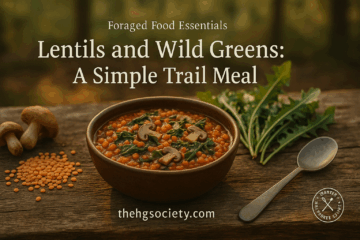
A rustic bowl of red lentil stew with wild foraged greens and mushrooms on a wooden table in a forest setting

Lentils: My Go-To Foraged Food Base for Hikers, Campers, and Anyone Living Simply

When you spend enough time outdoors, whether it’s hiking, bikepacking, or just trying to make it through a tough stretch, you start to realize that good food doesn’t have to be complicated.For me, one food has proven itself again and again: lentils. They’re lightweight, packed with nutrients, and they mix perfectly with wild greens and mushrooms you can find almost anywhere. Over the years, I’ve learned that lentils aren’t just “trail food”, they’re one of the most practical, inexpensive, and nourishing staples you can carry, especially when you combine them with foraged foods. Why Lentils Are My Go-To Wild Food Base I’ve tried a lot of staples over the years, rice, oats, beans, but lentils win every time.Here’s why. They’re[…]

Read more
Social Share Buttons and Icons powered by Ultimatelysocial