Introduction
Some wild edible plants hide in plain sight. Pineapple weed is one of them.
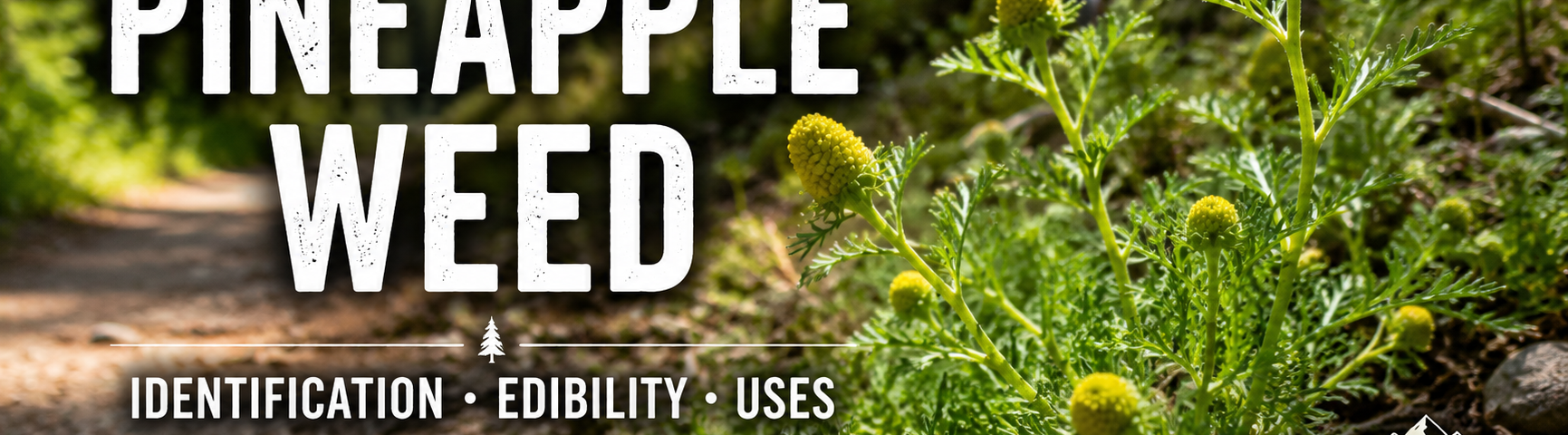
Most people walk right past this plant without realizing it is edible, aromatic, and surprisingly useful. I regularly find pineapple weed growing in places where few people think to look, including hiking trails, logging roads, gravel driveways, campsites, and parking lot edges.
The first time I crushed one of the flower heads between my fingers, the scent stopped me in my tracks. Suddenly, a sweet tropical aroma filled the air. It smelled remarkably similar to pineapple.
That distinctive fragrance is exactly how pineapple weed earned its common name.
Although it may not look like much at first glance, pineapple weed is one of my favorite beginner-friendly wild edible plants. It is easy to identify, has very few confusing look-alikes when properly understood, and offers a pleasant flavor that works well in teas, syrups, desserts, and fresh trail snacks.
If you spend time hiking, foraging, camping, fishing, or exploring the outdoors, chances are you have already walked past pineapple weed many times without noticing it.
Once you learn to recognize it, however, you will likely start seeing it everywhere.
Quick Answer Box
Is pineapple weed edible?
Yes. Pineapple weed (Matricaria discoidea) is edible and widely considered safe when correctly identified.
What does pineapple weed taste like?
The flower heads have a sweet flavor often described as a blend of pineapple, chamomile, citrus, and apple.
What part of pineapple weed is edible?
The flower heads are the most commonly harvested edible part, although young leaves can also be used.
Where does pineapple weed grow?
It commonly grows in compacted soils, trail edges, roadsides, driveways, campsites, gravel areas, and other disturbed sunny locations.
Does pineapple weed have dangerous look-alikes?
Few plants closely resemble pineapple weed. However, the strongest identifying feature is the sweet pineapple scent released when the flower head is crushed.
Key Takeaways
- Pineapple weed is a common wild edible plant found throughout much of North America.
- Its flower heads release a strong pineapple aroma when crushed.
- This plant belongs to the chamomile family.
- The flower heads are the most commonly harvested edible portion.
- Pineapple weed thrives in compacted and disturbed soils.
- For beginners, it is one of the easiest edible plants to identify.
- Fresh or dried flowers make an excellent herbal tea.
- As always, proper identification should be confirmed before consumption.
Featured Snippet Answers
What is Pineapple Weed?
Pineapple weed (Matricaria discoidea) is a small annual plant in the chamomile family known for its pineapple-scented flower heads and edible uses.
Can You Eat it?
Yes. Pineapple weed is edible. The flower heads are commonly eaten fresh, brewed into tea, or incorporated into syrups, jellies, and desserts.
How Do You Identify Pineapple Weed?
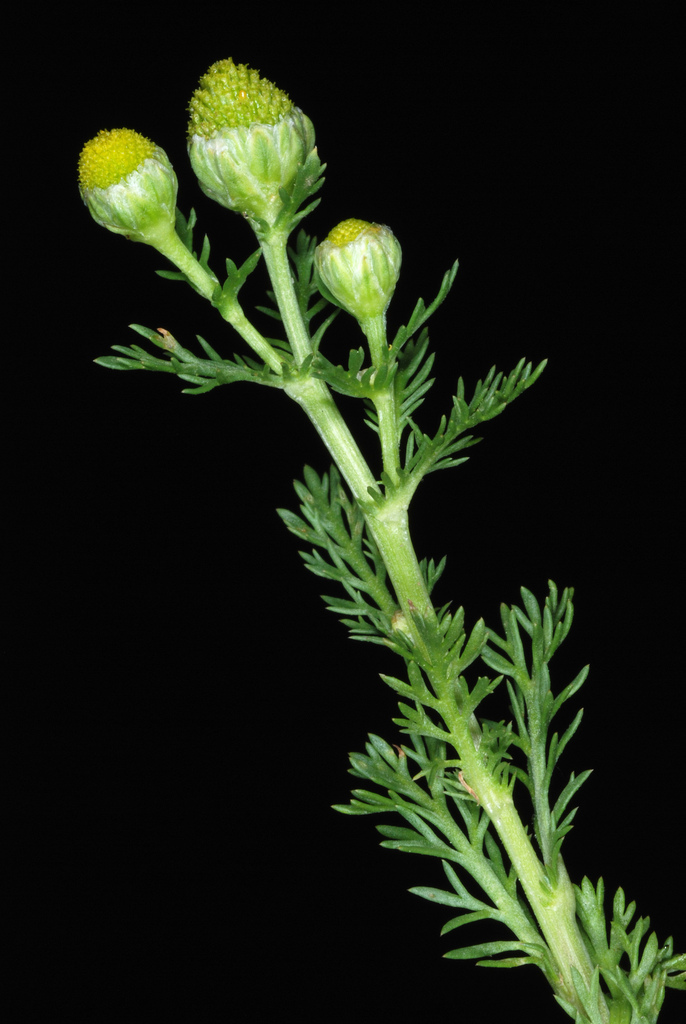
To identify pineapple weed, look for small yellow-green cone-shaped flower heads without white petals, finely divided fern-like leaves, and a strong pineapple aroma when crushed.
What Does it Smell Like?
Most people describe the scent as pineapple, tropical fruit, sweet chamomile, citrus, or apple.
Scientific Classification and Quick Facts
Scientific Name: Matricaria discoidea
Family: Asteraceae
According to the USDA PLANTS Database, pineapple weed is now widely naturalized throughout much of North America:
https://plants.usda.gov/home
Common Names:
- Pineapple weed
- Wild chamomile
- Disc mayweed
- Pineapple mayweed
Plant Type: Annual herb
Native Range: Northeastern Asia
Current Distribution: Widely naturalized throughout North America and many other regions of the world
Primary Edible Part: Flower heads
Typical Height: 2 to 16 inches
Pineapple Weed Identification
Pineapple weed is one of the easiest edible plants for beginners to learn.
The key is understanding the combination of appearance, smell, and habitat.
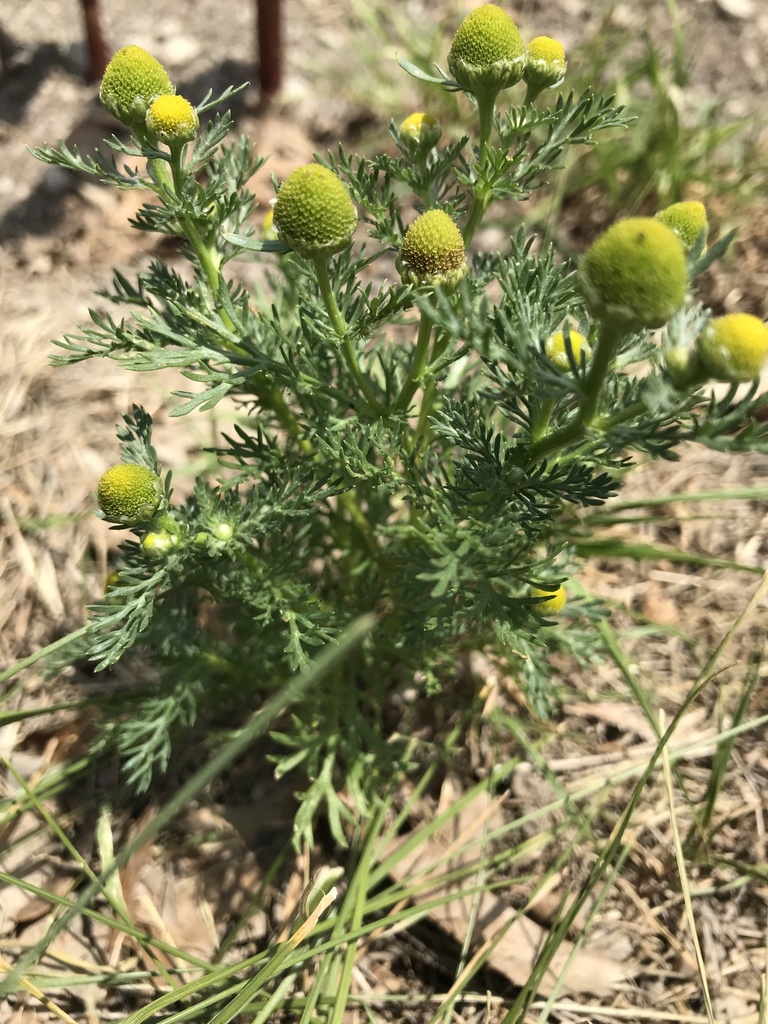
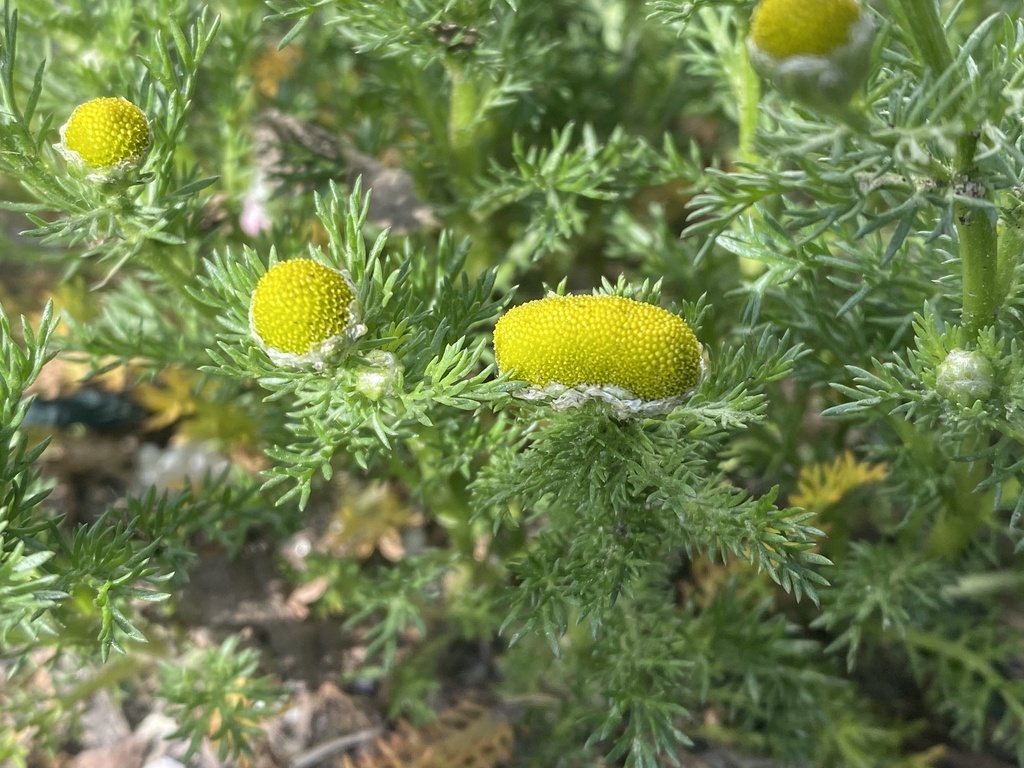
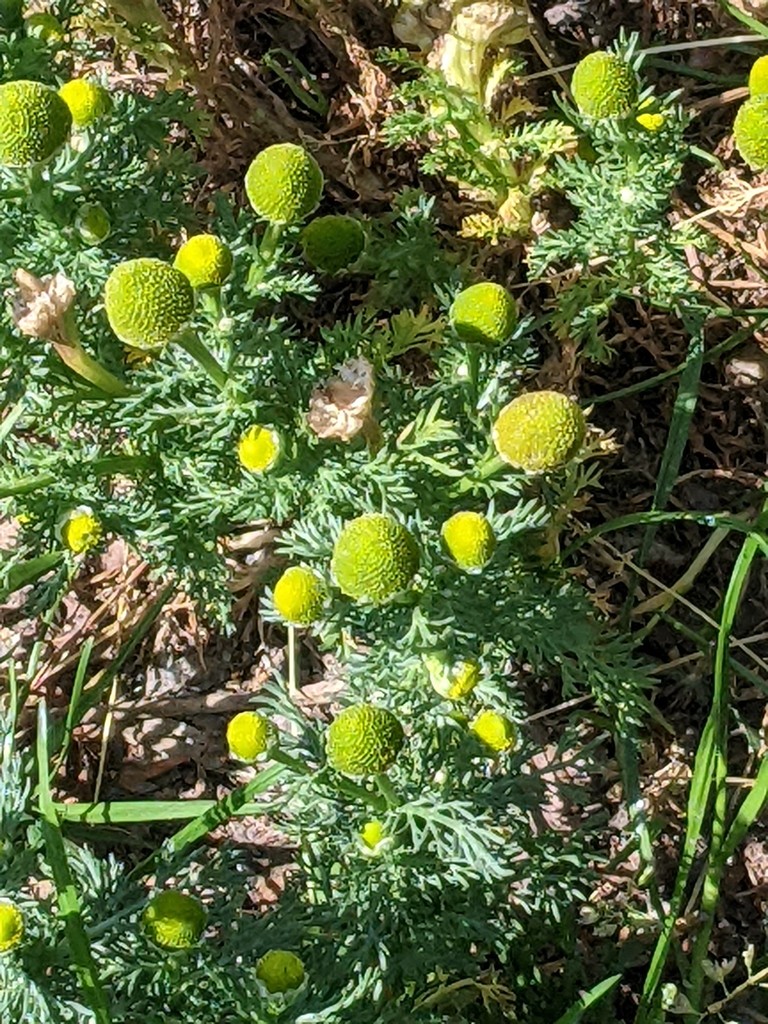
This plant grows low to the ground and produces distinctive cone-shaped flower heads that resemble tiny greenish-yellow buttons.
Unlike many daisies and chamomiles, pineapple weed lacks white petals. As a result, that feature alone narrows identification considerably.
The foliage appears soft and feathery, similar to dill, fennel, or chamomile.
When you crush a flower head between your fingers, a sweet pineapple scent is released almost immediately. As a result, many foragers use that aroma as the final confirmation.
Quick Identification Checklist
Small yellow-green flower heads with a rounded cone shape
Absence of white petals around the flower head
Finely divided foliage resembling delicate fern leaves
Compacted soil is a common growing location
A strong pineapple aroma released when crushed
Sunny, disturbed ground often supports healthy patches
Key Features Checklist
Flower Heads
Flower heads are small, rounded, and cone-shaped, usually ranging from yellow-green to greenish-gold.
Leaves
In contrast, the leaves are deeply divided, delicate, soft, and feathery.
Stem
Meanwhile, the stem remains smooth, branching, and relatively low growing.
Aroma
When crushed, the flower heads release a strong pineapple scent.
Growth Habit
Overall, pineapple weed grows as a low annual that often forms small patches or colonies.
Beginner Identification Tips
If you are new to foraging, focus on three traits.
First, look for flower heads without white petals.
Next, crush a flower head and smell it.
Finally, observe the habitat.
As a result, identification becomes much easier when all three characteristics align.
Many beginner foragers become overwhelmed trying to memorize dozens of plant characteristics. Fortunately, pineapple weed demonstrates that some species can be identified confidently using just a handful of highly distinctive traits.
Habitat and Distribution
Pineapple weed thrives where many other plants struggle.
Because it prefers compacted soils and disturbed ground, it often appears in places where other plants cannot compete.
Common places to find it include:
- Hiking trails
- Logging roads
- Gravel roads
- Driveways
- Parking lot edges
- School grounds
- Parks
- Construction sites
- Campsites
I frequently encounter pineapple weed growing directly in heavily traveled paths where foot traffic prevents larger vegetation from taking over.
Meanwhile, the plant has become widespread throughout North America and is especially common across the Pacific Northwest.
Seasonality and Availability
Pineapple weed typically emerges in spring.
Flower production usually begins in late spring and continues throughout summer.
In cooler climates, flowering may continue well into early fall.
For that reason, peak harvesting generally occurs from late spring through midsummer when flower production is strongest and the pineapple aroma is most pronounced.
Edible Parts
Flower Heads
Most foragers harvest the flower heads because they provide the strongest flavor and aroma.
Young Leaves
Additionally, young leaves can be eaten fresh or added to herbal preparations.
Tender Stems
In smaller quantities, tender stems may also be used, although the flowers remain the preferred edible portion.
Taste and Texture
Pineapple weed offers a pleasant flavor profile that surprises many first-time foragers.
Common flavor notes include:
- Pineapple
- Chamomile
- Citrus
- Apple
- Mild herbal sweetness
Soft and tender flower heads are pleasant to eat fresh.
Because of their mild sweetness, they make an enjoyable trailside snack.
Many foragers compare the flavor to a blend of chamomile tea and pineapple.
Nutritional Information
However, pineapple weed has not been studied as extensively as cultivated vegetables.
Like many members of the Asteraceae family, it contains naturally occurring flavonoids, essential oils, and antioxidant compounds.
Historically, the plant has been valued more for its aromatic and herbal properties than as a significant calorie source.
Traditional and Historical Uses
Indigenous communities and traditional herbal practitioners have used pineapple weed for generations.
Historically, the plant was utilized as:
- A calming herbal tea
- A digestive aid
- An aromatic herb
- A mild traditional remedy
- A flavoring ingredient
Because it belongs to the chamomile group, many traditional uses overlap with those associated with chamomile.
Food Uses
Pineapple weed can be surprisingly versatile in the kitchen.
Fresh flower heads can be:
- Eaten raw
- Added to fruit salads
- Mixed into yogurt
- Used as a garnish
They can also be incorporated into:
- Jellies
- Syrups
- Cookies
- Cakes
- Ice cream
- Fruit preserves
Since the aroma is sweet and fruity, pineapple weed pairs especially well with desserts.
Tea Uses
Tea is perhaps the most popular use for pineapple weed.
To make tea:
- Harvest fresh flower heads.
- Rinse them gently.
- Place a handful into a mug.
- Pour hot water over them.
- Steep for 5 to 10 minutes.
The resulting tea is lightly sweet, floral, and aromatic.
Many people enjoy it without adding sweeteners.
Additionally, dried flowers can be stored and enjoyed throughout the year.
Cooking Uses
Pineapple weed works well in:
- Herbal syrups
- Infused honey
- Vinegars
- Baking recipes
- Fruit desserts
- Herbal beverages
Because the flavor is delicate, gentle cooking methods generally preserve the aroma best.
Harvesting Guide
Harvesting pineapple weed is straightforward.
Start by looking for healthy plants growing away from pollution sources.
Avoid harvesting near:
- Busy roads
- Industrial sites
- Chemically treated landscapes
- Contaminated soils
Use your fingers or scissors to remove flower heads.
Only harvest what you need.
Whenever possible, leave plenty behind for wildlife and future seed production.
A good rule is to harvest lightly and leave the majority of any patch intact.
Preservation Methods
Drying
Most foragers begin by drying the flower heads.
Spread them in a single layer and allow them to dry completely in a well-ventilated location.
Freezing
Alternatively, freezing can preserve much of the flavor, although texture may decline.
Syrups
For longer-term use, many people create simple syrups that capture the plant’s sweet aroma.
Infused Honey
Another excellent option is infused honey.
When stored in airtight containers, properly dried flowers can remain usable for many months.
Look-Alikes
Fortunately, pineapple weed has relatively few confusing look-alikes.
The most commonly compared plants include:
- Chamomile species
- Scentless mayweed
- Other mayweed species
Even so, the pineapple scent remains one of the easiest distinguishing characteristics.
When in doubt, use multiple identification features rather than relying on a single characteristic.
Comparison Table
| Feature | Pineapple Weed | Chamomile | Scentless Mayweed |
|---|---|---|---|
| White Petals | No | Yes | Yes |
| Pineapple Aroma | Strong | Mild Floral | None |
| Flower Shape | Cone-Shaped | Daisy-Like | Daisy-Like |
| Edibility | Yes | Yes | Rarely Used |
| Habitat | Disturbed Soil | Meadows & Gardens | Disturbed Soil |
Safety Considerations
Pineapple weed is generally regarded as a safe edible plant when correctly identified.
However, several precautions still apply.
Individuals with allergies to plants in the daisy family may experience sensitivity.
As with any wild food, begin with small amounts when trying it for the first time.
Never consume a plant unless identification is certain.
Also, harvest only from clean environments.
Building confidence through careful observation is one of the most important foraging skills you can develop.
Common Mistakes
Ignoring Habitat
Roadside plants may contain contaminants.
Not Crushing the Flower
The scent is one of the easiest confirmation tools available.
Harvesting Too Aggressively
Leave enough plants to reproduce naturally.
Assuming Similar Plants Are Identical
Always verify multiple identifying characteristics before consuming any wild plant.
My Field Notes
One of the things I love about pineapple weed is where it grows.
Unlike many edible plants, it often appears right under our feet.
Over the years, I have found it growing along logging roads, trailheads, gravel parking areas, campsites, and places where most people assume nothing useful could possibly grow.
Most recently, while riding my ebike down a logging trail, I came across a healthy patch growing directly in the compacted track.
The moment I crushed one of the flower heads, that familiar pineapple aroma filled the air.
Experiences like that remind me why I enjoy foraging so much.
The world is full of useful plants hiding in plain sight.
Ultimately, once you learn to recognize it, you will likely begin noticing it everywhere.
FAQ
Is Pineapple Weed Really Related to Chamomile?
Yes. Pineapple weed belongs to the same plant family as chamomile and shares many similar characteristics.
Can You Eat it Raw?
Yes. The flower heads are commonly eaten fresh and are often enjoyed as a trailside snack.
Does It Smell Like Pineapple?
Yes. The scent is often remarkably similar to pineapple, which is how the plant earned its common name.
Can You Make Tea from Pineapple Weed?
Absolutely. Tea is one of the most popular uses for pineapple weed and has been enjoyed for generations.
Is It Invasive?
In many regions it is considered naturalized and highly adaptable, although classifications vary by location.
When Is the Best Time to Harvest Pineapple Weed?
Late spring through summer is generally the best harvesting period because flower production is at its peak.
Related Species Guides
Foragers interested in pineapple weed often enjoy learning about:
- Chamomile
- Wood Sorrel
- Chickweed
- Dandelion
- Plantain
- Stinging Nettle
Summary
Ultimately, pineapple weed is one of the most approachable wild edible plants a beginner can learn.
Its unique pineapple fragrance, lack of white petals, feathery leaves, and preference for compacted soils make identification relatively straightforward.
Beyond identification, the plant offers real value.
For example, the flower heads can be eaten fresh, brewed into tea, infused into syrups, or incorporated into desserts and herbal preparations.
Perhaps most importantly, pineapple weed reminds us that useful wild foods are often growing in the most unexpected places.
If you enjoy learning about beginner-friendly edible plants, you may also enjoy my guide to Wood Sorrel (Oxalis):
The next time you are walking a trail, riding a logging road, or exploring a campground, take a closer look at the small plants beneath your feet.
You may discover a patch of pineapple weed waiting to introduce itself.
Foraging Safety Disclaimer
This article is provided for educational purposes only.
Always positively identify any wild plant before consuming it. Environmental conditions, regional variations, and look-alike species can affect identification.
Never rely on a single source when determining edibility. Instead, consult multiple trusted references, field guides, and local experts when learning new species.
Harvest responsibly, obey local regulations, and avoid collecting plants from contaminated areas.
If you have allergies, medical conditions, are pregnant, or are taking medications, consult a qualified healthcare professional before consuming wild plants or herbal preparations.


