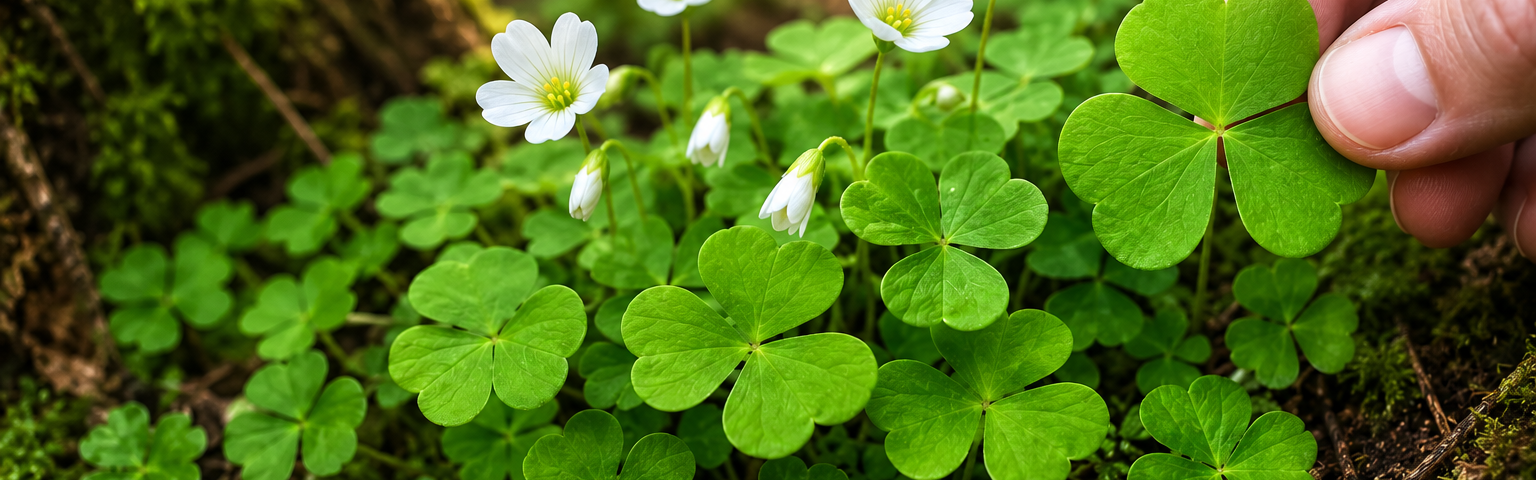
Some plants just make you smile every time you see them.
While exploring trails recently, I kept noticing bright green patches of wood sorrel covering the forest floor beneath the trees. Once you start recognizing it, you realize it seems to appear everywhere in the right conditions.
I have eaten wood sorrel many times over the years, but finding so much of it growing along these trails still made me stop and smile.
That bright lemon lime flavor never gets old.
Wood sorrel, also known as Oxalis, has been one of my favorite wild trail snacks for years. It is one of those plants that feels like a small hidden reward once you learn how to recognize it.
What Is Wood Sorrel?
Wood sorrel is the common name for plants in the Oxalis genus, a group of small flowering plants found throughout much of the world. Different species grow across North America, Europe, Asia, Africa, and South America in forests, gardens, lawns, and shaded woodland edges.
According to Oregon State University Extension, one of the best known Pacific Northwest species is redwood sorrel (Oxalis oregana), which thrives in cool moist forests.
Depending on where you live, you may find wood sorrel growing in:
Forest understories
Trail edges
Moist woodland areas
Gardens and yards
Mossy shaded ground
Coastal forests
Once you learn the plant, it becomes surprisingly recognizable.
How to Identify Wood Sorrel
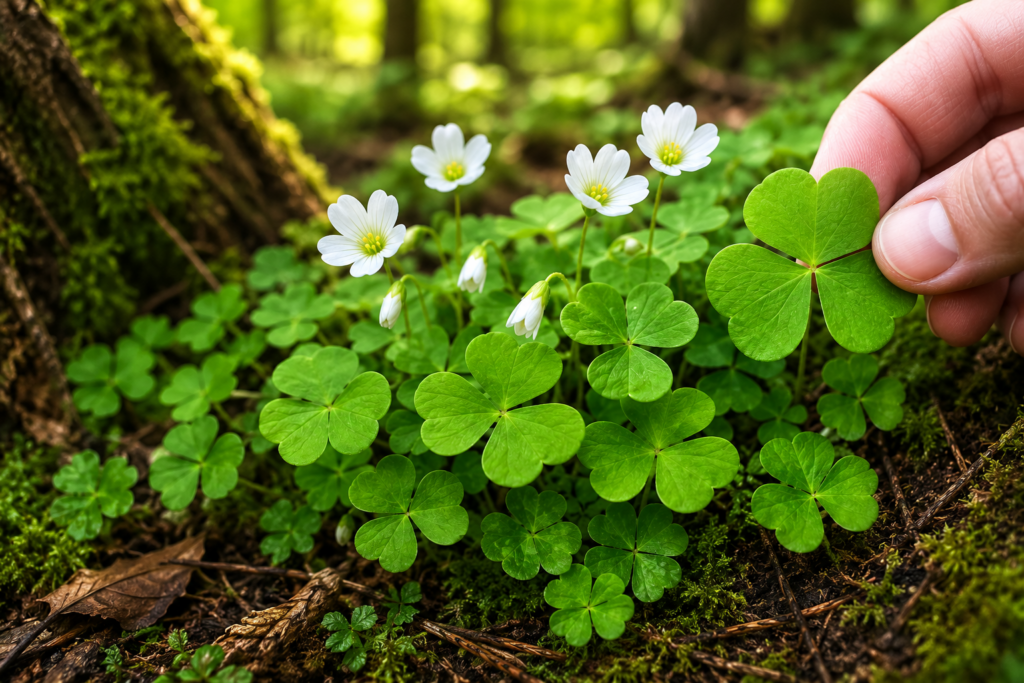
At first glance, wood sorrel can resemble clover, but there are a few easy differences that help separate the two.
Look for:
Three heart shaped leaflets
Soft delicate stems
Low growing patches close to the ground
Small white, pink, or yellow flowers depending on species
A bright tart citrus flavor when tasted
That lemony flavor is honestly one of the easiest clues. Few wild plants have such an immediate citrus like bite.
Why Does Wood Sorrel Taste Like Lemon Lime?
The flavor comes from oxalic acid, a naturally occurring compound also found in many common foods.
The National Kidney Foundation notes that oxalates are found in foods like spinach, rhubarb, beets, Swiss chard, nuts, and chocolate.
Wood sorrel simply contains enough of that compound to create its refreshing sour flavor.
To me, it tastes somewhere between lemon lime candy and fresh citrus.
Is Wood Sorrel Edible?
Yes. Many species of wood sorrel are considered edible and have traditionally been enjoyed as trail snacks, garnishes, and flavor accents.
The leaves, flowers, and seed pods are all commonly discussed as edible parts.
A few fresh leaves can add a bright pop of flavor to:
Salads
Fish dishes
Soups
Wild greens
Cold drinks
Camp meals
Personally, I think wood sorrel is best enjoyed while walking the trail. There is something satisfying about recognizing a wild edible plant and being able to enjoy a quick burst of flavor right where it grows.
What About the Oxalic Acid?
This is the part of the conversation that often gets blown out of proportion online.
Yes, wood sorrel contains oxalic acid. So do many foods people eat regularly without concern.
For most healthy people, casually nibbling a few wood sorrel leaves while hiking is not considered a major issue.
The important thing to understand is that wood sorrel is typically eaten in small amounts. Most foragers are not sitting down to eat giant bowls of it every day. It is usually enjoyed as a refreshing trail snack or used to add a little citrus like flavor to a meal.
That sharp lemon lime taste is actually what makes the plant so enjoyable.
People who already have a history of kidney stones or who have specifically been advised to avoid high oxalate foods may want to be more cautious. For the average healthy forager, though, enjoying a few leaves along the trail is generally considered perfectly reasonable.
My Favorite Way to Enjoy It
Most of the time, I simply eat a leaf or two while hiking.
There is something rewarding about recognizing a wild edible plant and being able to enjoy a flavor that most people walk right past without noticing.
If I were using it at camp, I would probably sprinkle a few leaves over fish or toss a little into a salad for a fresh citrus like kick.
A little goes a long way.
Harvesting Wood Sorrel Responsibly
Even though wood sorrel is often abundant, I still believe in harvesting lightly and respectfully.
Take only a few leaves from larger patches
Avoid polluted or heavily trafficked areas
Leave plenty behind
Respect local regulations and protected lands
Foraging is not just about gathering food. It is about paying closer attention to the world around you.
Final Thoughts
Wood sorrel is one of those small details that can completely change the way you experience a walk through the woods.
Most people pass right by it without ever realizing there is a bright lemon lime flavored edible plant growing beneath their feet.
Now every time I spot those little heart shaped leaves along a trail, I notice the landscape differently.
That is one of my favorite things about learning wild plants.
The woods begin to feel more familiar.
You stop simply walking through nature and start recognizing it piece by piece.
Get outside and do something wild.
Internal Links
Beginner Foraging Guide
https://thehgsociety.com/how-to-start-foraging-safely/
Wild Edible Plants Guide
https://thehgsociety.com/how-to-identify-wild-edible-plants/
Confident Forager Guide
https://thehgsociety.com/confident-forager-guide/


