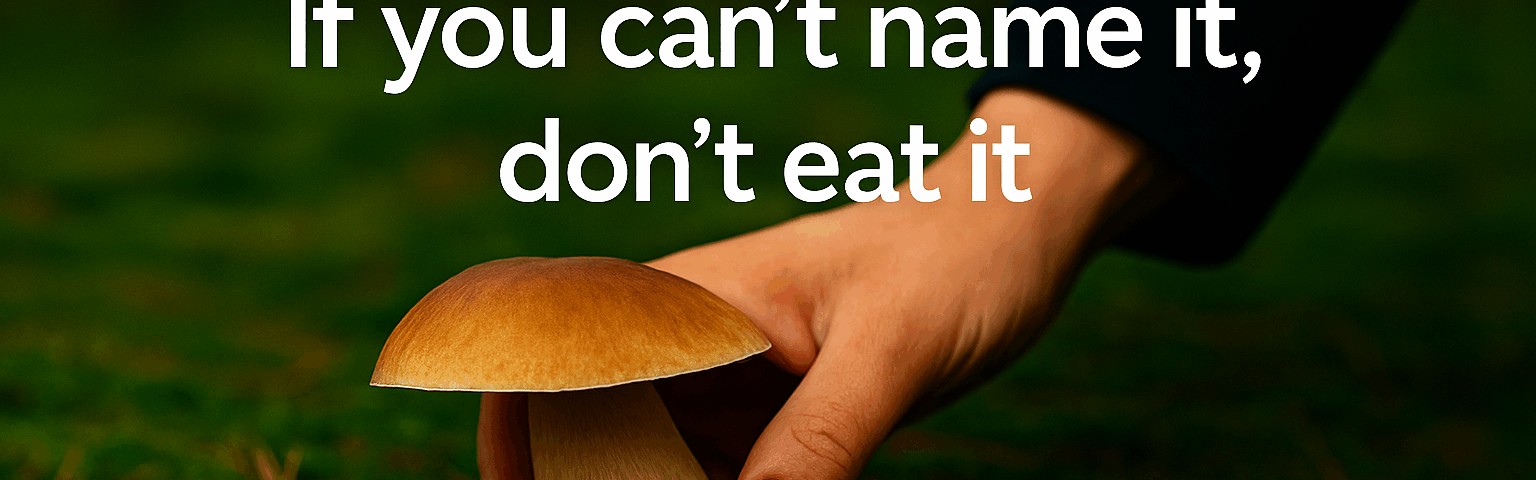
There’s something magical about stepping into the woods with a basket in hand, scanning the forest floor for that first glimpse of a mushroom cap peeking through the moss. For me, mushroom foraging isn’t just about finding food—it’s about slowing down, reconnecting with nature, and discovering what the land has to offer.
But let’s be honest: when it comes to wild mushrooms, safety is everything. The old saying is true—if you can’t name it, don’t eat it. Every year, people make the mistake of misidentifying mushrooms, and the consequences can be dangerous. That’s why I want to share a few of my go-to rules for foraging wild mushrooms safely, especially if you’re just starting out.
My Top Safety Rules for Foraging Wild Mushrooms
- Learn One or Two at a Time
When I first started, I focused only on morels and chanterelles. Both are fairly distinct and well-documented, which made learning to identify them much easier. Trying to learn ten mushrooms at once only creates confusion. - Use Multiple Sources
Don’t rely on just one field guide or one website photo. I always double-check identifications using at least two or three sources—a field guide, an app, and an online mushroom forum. - Join a Local Group
Some of my best learning moments came from tagging along with experienced foragers. If you can, join a local mushroom club or Facebook group. Seeing mushrooms in their natural setting with an expert is invaluable. - Avoid Look-Alikes Until You’re Confident
There are edible mushrooms with poisonous twins (false morels vs. true morels, for example). Until you’re rock solid in your ID skills, steer clear of anything questionable. - Start with the Easy Ones
Some mushrooms are nearly foolproof—like chicken of the woods or giant puffballs. Begin with these before branching into species with tricky look-alikes.
Free Resource: Download My Foraging 101 Guide
If you’re ready to start your journey into wild food, I put together a free beginner’s guide to foraging. It covers mushrooms and plants, safety tips, and simple ways to add your harvest into everyday meals.
👉 Click here to download your free Foraging 101 Guide
This guide is perfect if you want something you can print out and take with you on your walks, or just keep handy for quick reference.
Recommended Gear for Safe Mushroom Foraging
Having the right gear makes a big difference in both safety and enjoyment. Here are some essentials I personally use and recommend:
- 🍄 Foraging Basket – Perfect for keeping mushrooms fresh and allowing spores to spread as you walk. Check it out here
- 🔪 Mushroom Knife with Brush – A curved blade for cutting stems and a brush for cleaning dirt. See one here
- 📘 Field Guide to Edible Wild Mushrooms – A must-have reference for identifying species with confidence. Grab one here
- 🎒 Insulated Cooler Backpack – Great for longer trips where you want to keep your harvest fresh. Find it here
Final Thoughts
Foraging wild mushrooms safely is about more than just food—it’s about respect. Respect for nature, respect for the process, and respect for your own safety. Every mushroom I harvest reminds me that patience and caution are part of the reward.
So, grab your basket, head into the woods, and start small. Learn one mushroom at a time, double-check your finds, and enjoy the experience. Who knows—your next walk in the forest might end with dinner on your table, gathered by your own hands.
Explore My Etsy Shop
If you’re looking for printable foraging journals, trackers, and outdoor-inspired guides, check out my Etsy shop Step Outside Grow. I’ve designed each resource to be simple, practical, and easy to carry into the woods with you.
👉 Visit Step Outside Grow on Etsy
It’s a great place to grab tools that complement what you’re learning here, especially if you like having a dedicated spot to record your foraging adventures.


