
If you love discovering new flavors when you forage wild edible plants, sumac is one you will never forget. Those bright red, cone-shaped clusters that stand out in late summer and fall are not just beautiful. They are tangy, citrusy, and bursting with vitamin C.
While most people know sumac as a spice in Middle Eastern cooking, few realize that our native species grow wild across North America. Learning how to identify and harvest it safely opens the door to refreshing drinks, zesty seasonings, and a deeper appreciation for the wild foods around us.
Learn more about other fall plants in my full guide Forage Wild Edible Plants This Fall: A Beginner’s Guide

A Look Back: The History and Traditional Uses of Sumac
Sumac has a long history of use by Indigenous peoples for both food and medicine. Native tribes across North America brewed the red berries into tart, cooling drinks and used the bark and roots for treating colds, sore throats, and fevers.
In the Mediterranean and Middle East, the dried berries were ground into a spice that added brightness to meats, salads, and rice. Ancient Romans used sumac in place of lemons, and early American settlers followed their example by making lemonade from the clusters of crimson fruit that ripen in late summer.
Today, sumac remains a global favorite for its unique flavor and health benefits. It is high in antioxidants and has a refreshing tartness that pairs perfectly with sweet or savory foods.
Where to Find Sumac
Sumac grows wild in much of the United States and southern Canada. You will often find it along roadsides, field edges, and sunny clearings. The most common edible varieties are staghorn sumac, known as Rhus typhina, and smooth sumac, known as Rhus glabra.
Both thrive in open, sunny areas and produce tall shrubs or small trees, often in clusters. Each produces the familiar upright cone of red berries that ripens from late July through October.
How to Identify Sumac
Edible sumac is easy to identify once you know what to look for.
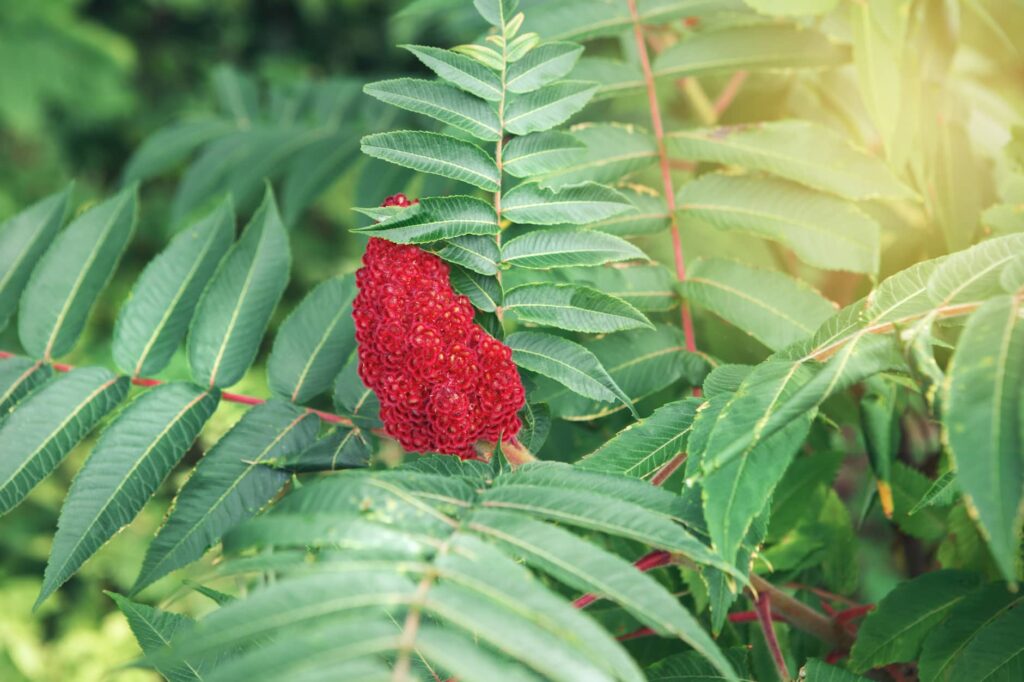
- Berries: Bright red clusters that form a cone shape. Each berry is covered in tiny, velvety hairs that give them a fuzzy look.
- Leaves: Long, feather-like leaves with many pointed leaflets arranged in pairs.
- Stems: Staghorn sumac has fuzzy stems, while smooth sumac has hairless ones.
- Height: Typically between five and fifteen feet tall.
Important: Avoid poison sumac, known as Toxicodendron vernix. It grows in swamps and wetlands and has smooth, white berries instead of red.
How to Harvest Sumac
The best time to harvest sumac is from late summer through early fall when the berry clusters are deep red and slightly sticky to the touch. Taste a small berry before harvesting. If it is tangy and lemony, it is ready. If it tastes bland, rain may have washed away the flavor, and it is best to wait for a drier spell.
To harvest, use pruning shears to cut the entire berry cluster from the branch. Store clusters in a paper bag or basket so they can breathe.
How to Prepare and Use Sumac
Sumac is incredibly versatile. You can steep it in water to make a tart, vitamin-rich drink, grind it into a spice, or use it to flavor meats, vegetables, and dressings.
To make a spice, dry the clusters completely, then rub or grind the berries off their stems and sift out the seeds. The powder has a bright red color and a flavor similar to lemon zest mixed with cranberries.
For a refreshing drink, try this traditional recipe below.
Recipe: Wild Sumac Lemonade
Sumac lemonade, sometimes called Indian lemonade, is a tangy, refreshing drink that is easy to make and tastes like a mix between lemonade and cranberry juice. It is one of the best ways to enjoy your wild harvest.
Ingredients
- Two to three ripe sumac clusters
- One quart cold water
- Honey or maple syrup to taste
- Ice and optional lemon slices for garnish
Instructions
- Place the whole sumac clusters in a large bowl or pitcher.
- Pour cold water over the clusters and gently crush them with your hands or a spoon.
- Let the mixture steep for about twenty to thirty minutes, stirring occasionally.
- Strain through a fine mesh or cheesecloth to remove seeds and hairs.
- Sweeten to taste, chill, and serve over ice.
For a fall twist, add a cinnamon stick or a slice of fresh ginger while steeping. The warmth of the spices pairs perfectly with the tart flavor of the sumac.
How to Store Sumac
Fresh clusters can be kept in the refrigerator for up to a week. For long-term use, dry the clusters in a warm, airy place until they are crisp. Store dried clusters or powdered sumac in airtight jars away from sunlight. Properly dried sumac can last for a year or more while retaining its bright flavor.
Final Thoughts
Sumac is one of those wild edible plants that changes how you see the landscape. What looks like an ordinary shrub becomes a source of natural lemonade, vibrant spice, and a piece of living history.
Once you learn to identify it, you will start noticing sumac everywhere and maybe you will never look at the roadside the same way again.
If you enjoyed learning about sumac, check out more wild fall plants like rosehips, chickweed, and curly dock in my full guide.
Read Forage Wild Edible Plants This Fall: A Beginner’s Guide


