
When most people see dandelions, they think of pesky weeds that take over lawns in spring. But I’ve learned to see them differently — as one of nature’s most generous and overlooked gifts. Every part of this bright little plant, from root to flower, has a purpose. It’s food, medicine, and even a natural source of rubber. Let’s dig into its story and explore how we can reconnect with this remarkable plant in the wild and in our kitchens.
A Brief History of the Dandelion
Dandelions (Taraxacum officinale) have followed humans for centuries. Originally native to Europe and Asia, they’ve spread almost everywhere people live. The name comes from the French dent de lion, meaning “lion’s tooth,” a nod to the jagged edges of its leaves.
Ancient Egyptians, Greeks, and Romans used dandelions for their healing properties. In traditional Chinese and Arabic medicine, they were prized for treating liver and digestive issues as early as the 10th century. That’s why the Latin name includes officinale — it’s a sign that the plant was officially recognized for medicinal use.
When European settlers came to North America, they actually brought dandelions with them as a valuable crop, not a nuisance. Over time, they naturalized so well that now they seem to pop up anywhere soil meets sun.
Medicinal and Food Uses Through Time
For centuries, dandelions were a staple in herbal medicine. Traditional healers used them as a diuretic, to support liver health, and to help balance digestion. Modern studies have found that dandelions contain antioxidants, vitamins A, C, and K, as well as minerals like iron, calcium, and potassium. While research is still ongoing, it’s clear our ancestors were onto something.
And beyond medicine, dandelions are a fantastic wild food source. The young leaves can be eaten raw or cooked, the roots roasted for coffee, and the golden flowers turned into everything from wine to syrup. In many parts of Europe, Asia, and North America, dandelions are still part of the local cuisine — especially in spring when fresh greens are scarce.
Quick note: If you’re allergic to ragweed or similar plants, start slow. And always harvest from clean areas away from roads or sprayed lawns.
Where to Find and How to Harvest Dandelions
You can find dandelions almost anywhere there’s open ground and sunshine — meadows, lawns, forest edges, and trails. In western Washington, I start spotting them in early spring when the first bright yellow blooms pop up through the grass.
Here’s what I look for:
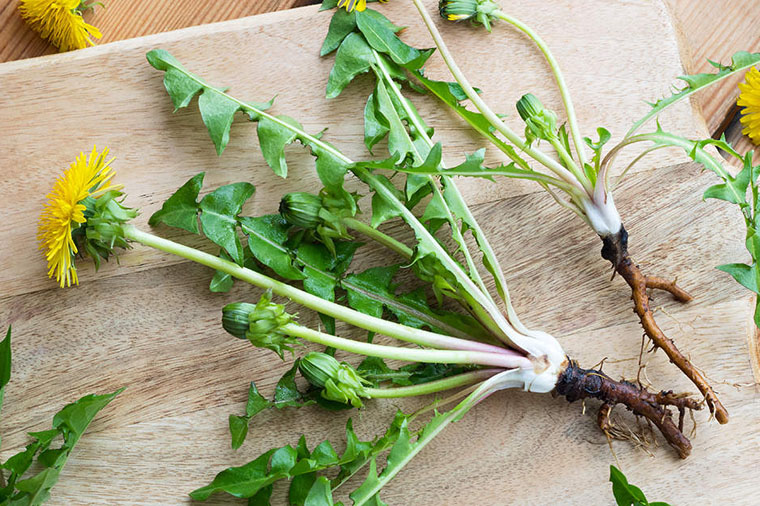
- Leaves: Deeply toothed, growing in a circular rosette.
- Stems: Hollow and full of milky sap when snapped.
- Flowers: Single, bright yellow heads that later become round puffballs of seeds.
For the best flavor, harvest the young leaves in early spring before the flowers bloom. Older leaves tend to taste more bitter. The roots are best dug in fall or early spring when they’re packed with nutrients. Use a small digging tool to gently lift them out — the taproot can go deep. And the flowers can be picked any time during bloom season for teas, jellies, or even wine.
Always remember to harvest responsibly. Leave plenty of plants behind so they can keep spreading and supporting bees and pollinators.
How to Prepare Dandelions (With Two Simple Recipes)
Cooking with dandelions is simple once you get the hang of it. Their flavor ranges from mildly bitter to earthy and nutty, depending on the part of the plant you use. Here are two easy ways to get started.
1. Sautéed Dandelion Greens with Garlic and Lemon
Ingredients
- 4 cups young dandelion leaves
- 1–2 cloves garlic, minced
- 1 tablespoon olive oil
- Juice of half a lemon
- Salt and pepper to taste
Instructions
- Wash and trim the leaves. If they’re tough or older, blanch them in boiling water for a minute to reduce bitterness.
- Heat olive oil in a skillet and sauté garlic until fragrant.
- Add the greens, tossing until just wilted (about 2–4 minutes).
- Finish with lemon juice, salt, and pepper.
This dish reminds me of spinach or kale with a wild edge — simple, earthy, and full of nutrients.
2. Roasted Dandelion Root “Coffee”
Ingredients
- Fresh dandelion roots
- Optional: cinnamon or chicory root for added flavor
Instructions
- Scrub the roots clean and chop them into small pieces.
- Roast in the oven at 350°F for 30–40 minutes, stirring halfway through, until they turn dark brown and aromatic.
- Grind or steep the roasted roots in hot water for 5–10 minutes. Strain and enjoy like coffee — but naturally caffeine-free.
This “coffee” has an earthy, roasted flavor that feels grounding and comforting. I love it on chilly mornings outdoors.
3. Pickled Dandelion Roots (My Favorite)
A crisp, tangy, and surprisingly addictive wild snack
When most people think of dandelions, they picture the bright yellow flowers in their yard — not the roots hiding below. But once you try these pickled dandelion roots, you’ll start seeing every patch of dandelions as a potential pantry treasure. They’re earthy, slightly bitter, and when pickled, they take on the perfect balance of crunch and tang. Think of them like wild-foraged bread and butter pickles — only with a little more bite.
Ingredients
- 2 cups cleaned dandelion roots, chopped into 2–3 inch pieces
- 1 cup apple cider vinegar
- 1 cup water
- 1 tablespoon salt (non-iodized preferred)
- 1 tablespoon sugar or honey (optional)
- 2 cloves garlic, lightly crushed
- 1 teaspoon black peppercorns
- 1 teaspoon mustard seed
- ½ teaspoon red pepper flakes (optional for heat)
- A small sprig of fresh dill or thyme
Instructions
- Clean and scrub the roots well. Slice into even pieces.
- If they’re large or tough, blanch them in boiling water for 1–2 minutes to soften slightly.
- In a small pot, bring vinegar, water, salt, and sugar to a simmer. Add the garlic and spices.
- Pack the roots into a clean pint jar with dill or thyme, then pour the hot brine over them.
- Cool to room temperature, seal, and refrigerate.
They’ll be ready after 24 hours but taste best after 3–5 days. Stored in the fridge, they’ll keep for up to 3 months.
Serving ideas: Eat them straight from the jar, chop them into salads, or pair them with smoked fish and sharp cheese. They’re crisp, zesty, and perfect for sharing with curious friends

Storing and Preserving Dandelions
Short-Term Storage
- Greens: Keep in the fridge inside a paper towel-lined bag. Use within 2–3 days for the best flavor.
- Roots: After roasting, store in a dry, airtight jar. They’ll last several months.
- Flowers: Use fresh or turn them into syrup, jelly, or tea right away — they wilt fast.
Long-Term Storage
If you want to preserve dandelions for year-round use, there are several great methods that don’t require special equipment.
1. Drying
- Leaves: Spread cleaned leaves on a mesh screen or dehydrator tray. Dry at low heat (95–115°F) until crisp. Store in airtight jars in a dark, cool cupboard.
- Roots: Slice into thin pieces and dry the same way. Once fully dry, they can be stored whole or ground into powder for tea or tinctures.
- Flowers: Petals can be gently dried on parchment or a dehydrator tray. They keep their color and make a lovely tea addition.
Properly dried dandelion parts can last up to one year if kept away from moisture and sunlight.
2. Freezing
- Blanch dandelion greens in boiling water for 30 seconds, then immediately cool in ice water.
- Pat dry and store in freezer bags or vacuum-sealed pouches.
- Frozen greens hold up well in soups and sautés for several months.
3. Tinctures and Vinegars
For herbal use, the roots or leaves can be soaked in alcohol or apple cider vinegar for 4–6 weeks, strained, and bottled. This makes a potent tonic that can last a year or more when stored in dark glass.
4. Dandelion Powder
Dried leaves or roots can be ground into a fine powder using a coffee grinder. Store in a sealed jar or mylar bag with a desiccant pack. Powdered dandelion adds a nutrient boost to smoothies, soups, or baked goods and can last up to two years.
Dandelions in Modern Times
Even though most people treat them as weeds, dandelions are finding new life in modern industries. In Europe and China, dandelion extract is used in herbal teas, tonics, and skincare products. Researchers are also exploring a related species, Taraxacum kok-saghyz, as a sustainable source of natural rubber — a potential alternative to the rubber tree.
Meanwhile, chefs and foragers around the world are rediscovering dandelions as seasonal delicacies. Upscale restaurants now feature wild dandelion salads, pestos, and even dandelion wine. What was once a backyard nuisance is becoming a celebrated symbol of sustainable food culture.
Tips for Beginner Foragers
If you’re new to wild harvesting, dandelions are the perfect plant to start with. Here are a few tips I’ve learned over time:
- Know your source. Avoid roadsides, lawns, and areas treated with chemicals.
- Start small. Try a few leaves first to get used to the flavor.
- Balance the bitterness. Lemon, vinegar, or garlic can mellow out the greens.
- Harvest responsibly. Take only what you’ll use and leave enough for the bees.
- Enjoy the process. Foraging is as much about slowing down and observing as it is about gathering food.
Final Thoughts
Every spring when the first yellow blooms appear, I’m reminded that the dandelion isn’t just a weed — it’s a survivor, a teacher, and a gift from nature. It thrives where others can’t, adapts to every environment, and provides food and medicine for those willing to look beyond the surface.
If you haven’t given dandelions a fair chance yet, grab a basket this spring and get to know them. Cook a handful of greens, dig a few roots, and brew yourself a cup of dandelion “coffee.” You’ll never look at your yard the same way again.


